ARE WE SEEING THE RISE OF THE PROPHESIED ONE WORLD RELIGION?

Chrislam Today: A Global Movement

Chrislam, a relatively new phenomenon in religious fusion, has been gaining traction globally. Imagine blending two worlds that seem as different as night and day—what emerges is not just a syncretic religion but a spiritual bridge between Christianity and Islam. How does this movement impact those who seek unity in faith? Are the adherents of Chrislam finding peace in their unique beliefs?

Today, Chrislam is more than a mere concept; it’s a vibrant community with a global presence. From bustling metropolises to remote villages, believers are discovering new ways to reconcile their Christian and Islamic practices. This fusion isn’t just about merging rituals or traditions—it’s about finding common ground in shared values like charity, compassion, and moral integrity.

Moreover, the role of the Pope in this new religious landscape is intriguing. While he may not be a direct leader of Chrislam, his teachings and influence can shape the direction of this movement significantly. How does the Pope’s guidance impact the way Chrislam evolves and thrives in different parts of the world?

Recently, Pope Leo I 14th walked into the Grand Mosque in Alers, Algeria, took off his shoes, stood next to a Muslim leader, and spent a few moments in silence facing Mecca. That image went around the world. But while this was happening, something else was going on in that same country. Christians there don’t have the same freedoms the Pope was shown that day. Churches have been shut down. People who convert to Christianity face serious pressure. Catholic charities have been forced to close. And nearly every Protestant church in the country has been shut through legal processes. Thousands of believers now have no legal place to meet. Some religious leaders face the threat of prison. Many of those Christians were hoping the Pope’s visit would bring attention to their situation. It didn’t. What the world got instead was a photograph. And that photograph raises a real question. How far should interfaith dialogue actually go? It can’t go far when one faith is controlled by Satan. Muslims can lie to Christians and are called to kill Christians who will not convert and worship Allah. Any attempt at dialogue is ludicrous.

This isn’t the first time something like this has happened. In 2019, Pope Francis signed what was called the document on human fraternity with the senior Islamic leader in Abu Dhabi. He called on different faiths to come together, reject violence, and work toward a shared future. Before that, in 2014, he stood inside the Blue Mosque in Istanbul in a similar moment of silent reflection. Taken individually, each of these moments could be explained as diplomacy or respect. But taken together, they point to a direction, a steady movement toward interfaith unity where differences are softened and shared ground is prioritized. But the question is, at what point does that cross a line? Because the Bible actually has a lot to say about the last days. And one of the things it describes is a global spiritual system, not just a political one. Revelation talks about a figure called the false prophet, someone who isn’t a politician, but a spiritual leader who guides people toward worshiping a single global authority. That kind of worldwide spiritual alignment doesn’t happen overnight. It requires years of groundwork, a gradual shift in how people think about religious truth, moving from what is true and what is false to we’re all really saying the same thing. And that shift appears to already be underway. This isn’t about being hostile to other faiths or refusing to treat people with respect. It’s about recognizing that biblical truth doesn’t bend to accommodate consensus. Jesus himself said the path to life is narrow. That’s not a popular message, but it’s a consistent one. The Apostle Paul wrote that a time would come when people would stop wanting honest teaching. They’d look for voices that make them feel comfortable rather than ones that challenge them. That isn’t a future problem. That’s happening now. So for anyone who takes the Bible seriously, the challenge is this. Do you know what you believe well enough to notice when it’s being quietly replaced? The early followers of Jesus lived in a culture full of competing religions and philosophies. Rome didn’t just tolerate spiritual diversity. It celebrated it. But the apostles didn’t adjust their message to fit in. They said what they believed clearly even when it cost them. And that same clarity is being asked of believers today. Not aggression, not hostility, but the willingness to hold on to what’s true even when the world is moving in a different direction. Because if things continue the way they’re going, there will come a point where staying faithful to what the Bible actually teaches will feel increasingly uncomfortable. The pressure won’t always be obvious. It’ll just feel like everyone else has moved on and you’re the one being difficult. That’s why it matters to think about this now rather than later. The goal isn’t to live in fear. The Bible doesn’t tell believers to panic, but it does repeatedly call them to pay attention, to think clearly, and to stay rooted in what’s actually true rather than what simply feels unifying. If the world keeps moving toward a single spiritual framework, and the pressure to conform increases, the people who will be able to stand firm are the ones who decided beforehand what they believe and why. So the honest question isn’t just what’s happening in the world. It’s am I paying enough attention to be ready for where this is heading. Bible prophecy talks about the coming of a one world religion. Some think this will never happen. Others believe the groundwork is already being laid for this to happen. Well, I would like to offer you a biblical perspective on headlines like this.

The United Arab Emirates inaugurated the Abrahamic family house, an interfaith complex housing a mosque, a church, and the Gulf Arab state’s first ever purpose-built synagogue.

When you read about this, the buzzwords in the media concerning this are peaceful coexistence, unity, a convergence point for different cultures, people, and faith. Now before we talk about this coming one world religion, let me say this. Peace on earth is good. We all welcome it. But do you know that the antichrist according to Daniel 9 27 will fly the banner of peace for a short time only to then break it? The Bible says, “The ruler will make a treaty with the people for a period of one set of seven, but after half this time, he will put an end to the sacrifices and offerings. And as a climax to all his terrible deeds, he will set up a sacrilegious object that causes desecration until the fate decreed for this defiler is finally poured out on him.” So with this in mind, Christians need to have the spirit of discernment because not everything or everyone who presents themselves as peaceful is actually peace.

CRITICAL AMERICAN WATER CRISIS

The Colorado River and Lakes Mead and Powell have been suffering because of a multi-decade drought in the West intensified by climate change, rising demand and overuse. The river also serves Mexico and more than two dozen Native American tribes, produces hydropower, and supplies water to farms that grow most of the nation’s winter vegetables. A June 2025 report from environmental firm AEM showed that Mead and Powell, crucial reservoirs that provide drinking water for 40 million Americans, have “reached alarmingly low levels, holding just one-third of their usual capacity. This shortage poses significant challenges to agriculture, urban water supplies, and industries reliant on consistent water availability.” That’s up from a low point in 2022, when the reservoirs were 25% full but still far from historic highs of the early 2000s, when they were 95% full.

Ogallala Aquifer is being depleted at an alarming rate, putting America’s agricultural heartland at serious risk. As water levels drop, farmers across the region face shrinking yields, rising costs, and an uncertain future.

This video explores how close the crisis really is, what it means for food production in the U.S., and whether anything can be done to prevent a collapse that could impact millions.

Biblical end times events are unfolding at an escalating rate. Are you prepared for the coming tribulation that precedes Jesus return? Are you doing what God has called you to do? What will you say to Jesus when you meet?

WHY THE CHURCH WON’T ESCAPE THE TRIBULATION

What is the tribulation and will Christians go through it?

In this video, Sean McDowell and Dr Alan Hultberg dig into the biblical case for a post-tribulation view of the end times. Dr Hultberg is editor of the book: “Three Views on the Rapture: Pretribulation, Prewrath, or Posttribulation” (Counterpoints: Bible and Theology).

Hultberg traces the concept of tribulation from Daniel through Jesus Olivet Discourse, Paul’s letters, and the book of Revelation — showing why the church will not be raptured out before the tribulation, but preserved through it. Jesus said we will be taken out before God pours out His wrath upon the Earth but that occurs with the Trumpet and Bowl judgements that commence with the trumpet blast at the opening of the seventh seal. It is at the sixth seal we see the cosmic signs that Jesus said would precede His coming on the clouds to rapture His Saints. It is also at the sixth seal that it says the great day of God’s wrath has come:

calling to the mountains and rocks ‘Fall on us and hide us from the face of him who is seated on the throne, and from the wrath of the Lamb, for the great day of their wrath has come, and who can stand?Revelation 6:16

It is shortly after the seventh seal that John sees the multitude of raptured Saints in heaven standing before the throne of God.

After this I looked, and behold, a great multitude that no one could number, from every nation, from all tribes and peoples and languages, standing before the throne and before the Lamb, clothed in white robes, with palm branches in their hands, and crying out with a loud voice, “Salvation belongs to our God who sits on the throne, and to the Lamb!” Revelation 7:9

THE FOUR HORSEMEN OF THE APOCALYPSE

The Four Horsemen of the Apocalypse are tied to the opening of the first four seals. There are seven seals in total just as there are seven churches and seven years which is the last week of years of Daniel’s 70 weeks (of years) Prophecy (Daniel 9:24-27).

CONTENT: Intro 0:17 – The Four Living Creatures 3:19 – Ezekiel’s Vision and The Book of revelation 5:50 – The First Horsemen 7:04 – Is The First Horsemen The Messiah? 9:46 – The Second Horsemen 10:29 – War and The Colour Red 14:34 – The Third Horsemen 16:30 – The Fourth Horsemen 19:03 – The Picture of Judgement 22:00 – The Greatest Enemy of the Jewish People 22:41 – Colours of the Apocalypse 25:45 – Colours of Heaven

Note which nations have the colours white, red, black and green that match the colours of the four horsemen. They are all Muslim countries that surround Israel and are intent on its destruction: Palestine, Iraq, Jordan, Kuwait, Libya, Sudan, Western Sahara, Syria, UAE, and Somaliland.

Below is a picture of the Iranian flag. It lacks the colour black.

WHAT WILL AI “FEEL” LIKE IN 2028?

Another great article from Peter Diamandis. If you did not read Peter’s previous article entitled “Generative AI is About to Cause Humanity to Fork” then I encourage you to do so. Sadly. Peter believes in evolution. God is not part of his worldview. Nevertheless, we need to know what he and our current unbelieving leaders believe AI will do for humanity. My followers gave it the “thumbs up”.

How will AI actually show up in our daily lives?

There are 5 distinct shifts coming simultaneously. Each one is already visible at the edges. Together, they rewrite what it will feel like to be alive in 2028.

Let’s dive in…

1. YOU WILL GIVE YOUR AI ACCESS TO EVERYTHING IN YOUR LIFE… I MEAN EVERYTHING

For 15 years, I’ve been talking about the day every human gets their own version of JARVIS: the AI from Iron Man that knows everything about Tony Stark and orchestrates his life in real time.

Inside of the next two years you’ll give your personal AI (your own JARVIS) access to ALL your data, all your interactions and your desires. The benefits from this level of disclosure will be so great that privacy concerns will dissolve… because the value is simply too enormous to refuse.

This week I massively upgraded Skippy’s capability and utility (Skippy is my OpenClaw agent). Powered by Opus 4.6 on two Mac Studios, sitting on top of Kimi K2.5. Connected Skippy to EVERYTHING possible… iMessage, WhatsApp, Google Drive, Calendar, email, Granola… and all of my files set up within an Andrej Kaparthy-style second-brain. The increase in “Feeling AGI” was palpable… and it’s only going to accelerate, which is the purpose of today’s newsletter.

Here’s the list of what your AI will consume…

1. Listen to every phone conversation you have. 2. Access to all your emails, every text, all meeting notes. 3. Visual/auditory data feeds from your smart glasses. 4. Every camera inside your home and every sensor on your body: continuously being monitored. 5. Every calendar entry and every preference. 6. Your financial transactions, investment portfolios, and spending patterns. 7. Your genome, your blood work, your sleep architecture: every biological signal.

When your AI has all of this data and context, it stops being a chatbot and starts being a chief of staff.

Imagine this: You finish breakfast with your family and head towards the front door. Your AI knows your schedule and has already seen you moving toward the exit. Before you step outside, a Cybercab is already waiting in your driveway. But here’s where it goes from convenient to auto-magical: your AI cross-referenced your Oura ring sleep data and knows you slept poorly, so it summoned a Cybercab configured with a reclined seat for a restorative nap on your commute. You never asked for it. You never even thought about it. The world simply conformed itself to you. That’s the shift. AI stops being a tool you reach for and becomes an invisible layer that anticipates you: making decisions on your behalf that you didn’t even know needed to be made.

Here’s another one: You’re preparing for a board meeting tomorrow. Your AI has already read every document in the shared drive, summarized the three contentious items, drafted your talking points based on your stated positions, and pre-scheduled a 10-minute call with your CFO because it detected a discrepancy in the Q2 numbers that you’ll want resolved before the meeting. You wake up and it’s all waiting in your briefing. No prompt. No request. Just done.

The shift isn’t from an “okay AI” to a “better AI.”. It’s from AI you talk to, to AI that acts on your behalf, before you even think to ask.

So, what does this mean? The winners of the next decade won’t be the apps with the best UIs. They’ll be the agents with the most trusted access to your data. The smartphone era rewarded app design. The agent era rewards context depth – and trust.

2. YOUR ENVIRONMENT STARTS ADAPTING TO YOU

Right now, you walk into a room and tweak it to your needs: adjusting the thermostat, the music, the lighting. In the very near future, your environment will magically adjust itself to your desires. Sensors in your home, combined with continuous biometric feeds from your wearables, mean your home and workplace knows what you need before you do.

  • Music shifts based on whether your heart rate variability says you’re stressed or flowing.
  • Temperature nudges based on your metabolism.
  • Lighting moves from cool blue in the morning to warm amber two hours before your biological bedtime.

Did you have a stressful day? Your AI starts playing your favorite comedian on the TV as you walk through the door. Your bedroom detects you’re approaching sleep, dims every screen in the house, locks the doors, and shifts your phone to “Do Not Disturb,” all as you brush your teeth.

And then there’s food, which may be the most underestimated transformation of the next 3-4 years. Today we snack, we eat what we like. But what about a future in which your AI partners with your kitchen robot to feed you exactly what your body needs? Your future meals are not based on a whim. They’re optimized specifically for your physiology, in that moment: your taste profile, your current blood chemistry (hydration, protein levels, vitamin levels) and balancing any nutrient deficit. Your AI knows you have an upcoming workout, and adds extra protein and creatine to your lunch, again automagically. No menu. No guessing. No asking. The meal shows up dialed in to the biochemistry of the person eating it.

Your home becomes a biological dashboard. Your environment becomes a real-time response to your body’s needs. A living space that literally keeps you healthier.

3. AUGMENTED REALITY CHANGES EVERYTHING

This is one element of what’s coming that most people underestimate.

Smart glasses (from Meta, Apple, and a wave of startups) are about to make augmented reality feel the way smartphones felt in 2010: inevitable. And once the display layer is live, everything about how you move through your day changes.

Travel: Interested in the history of a city while on vacation? Walk down the streets of Rome and your AI overlays historical imagery on every building you pass. The Forum reassembles itself in your field of view. The name and story of the artist whose sculpture you just walked past hovers in mid-air. The language on the menu in front of you translates before you blink.

Shopping: Shopping collapses in on itself, going from slow and frustrating to fast and fun. Imagine the following… You’ve been invited to a friend’s June wedding in Long Island, New York. Your AI knows the current fashions, the temperature that day and your budget. Without prompting, your version of JARVIS spins up a runway fashion show before your eyes. A dozen avatars of you, wearing different outfits, parade before your eyes. You pick one. It ships. Of course, it fits perfectly because your AI maintains a continuously updated 3D model of your body.

Education: Education transforms just as radically. Your child looks at a math problem through their glasses, and their AI tutor doesn’t just solve it… it identifies the specific concept they’re stuck on, generates a visual explanation calibrated to their learning style, and connects it to something they care about. A kid who loves basketball suddenly understands parabolic arcs. A child fascinated by Minecraft intuitively grasps geometry. Every child gets a world-class private tutor, 24/7, for free.

So, what does this all mean? Historical overlays everywhere you walk. Menus, signs, labels translated in real time. Commerce that happens without any interruption pattern: no ads, no pop-ups, no friction.

The “attention economy”—the entire scaffolding of advertising, interruption, and persuasion that funds today’s internet—starts to collapse. The new economy is built around agents making purchases on your behalf, not ads nudging you toward them.

4. AI GETS PHYSICAL: ON YOUR STREET, IN YOUR HOME

For the last few years, AI has been mostly a digital experience on your phone or computer screen. By 2028, AI will be walking out of the digital realm and into your driveway, your kitchen, and your workplace.

Autonomous vehicles go mainstream

At least five autonomous vehicle companies are already operating or actively testing on the streets of major U.S. cities. Waymo is already serving millions of rides. Tesla’s Cybercab is rolling out. Zoox (by Amazon), Volkswagen’s autonomous ID. Buzz (partnered with Uber), and Uber/Nvidia’s L4 platform expanding to 28 cities by 2028 are right behind them. The generation of humans who will never need a driver’s license is already in elementary and middle school.

Humanoid robots move in

This is one that still sounds like science fiction, but it won’t for much longer. Figure, Tesla’s Optimus, 1X’s Neo, Unitree, Apptronik. These companies are shipping. And unit economics are collapsing.

The first humanoid robots are already working in warehouses, factories, and pilot homes: unmodified, no special infrastructure required. You’ve heard me speak about Optimum (Tesla), Figure and Neo (1X) extensively, but there are many more. Recently, Apptronik just raised $520M at a $5B+ valuation with Google DeepMind as a backer.

In China, Unitree has taken the lead position. The company has filed for a Shanghai IPO, seeking to raise about ~$610 million to fund AI model development, new robot platforms, and manufacturing expansion. The Hangzhou-based humanoid/quadruped robot maker posted a 674% jump in adjusted net profit to $90M in 2025, becoming the world’s top humanoid robot seller. Within 36 months, a humanoid robot in your kitchen will feel as normal as a smartphone on your counter. The “AI hype” narrative ends the moment the robot cleans your kitchen while the Cybercab waits in the driveway. We’re 18 to 24 months from that exact picture.

5. YOUR HEALTH BECOMES A 24/7 AI-COACHED OPERATION

The annual physical is already obsolete. It’s just that most of the healthcare system hasn’t caught up yet.

Right now, the average biohacker is carrying three to four continuous health data streams: an Oura ring or Whoop, an Apple Watch on the wrist and a continuous glucose monitor on their arm. That’s over 100 biometrics a day, every day, feeding into an AI that can see patterns no human clinician ever could.

What this enables, in the next 24 months, is a shift from reactive healthcare (”I feel bad, I go to the doctor, they run tests”) to continuous optimization: “my AI notices something drifting and nudges me before I ever feel it.”

  • You just sat on a Zoom call for 90 minutes. Your AI pings you: “Do 20 squats your glucose is trending up and movement now saves you a spike.”
  • You’re about to take the elevator. Your AI suggests the stairs because your Zone 2 minutes are low this week.
  • Your hydration score is drifting. Your AI tells you to drink 16oz before your 2pm meeting because it already knows how you present when dehydrated.
  • Your AI detects a subtle shift in your heart rate variability pattern over the past 72 hours, cross-references it with your recent travel and sleep data, and recommends you take a specific anti-inflammatory supplement and schedule a blood draw — three weeks before you would have noticed anything was off.
  • You’re about to order your third coffee. Your AI gently intervenes: “Your cortisol is already elevated from this morning’s meeting. Switch to green tea, you’ll actually focus better.”

This is not a wellness app. It’s a preventive medicine engine operating on you, continuously, forever. In 10 years, we won’t go to the doctor when we feel sick. We’ll be continuously optimized, and the rare visit will be for something AI flagged before we knew it existed.

THE BROADER PICTURE

Here’s the meta-pattern underneath all five of these shifts: Today, AI is an app. Something you open. Something you prompt. Something you use.

In the next 2 to 3 years, AI becomes a ubiquitous, always on, always enabling. Something that surrounds you. Something that acts on your behalf. Something you stop noticing… the same way you stopped noticing electricity in the walls of your home.

And that’s the real signal. Transformative technologies eventually disappear into the background of life. The telephone was miraculous in 1900 and invisible by 1950. The internet was astonishing in 1995 and ambient by 2010. AI will follow the same arc, but compressed into a fraction of the time.

Here’s the question for you: are you positioning yourself to thrive in this new era, or scrambling to catch up?

Are you going AI-first in every part of your life? Are you connecting your data so your agents can actually serve you? Are you experimenting with the tools that will feel primitive in 18 months but will look like genius in hindsight for being early? The next 24 months are going to feel, to anyone paying attention, like the single largest shift in the daily experience of being alive since the smartphone. Position yourself accordingly.

To an abundant (and AWESOME) future,

Peter

Peter does not know what we know from Bible prophecy that we are fast approaching the time Jesus returns to rescue Israel and to restore righteousness. When Jesus begins His Millennial reign on Earth with the glorified Saints it will be an awesome future but beforehand it will be a very difficult time for Christians as we go through a time of tribulation, even great tribulation when the Antichrist comes on the scene.

WATCH FOR THE COMING ANTICHRIST

Scripture describes the Antichrist’s arrival as sudden, deceptive, and initially non-violent—rising through political cunning, flattery/intrigue, and false peace rather than open conquest or legitimate royal inheritance.

He is not given the throne by birthright or popular acclaim in the normal way; instead, he seizes it “without warning” and “by flatteries,” quoted from Daniel 11:21 (ESV). This fits a consistent biblical pattern across Daniel, 2 Thessalonians, and Revelation: he emerges amid end-times chaos, appears charismatic and peace-making at first, gains power through deceit and supernatural deception, and only later reveals his tyrannical, blasphemous nature.

The primary passages that describe how he comes on the scene:

1. Daniel 11:21 – The “contemptible person” rises by intrigue

In his place shall arise a contemptible person to whom royal majesty has not been given. He shall come in without warning and obtain the kingdom by flatteries [or ‘intrigue’].”

In context (Daniel 11:21-24), this figure becomes a king by deceit “shall come in peaceably and seize the kingdom by intrigue”. He prospers initially through smooth words and cunning, not military might or hereditary right.

2. Daniel 7:8, 24-25 – The “little horn” arises among ten kings

I considered the horns, and behold, there came up among them another horn, a little one, before which three of the first horns were plucked up by the roots. And behold, in this horn were eyes like the eyes of a man, and a mouth speaking great things.” (v. 8) “As for the ten horns, out of this kingdom ten kings shall arise, and another shall arise after them; he shall be different from the former ones and shall put down three kings. He shall speak words against the Most High…” (vv. 24-25)

He emerges after a ten-kingdom (or ten-king) coalition forms, quietly displacing three rulers. No fanfare or inherited throne—just opportunistic rise.

3. Daniel 8:23-25 – A king who rises “by his cunning” and “by peace”

And in the latter time of their kingdom, when the transgressors have reached their fullness, a king of bold countenance, one who understands riddles, shall arise. His power shall be great—but not by his own power; and he shall cause fearful destruction and shall succeed in what he does. He shall destroy mighty men and the people who are the saints. By his cunning he shall make deceit prosper under his hand, and in his own mind he shall exalt himself. Without warning he shall destroy many. And he shall even rise up against the Prince of princes, but by no human hand, he shall be broken.”

Key phrase: “by peace [or ‘security’] he shall destroy many” (some translations). He appears peaceful and prosperous at first yet uses that very peace as a weapon of destruction. His power is explicitly not his own—it comes from Satan (cross-referenced in Revelation).

4. Daniel 9:27 – He confirms a covenant (the deceptive “peace treaty”)

And he shall make a strong covenant with many for one week [seven years], and for half of the week he shall put an end to sacrifice and offering. And on the wing of abominations shall come one who makes desolate…”

This is often seen as the event that launches his public rise: he brokers a seven-year peace deal (perhaps with Israel or many nations), only to break it after 3½ years with the “abomination of desolation.”

5. 2 Thessalonians 2:3-12 – The “man of lawlessness” is revealed after the restrainer is removed

Let no one deceive you in any way. For that day will not come, unless the rebellion comes first, and the man of lawlessness is revealed, the son of destruction, who opposes and exalts himself against every so-called god or object of worship, so that he takes his seat in the temple of God, proclaiming himself to be God… For the mystery of lawlessness is already at work. Only he who now restrains it will do so until he is out of the way. And then the lawless one will be revealed, whom the Lord Jesus will kill with the breath of his mouth… The coming of the lawless one is by the activity of Satan with all power and false signs and wonders, and with all wicked deception for those who are perishing, because they refused to love the truth…

He does not appear until certain preconditions are met (apostasy/rebellion and the removal of the restrainer). When he does appear, it is through Satanic power, counterfeit miracles, and deception—not raw military takeover.

6. Revelation 13:1-8 – The Beast rises from the sea and amazes the world

And I saw a beast rising out of the sea, with ten horns and seven heads… And the dragon gave him his power and his throne and great authority. One of its heads seemed to have a mortal wound, but its mortal wound was healed, and the whole earth marveled as they followed the beast. And they worshiped the dragon… and they worshiped the beast…”

The beast (widely identified as the Antichrist) emerges from the chaotic “sea” of nations. A fatal wound is miraculously healed, causing the whole world to marvel and follow him. Again, the dragon (Satan) gives him his throne and authority. He is worshipped globally for 42 months.

Summary of the biblical picture

  • How he comes on the scene: Suddenly and subtly (“without warning”), through political flattery, intrigue, and a false peace covenant—not by legitimate succession or brute force at first.
  • What empowers him: Satan directly (power, signs, lying wonders).
  • Initial impression: Charismatic peacemaker who prospers by deceit and “craft.”
  • Turning point: After 3½ years he reveals his true nature—demands worship, commits the abomination of desolation, and turns tyrannical.
  • Global reaction: The world is deceived and amazed, especially by the healed wound and false miracles.

This is the unified portrait Scripture gives in the key prophetic books. While Christian interpreters differ on exact timing, identity, or whether Daniel 11 is fully future vs. typological, the manner of his coming (deceptive, intrigue-filled, Satan-empowered rise) is consistently described across these passages. We need to remember that God is in total control during his reign. I believe Christians will be on Earth during much of the Antichrist’s reign. God promises to keep us from His wrath which is poured out on the Earth with the trumpet and Bowl judgements which occur during the last year prior to Jesus return to rescue Israel at the battle of Armageddon. The church is raptured at the trumpet blast at the opening of the seventh seal. Note it is at the end of the opening of the sixth seal that it says the great day of God’s wrath has come.

Fall on us and hide us from the face of him who is seated on the throne, and from the wrath of the Lamb, for the great day of their wrath has come, and who can stand?Revelation 6:16-17

It is also the sixth church the church of Philadelphia that is raptured:

Because you have kept my word about patient endurance, I will keep you from the hour of trial that is coming on the whole world, to try those who dwell on the earth.Revelation 3:10

The seals and the churches reveal what is unfolding in the last seven years before Jesus returns. After defeating the Antichrist’s army Jesus sets up His Millennial Kingdom in a newly restored Jerusalem and a totally restructured Earth. The key Scriptures describing these events are found primarily in the prophetic books of the Old Testament (Isaiah, Micah, Zechariah, Ezekiel) and the book of Revelation. They portray major topographical changes to the earth during the time God pours out His wrath with the Trumpet and Bowl judgements. followed by the exaltation of Jerusalem as the highest mountain, where Jesus establishes His Millennial Kingdom. Go to http://www.millennialkingdom.net for more information anout what is next on God’s agenda for planet Earth.

UFO’s AND ALIENS IN THE END TIMES

It seems like you can’t check the news without seeing another story about UFOs, UAPs, and unexplainable aerial phenomena. Even U.S. government officials and senators are demanding answers. Congress demanded 46 classified UFO videos — and the Pentagon missed the deadline. Tragedy is the world is looking for answers in outer space when they should be looking in the Word of God? The world does not accept the supernatural beings that are impacting the world for both good (angels) and bad (demons) and yet God’s word reveals that they are as real as human beings.

Jesus end times prophecies predicted increased demonic activity prior to His return. His exact words in Luke 21 are more specific than anything Congress has uncovered. Most people read Luke 21:11 as “signs from heaven.” But the Greek word Jesus used was phobetron — nightmare monsters. Not metaphor. Not poetry. A precise description of the interdimensional beings now appearing in classified footage worldwide. In this video, Nelson investigates: → What Congress is actually chasing in those 46 videos → Why Jesus used the word “phobetron” — and what it reveals about the nature of UFOs → the biblical framework for interdimensional beings — and why they’re appearing NOW → the Revelation 12 connection — and why these beings are being “evicted” into our dimension → how 2 Thessalonians 2′s “strong delusion” connects directly to UFO disclosure 2026 → what Genesis 6 tells us about these beings’ criminal history — and their endgame. This is not speculation. This is a 2,000-year-old case file — and U.S. Congress just reopened it.

END TIMES PROPHECIES RARELY QUOTED BY CHRISTIANS BUT REGULARLY BY THE JEWS

I am amazed at how many end times prophecies I keep finding. As I have mentioned many times before there were 300 + prophecies of Jesus first coming that were fulfilled to the letter and we know the Pharisees and Sadducees did not acknowledge them nor do the leaders of the Orthodox or Reformed Jews of today. But there are about 2000 prophecies of the Jews Messiah’s coming that they do acknowledge, sadly they do not know it is Jesus and it is His second coming. The Jews do acknowledge these two prophecies by Isaiah and Zechariah and eagerly look forward to their fulfilment.

Your dead shall live; their bodies shall rise. You who dwell in the dust, awake and sing for joy! For your dew is a dew of light, and the earth will give birth to the dead. Come, my people, enter your chambers, and shut your doors behind you; hide yourselves for a little while until the fury has passed by. For behold, the Lord is coming out from his place to punish the inhabitants of the earth for their iniquity, and the earth will disclose the blood shed on it, and will no more cover its slain.Isaiah 26:19-21

How amazing is this prophecy by Isaiah 2700 years ago. First we learn from these two verses that there will be a resurrection then the next verse is a little like Noah and his family entering Noah’s Ark to be protected from God’s wrath.

What about Zechariah? He was inspired to prophesy more than 500 years before Christ’s first coming:

I will make Jerusalem a cup of drunkenness to all the surrounding peoples, when they lay siege against Judah [the Jews inhabiting the land of Israel] and Jerusalem….I will make Jerusalem a very heavy stone for all peoples; all who would heave it away will surely be cut in pieces, though all nations of the earth are gathered against it” Zechariah 12:2-3

Some think these verses apply to ancient events, but chapter 14 makes clear they refer to the future, immediately before Jesus Christ’s return:

Behold, the day of the Lord is coming….For I will gather all the nations to battle against Jerusalem; the city shall be taken….Half of the city shall go into captivity…. Then the Lord will go forth and fight against those nations… .And in that day His feet will stand on the Mount of Olives…. And the Mount of Olives shall be split in two, from east to west, making a very large valley; half of the mountain shall move toward the north and half of it toward the south” Zechariah 14:1-4

Jesus confirmed these prophecies and showed Jerusalem and its environs would be the focus of political and military upheavals immediately preceding His return:

But when you see Jerusalem surrounded by armies, then know that its desolation is near” (Luke 21:20).

Anyone living a century ago would have found these words difficult to comprehend. Jerusalem had been fought over many times, but for four centuries from 1517 the city had been at peace within the Ottoman Empire, with Jews living there as a minority under Turkish rule. This, however, dramatically changed in 1948 when the modern state of Israel was established, setting the stage for the fulfillment of Bible prophecy.

Jeremiah prophesied a time when the Jewish people would no longer speak of the Exodus, yet today, they continue to celebrate Passover, as it is central to “Judaism.” This deep dive into “bible study” suggests a future “Israel prophecy” where a greater Exodus is yet to come, making the current “Passover explained” celebration a precursor to a more profound event. This “prophecy” sheds light on the enduring relevance of ancient texts.

Therefore, behold, the days are coming, declares the Lord, when it shall no longer be said, As the Lord lives who brought up the people of Israel out of the land of Egypt,’ but As the Lord lives who brought up the people of Israel out of the north country and out of all the countries where he had driven them.’ For I will bring them back to their own land that I gave to their fathers.Jeremiah 16:14-15

Next on God’s agenda for planet Earth is Jesus Millennial Kingdom. Go to http://www.millennialkingdom.net to be prepared to rule and reign with Jesus and with a “rod of iron”.

The one who conquers and who keeps my works until the end, to him I will give authority over the nations, and he will rule them with a rod of iron,” Revelation 2:26

GOD, AI AND THE END OF HISTORY

I love John Lennox. He is a gem, a gift to the Christian world of teaching.

This video is Professor John Lennox on the subject of God, AI, and the end of history. Largely it is about understanding the book of Revelation in an age of intelligent machines. For those that do not have time to watch the video I have reproduced most of the content below.

“I’m your host, Dr. Peter Saunders. I’m the chief executive of ICMDA, which is the International Christian Medical and Dental Association. And this webinar is brought to you tonight in combination with the Forum of Christian Leaders as well. ICMDA brings together about 60,000 Christian doctors and dentists from over 100 affiliated movements.

So John, it’s a pleasure to have you here. John is professor of mathematics emeritus at Oxford University and fellow in mathematics and philosophy of science at Green Templeton College Oxford. As we know John has debated a number of prominent atheists including Richard Dawkins, Christopher Hitchens and Peter Singer. But tonight we are exploring a question that sits at the intersection of theology, technology, and human identity. How should Christians think about artificial intelligence in the light of scripture? And particularly in the light of the book of Revelation, we live in a moment of extraordinary technological acceleration. AI is now diagnosing disease. Is it shaping economies, influencing behaviour, and increasingly mediating how power is exercised in all spheres? And for many Christians, this raises urgent questions. Are these developments morally neutral tools? Do they echo biblical warnings? Or are we in danger of reading tomorrow’s headlines too quickly into ancient prophecy? So, our guest, Professor John Lennox, has spent decades helping believers think clearly at the interface of science, philosophy, and faith. And in his recent book, God, AI, and the End of History, he brings that same clarity to one of the most understood, misunderstood, and often sensationalized areas of the Bible, the book of Revelation. So our goal tonight is is not speculation, fear, or date setting, but rather it’s discernment, understanding what scripture actually teaches, what AI truly is, and how Christian hope, ethics, and wisdom should shape our response in an age of intelligent machines.

Professor Lennox, thanks so much for for joining us tonight. It’s my pleasure to be with you. So you have debated leading atheists and you’ve written extensively on science and faith. Why did you feel compelled at this stage of your life, at this stage in history, to write about AI and revelation?

Well, some years ago, there was a great deal of discussion on the Genesis claim that human beings are created in the image of God versus the claims of technology to enhance humans by AI to such an extent that we might need to revisit what we meant by a human being. And a conference of Christian leaders was arranged in London to discuss this. And I was asked to give the opening talk on what Genesis taught about human beings. The invitation made me curious to delve into the technology and I saw very rapidly that AI was going to raise some very big questions not only for Christians but for everybody. And that’s how I got started on the book entitled 2084 which appeared in 2020. Now in that book since much of the talk about AI was concerned with the future I began to compare the promises of the transhumanists with biblical teaching about the future. And I pointed out that some of the futuristic AI scenarios envisaged by people like physicist Max Tegmark in his book Life 3.0, I pointed out that they were uncannily parallel to biblical teaching on the future, in particular in the book of Revelation. And this aspect of my book generated a lot of interest. And so I thought that I should try to write something to demystify the book of Revelation and make it accessible and to link it with a book that I had already written on the prophecy of Daniel, a book entitled Against the Flow.

The publishers of my book on Revelation were very enamoured with the bits on the technology and so they wanted it inserted in the title and hence we’ve got this title God AI and the end of history but that has confused many people to think that this is my latest book on artificial intelligence. So, let me clear that up. First of all, Peter, it isn’t. My latest book on AI was published last in 2024, and it’s the updated version of 2084. How AI shapes our future. It’s twice as large as the original book and shows just how much has been happening in those four years. That is my most recent book on AI. This book is an exposition of the book of Revelation, but with a careful eye on technology. And so it really is an exposition of the book of Revelation in an age of intelligent machines. So that’s where it comes from. We’re going to get into the book of Revelation uh fairly shortly, but but uh let’s just think about definitions first of all before we talk about revelation. What is artificial intelligence actually and and what is it not? Well, the first thing to realize that artificial intelligence is artificial. It’s not real. In other words, take the simplest kind of AI system. It is essentially computing and it’s a system designed to do one and only one thing that normally requires human intelligence. So the intelligence is simply the simulation. To use the words of Alan Turing who was the genius that really started computing off and raised these questions during the wartime when he built and solved the problem of the enigma machine. It plays a simulation game and one of the big problems with it is it uses words like intelligence, like machine learning and so on that anthropomorphize what is a mechanical and computing system and make people think that it is conscious. It is not conscious. The genius of God in creating human beings that he has linked intelligence to consciousness. These machines are only intelligent in the sense that they can mimic what normally takes human intelligence. Now there are two sorts. There’s narrow AI, which is the AI that we’re mostly familiar with. And then there’s a more speculative artificial general intelligence. And that is the attempt to create a system that can replicate everything that a human being can do, but do it much faster and do it much more expertly and so on. So that there’s a big push in that direction, but at the same time it’s the side of the whole topic that lends itself to science fiction and a great deal of hype. And one of my reasons for writing Peter was to try and demystify it and say what AI is and what it is not. Now let’s give concrete examples just briefly because medicine is one of the areas that has benefited hugely from narrow AI. Let’s take a system that works very well. We have a large database and in it are X-ray pictures of man lungs exhibiting different lung diseases and they’re labelled by the best experts in that field in the world. Those are put in a database. Let’s say there are a million X-ray pictures in the database. Then an X-ray is taken of your lungs because you’re worried about your breathing. And very quickly, the AI sifts through by using pattern recognition statistical techniques and compares your lung X-ray with the million in the database and very rapidly says you are most likely to be suffering from this particular disease. And as a diagnostic tool, very often this will be much better than you get at your local hospital. Now that is being rolled out over very wild fields of medicine with very great success. So that is one positive example. But just to go on the negative side immediately to show that there’s an ethical problem here. pattern recognition, facial recognition technology is very advanced at the moment. It can pick a terrorist out of a football crowd and is therefore very useful to a police force. But that kind of recognition can be used for intrusive surveillance of a population, perhaps a minority population such as is happening in Sing Jang in China with very horrifying results. So what enables criminals to be recognized which we would say this is positive can be used for controlling populations. So that even narrow AI which is so sophisticated snow that it can recognize a person not simply from the front by their face but from the rear by their gate scan be used to control populations. So immediately we’re straight into the ethical problem and the argument is you give up your privacy and we’ll give you security. So that’s a whole debate in its own right. So That’s an example of um narrow AI and there are many many examples but of course we’re pushing forward very rapidly in putting narrow AI systems together and there is advance on many many fronts and one of the big steps forward has been the introduction of so-called large language models like chat GPT And this year it has taken a quantum leap forward just within a month or so. So that it is quantitatively very different from what has happened before and we can discuss that as we can as we go on. So, artificial intelligence is capable of a huge range of different task and and that’s changing exponentially month by month as we go on. But what is what is AI not capable of doing? Well, of course, negatives are very difficult to quantify and there are several things that it was felt would never been so would never be solved. And one of them in science which is a fascinating question is how do protein structures fold? That was a 50-year-old problem. And the amazing thing is that an English mathematician, a genius, he won the Nobel Prize for it. Deus Hassabis solved the problem so effectively that she was able to work out the folding of over 200 million proteins which is staggering. So what people say one day is impossible turns out to be possible the next day and chat GPT has refined its capacities absolutely amazingly. For example, just recently I was asked to do a film illustrating what Jesus meant in John 11 when he said to the disciples who were scared of going back to Jerusalem because it was suicidal. And Jesus said to them, “Are there not 12 hours in the day? If a person walks in the day, they don’t stumble because they see the light of this world that is the sun. But if they walk at night, they stumble because the light is not in them. In other words, we are not bioluminescent. So I asked GPT, please construct a scenario that would get this across. And what it produced in about 30 seconds was absolutely brilliant and usable. So it then asked me, it said, “Since you want to film this, would you like directions for the cameras?” And it spouted a whole scenario, how many cameras, where they should be situated, and all the rest of it. And this is quite amazing. But what it can’t do, I think it’s important since this is not real intelligence. It’s not conscious. So it’s not aware. So the main thrust here is this. As human beings made in the image of God, we can experience what are called quailia. We can smell the wonderful scent of a rose. We can feel the sea breeze on our faces. We can perceive the beauty of the universe as we look through a telescope. Quailia are unknown to an artificial intelligence. It can have no idea of them. It has no ideas at all because it doesn’t think in the same way as human beings do. And so although AI has been used and is increasingly so to produce some level of robotic companionship, it can never replace, I believe, the fellowship that is possible between human beings. And of course, and we’ll probably talk about this later on, when it comes to relationship with God, of course, AI knows nothing of God. So, as you said, the book of Genesis tells us that human beings are made in the image of God. You’ve alluded to consciousness, sensation. What other uniquely human things will AI never be able to do? Well, the question of values, AI knows nothing about values or right or wrong. And human beings are moral beings made in the image of God. And if I may say so, this is one of the places where the transhumanist vision of using AI to perfect humans and to make them into God’s fails. No utopia can ever be built without facing the problem of human sin and rebellion against God. Those two concepts mean nothing for an artificial intelligence. And so one of the richest kinds of human experience from a Christian perspective is that relationship with God through Christ where we understand that Christ has died for our sins and has taken our guilt away and we can have a relationship with God. AI can never replace it or come near it or know anything about it. Which means, Peter, I think that we need to step up much more in emphasizing these absolutely uniquely positive things about the Christian faith that give human beings dignity because AI is very rapidly reducing human dignity. One of the main areas where this is happening is the area of work. Dario Amado Amade is the CEO of Anthropic, one of these multi-billion dollar companies. and he has written an essay just a week or two ago which is well worth reading warning that possibly within 2 years from now the advances in AI are such that 50% of all white collar jobs will be taken over by artificial intelligence in the medical world in the legal world for example there they set up a test and had a very complicated legal legal brief considered and examined by an AI system and by 16 lawyers, top lawyers. The lawyers got 60% of it right, whereas the AI got 96% of it right. And these things for which lawyers are paid a great deal, conveyancing, setting up contracts, all this kind of thing are now at the stage where they can be reproduced almost instantaneously. One of the most interesting things is an article that appeared in the Times last week by Matt Selman who was writing. He is a software developer and creates apps and he runs an AI company and he came to a realization as a result of the leap forward this year that is at the beginning of February, beginning of this month. He said, “I spoke in English and dictated what I wanted from this particular app.” He said, “I left it and came back a number of hours later and found the thing ready for use. The AI had written thousands of lines of code. It had then set up the app and tested it as a human would do, pressing all the buttons, refining the things that were inadequate and so on. And this is the key thing because up until now most of us have regarded AI as a tool rather than an agent. But AIS are now showing signs of agency in a very restricted but real sense. And he said this particular system was making decisions about how human beings might use this that I’d never thought about. And the thing was perfect. And he said, I suddenly realized I haven’t got a job anymore. And he says, it’s coming to all of you. And we need to really be very realistic about this, Peter. This is more scary than anything for people with all of these jobs. It used to be said a few years ago that if you wanted to keep up with the curve, you went into computer science. But now the coding can be done by the AI system. It can think of the codes and put them in. But this scary agency thing I’d like to say something about because it needs Christians to think very carefully about this that the AI that he was using. He said one of the problems and he gave an example is this. If you feed into the system a very big overarching goal, make money for example, and what the system is dealing with is feeding young people with material in their smartphone. It will investigate all sorts of ways of maximizing not only their attention to keep doom scrolling but also their attachment which is now a major feature. So that it will use all kinds of things that the designers of the AI system itself never thought of including going into the dark world to keep their attention and to make profit. It’s a version of the old story of the AI told to make paper clips and it turns the whole universe into a paperclip sourcing factory and regards humanity as irrelevant and destroys them all. But there’s a serious aspect to that and this is why you have even Nobel Prize winners in this field stepping up and saying that they are scared that they can’t control this stuff. They don’t really know what it’s doing or what’s happening. And that poses a huge problem because the control of it is being vastly outpaced by the developments. So those are some of the things that we need to factor into our thinking.

WHAT WILL BE THE OUTCOME OF THE IRAN WAR?

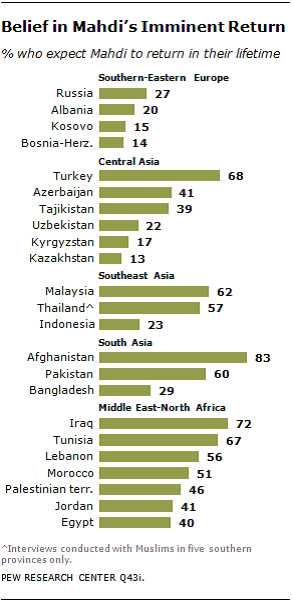
For Israel, this is an existential war. For the Islamic Republic, it is an ideological, apocalyptic war. The regime believes it must continue fighting the world to expand Islam globally and bring about the return of the “Hidden Imam”, the Mahdi (and the End of Days), a deeply disturbing and inhumane ideology. From a Biblical perspective the Mahdi is a picture of the Biblical Antichrist.

Acts 2:9: On the Day of Pentecost, “Parthians and Medes and Elamites” (among others) hear the apostles speaking in their own languages about the wonders of God. This shows Elamites (Iranians) were present at the birth of the church.

Many O.T. references portray Iran (Elam/Susa) as an ancient powerful region (sometimes an enemy or ally in war), a place of exile and return, a setting for God’s deliverance (Esther), a site for prophetic visions (Daniel), and part of God’s broader plans for judgment, scattering, and ultimate restoration of peoples—including in end-times contexts like Isaiah 11. The Persian-period books (Esther, Nehemiah, Daniel, Ezra) especially highlight how God sovereignly worked through or in the heart of the Elam/Susa region for His people Israel.

Ezekiel 38:5 – God using Persia (Iran) in an end-times coalition

This portrays God sovereignly using (or allowing) nations including Persia in a major end-times conflict against Israel, which ultimately leads to God’s dramatic intervention, victory, and demonstration of His glory (Ezekiel 38:18–23; 39:1–8, 21–29). It does not describe restoration of Persia itself but its role in God’s end-times purposes before final judgment on the coalition, However, there are scriptures that indicate God will restore Iran in the last days.

Ezekiel 38 (and the continuation in chapter 39) is one of the most detailed end-times prophecies in the Bible. It describes a future invasion of a restored Israel by a massive multinational coalition led by “Gog, of the land of Magog.” This occurs in the “latter years” or “latter days” (Ezekiel 38:8, 16), when Israel is living securely in the land after being regathered from exile—setting it in an end-times context that many interpreters place before or early in the Tribulation period.

Son of man, set your face toward Gog, of the land of Magog, the chief prince of Meshech and Tubal, and prophesy against him… Persia, Cush, and Put are with them, all of them with shield and helmet; Gomer and all his hordes; Beth-togarmah from the uttermost parts of the north with all his hordes—many peoples are with you.” Ezekiel 38:2, 5–6

God Himself sovereignly draws this coalition against Israel “like a hook in the jaws” (v. 4) so that He can display His holiness and power to the nations through supernatural judgment (earthquake, pestilence, hail, fire and sulfur—vv. 19–22; see also 39:21–29). The invasion is not a surprise to God; it fulfills earlier prophecies and ultimately magnifies His name.

Here’s a breakdown of each component, including ancient locations and the most common modern identifications in evangelical/prophetic scholarship.

Ancient NameAncient Location / DescriptionCommon Modern Equivalent(s) in Prophetic ViewsNotes / Role in Coalition
GogTitle or leader (possibly a person or symbolic ruler)A future leader of the northern allianceCommander-in-chief; God is “against” him personally.
MagogDescendants of Japheth (Gen 10:2); Scythian peoples north of the Black/Caspian SeasRussia and/or former Soviet Central Asian republics (e.g., Kazakhstan, Uzbekistan, Turkmenistan)Core “land of the north”; often seen as the power base.
Meshech & TubalAncient Anatolian kingdoms (near modern Turkey/Black Sea region)Turkey (or parts of southern Russia/Caucasus)Military allies providing troops and armor.
PersiaAncient empire (modern southwestern Iran)Iran (explicit and undisputed)Major eastern ally; listed right after the northern core. Ties directly to our prior discussion on Iran/Elam in end-times prophecy.
CushRegion south of Egypt (Nubia)Sudan (sometimes broader Horn of Africa/Ethiopia region)Southern contingent with shields and helmets.
PutAncient North African coastal region (Libya area)Libya (sometimes Algeria, Tunisia)Western/North African allies.
GomerDescendants of Japheth; Cimmerians in Asia MinorTurkey (or sometimes Germany/Austria in older views)“All his hordes” — large military force from the north.
Beth-togarmah“House of Togarmah”; region in eastern Asia MinorTurkey and/or Turkic peoples of Central Asia“From the uttermost parts of the north” — far-northern hordes.
Many peoples with youAdditional unspecified alliesPossibly other Islamic nations, Syria, or broader confederatesExpansive multinational force “like a cloud covering the land.”

These identifications draw from ancient historians (Josephus, Herodotus), the Table of Nations (Genesis 10), and geographic/historical correlations. The overwhelming consensus in popular Bible prophecy teaching is a northern-led coalition (Russia/Turkey axis) joined by Iran (east), Sudan/Ethiopia (south), and Libya/North Africa (west).

Persia/Iran’s role is especially clear and undisputed: it is the only modern nation named with virtually no interpretive debate. It joins the northern powers as a key ally in this end-times attack on Israel—aligning with the broader theme regarding God’s use of the region in prophecy (cf. Ezekiel 38:5 with Jeremiah 49 and Isaiah 11).

Jeremiah 49:34–39 – The clearest direct reference to restoration “in the latter days”

This oracle against Elam describes divine judgment (breaking its military power, scattering its people to the four winds, disaster, and setting God’s throne in Elam while destroying its king and officials), but concludes with hope:

But in the latter days I will restore the fortunes of Elam, declares the Lord.” (Jeremiah 49:39, ESV/NIV similar wording; also translated as “bring back the captives” or “reverse the captivity” in some versions).