
Chrislam Today: A Global Movement
Chrislam, a relatively new phenomenon in religious fusion, has been gaining traction globally. Imagine blending two worlds that seem as different as night and day—what emerges is not just a syncretic religion but a spiritual bridge between Christianity and Islam. How does this movement impact those who seek unity in faith? Are the adherents of Chrislam finding peace in their unique beliefs?
Today, Chrislam is more than a mere concept; it’s a vibrant community with a global presence. From bustling metropolises to remote villages, believers are discovering new ways to reconcile their Christian and Islamic practices. This fusion isn’t just about merging rituals or traditions—it’s about finding common ground in shared values like charity, compassion, and moral integrity.
Moreover, the role of the Pope in this new religious landscape is intriguing. While he may not be a direct leader of Chrislam, his teachings and influence can shape the direction of this movement significantly. How does the Pope’s guidance impact the way Chrislam evolves and thrives in different parts of the world?
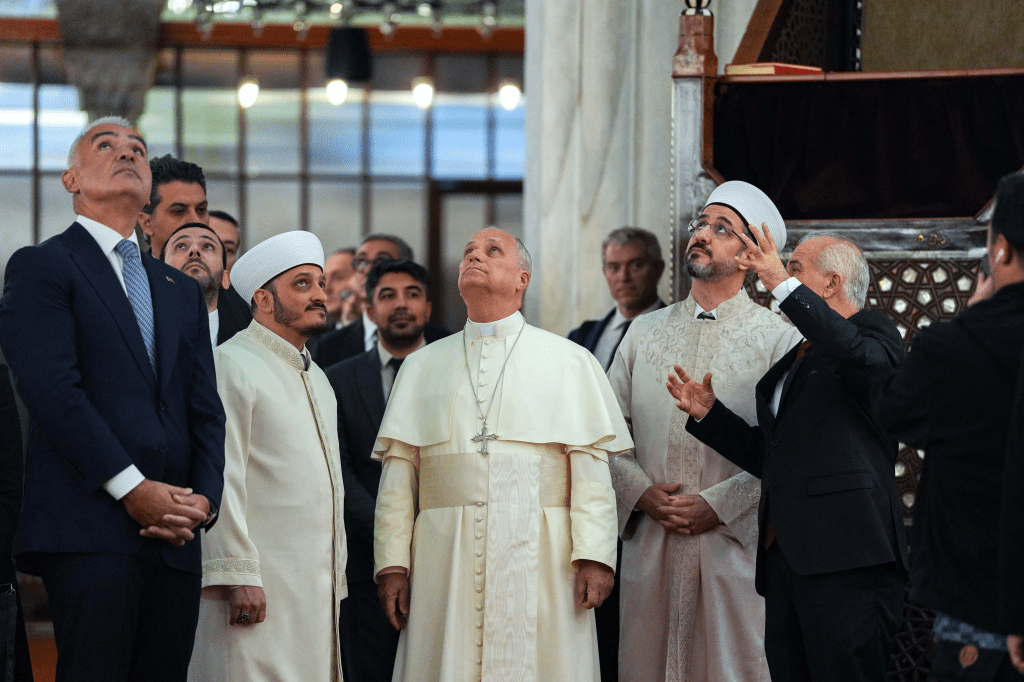
Recently, Pope Leo I 14th walked into the Grand Mosque in Alers, Algeria, took off his shoes, stood next to a Muslim leader, and spent a few moments in silence facing Mecca. That image went around the world. But while this was happening, something else was going on in that same country. Christians there don’t have the same freedoms the Pope was shown that day. Churches have been shut down. People who convert to Christianity face serious pressure. Catholic charities have been forced to close. And nearly every Protestant church in the country has been shut through legal processes. Thousands of believers now have no legal place to meet. Some religious leaders face the threat of prison. Many of those Christians were hoping the Pope’s visit would bring attention to their situation. It didn’t. What the world got instead was a photograph. And that photograph raises a real question. How far should interfaith dialogue actually go? It can’t go far when one faith is controlled by Satan. Muslims can lie to Christians and are called to kill Christians who will not convert and worship Allah. Any attempt at dialogue is ludicrous.
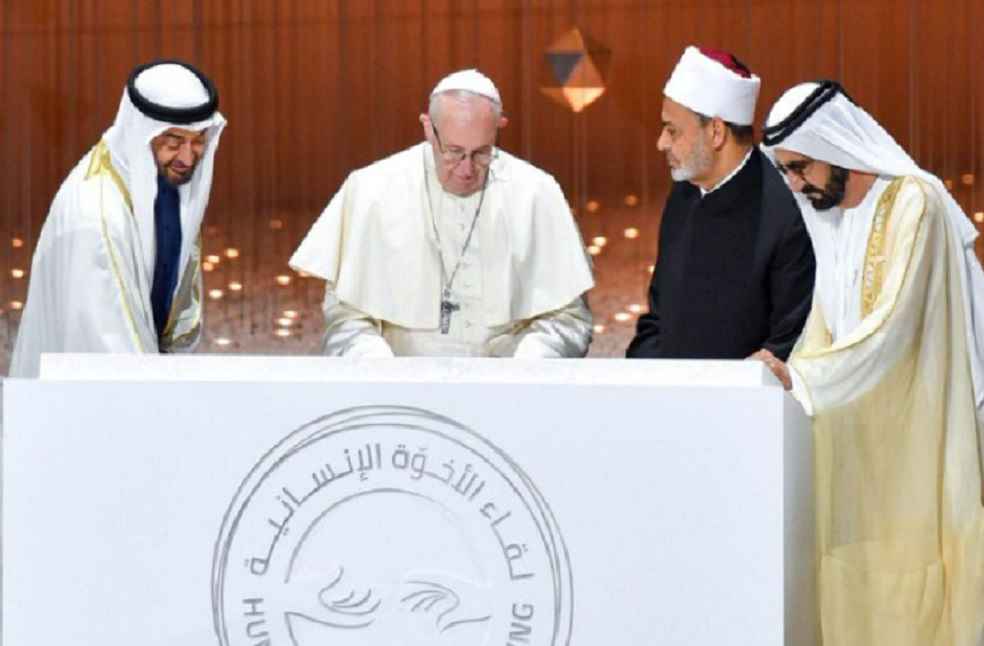
This isn’t the first time something like this has happened. In 2019, Pope Francis signed what was called the document on human fraternity with the senior Islamic leader in Abu Dhabi. He called on different faiths to come together, reject violence, and work toward a shared future. Before that, in 2014, he stood inside the Blue Mosque in Istanbul in a similar moment of silent reflection. Taken individually, each of these moments could be explained as diplomacy or respect. But taken together, they point to a direction, a steady movement toward interfaith unity where differences are softened and shared ground is prioritized. But the question is, at what point does that cross a line? Because the Bible actually has a lot to say about the last days. And one of the things it describes is a global spiritual system, not just a political one. Revelation talks about a figure called the false prophet, someone who isn’t a politician, but a spiritual leader who guides people toward worshiping a single global authority. That kind of worldwide spiritual alignment doesn’t happen overnight. It requires years of groundwork, a gradual shift in how people think about religious truth, moving from what is true and what is false to we’re all really saying the same thing. And that shift appears to already be underway. This isn’t about being hostile to other faiths or refusing to treat people with respect. It’s about recognizing that biblical truth doesn’t bend to accommodate consensus. Jesus himself said the path to life is narrow. That’s not a popular message, but it’s a consistent one. The Apostle Paul wrote that a time would come when people would stop wanting honest teaching. They’d look for voices that make them feel comfortable rather than ones that challenge them. That isn’t a future problem. That’s happening now. So for anyone who takes the Bible seriously, the challenge is this. Do you know what you believe well enough to notice when it’s being quietly replaced? The early followers of Jesus lived in a culture full of competing religions and philosophies. Rome didn’t just tolerate spiritual diversity. It celebrated it. But the apostles didn’t adjust their message to fit in. They said what they believed clearly even when it cost them. And that same clarity is being asked of believers today. Not aggression, not hostility, but the willingness to hold on to what’s true even when the world is moving in a different direction. Because if things continue the way they’re going, there will come a point where staying faithful to what the Bible actually teaches will feel increasingly uncomfortable. The pressure won’t always be obvious. It’ll just feel like everyone else has moved on and you’re the one being difficult. That’s why it matters to think about this now rather than later. The goal isn’t to live in fear. The Bible doesn’t tell believers to panic, but it does repeatedly call them to pay attention, to think clearly, and to stay rooted in what’s actually true rather than what simply feels unifying. If the world keeps moving toward a single spiritual framework, and the pressure to conform increases, the people who will be able to stand firm are the ones who decided beforehand what they believe and why. So the honest question isn’t just what’s happening in the world. It’s am I paying enough attention to be ready for where this is heading. Bible prophecy talks about the coming of a one world religion. Some think this will never happen. Others believe the groundwork is already being laid for this to happen. Well, I would like to offer you a biblical perspective on headlines like this.
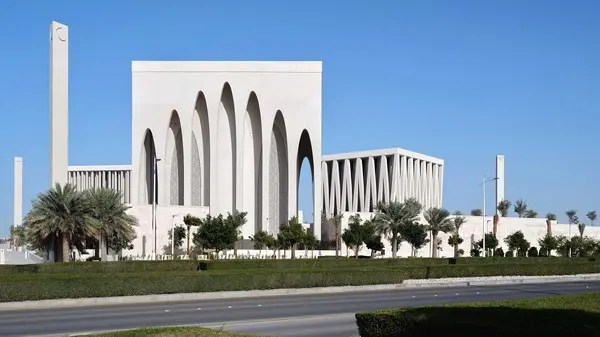
The United Arab Emirates inaugurated the Abrahamic family house, an interfaith complex housing a mosque, a church, and the Gulf Arab state’s first ever purpose-built synagogue.
When you read about this, the buzzwords in the media concerning this are peaceful coexistence, unity, a convergence point for different cultures, people, and faith. Now before we talk about this coming one world religion, let me say this. Peace on earth is good. We all welcome it. But do you know that the antichrist according to Daniel 9 27 will fly the banner of peace for a short time only to then break it? The Bible says, “The ruler will make a treaty with the people for a period of one set of seven, but after half this time, he will put an end to the sacrifices and offerings. And as a climax to all his terrible deeds, he will set up a sacrilegious object that causes desecration until the fate decreed for this defiler is finally poured out on him.” So with this in mind, Christians need to have the spirit of discernment because not everything or everyone who presents themselves as peaceful is actually peace.

