There are at least 500 legends of a worldwide deluge. Many of these show remarkable similarities, with many aspects similar to the details about Noah’s Flood in the Bible
Perhaps all the peoples of these remote civilisations, including Australian Aborigines, had different flood experiences that, by chance, had all these features in common, on which they based their stories. However, the more reasonable alternative is that these legends all find their root in the same one global Flood experience that Genesis records.
Now Noah’s Ark on a Roman coin!
Imperial Rome produced a series of now-rare bronze coins depicting Noah’s Ark—the first known coins depicting a biblical scene. These coins, averaging about 3 cm in diameter, were produced during the reigns of five Roman Emperors: Septimius Severus, Macrinus, Gordian III, Philip, and Trebonianus Gallus, covering a period of 61 years (AD 192–253).
Real history
Noah’s Flood was an important historical event, not only for the Jews and Christians who lived in the city, but for the Romans as well, whether they understood this or not. It shows their common heritage and history, for they are all descended from Noah and his family, just as is everyone else today.
The history depicted on the coin speaks of a fallen humanity descended from Adam, God judging the world for its sin by flooding it, and God remembering Noah and keeping him safe throughout the Flood, for which He received His due praise. The New Testament indicates that the Ark is a ‘type’ of Jesus (1 Peter 3:20–21); coming to Him in faith and repentance ensures salvation from God’s judgement on sin. So the story on the coin can be used by Christians to point people to Jesus, the Saviour of the world.
What’s on the coin?
One side of the coin carries the image and name of the Emperor, which obviously changes depending on the time of minting, but the core features remain essentially the same. On the reverse side it depicts Noah and his wife inside the box-shaped Ark with waves lapping at the bottom of it. Noah’s name in Greek, ΝΩΕ (Nōe), can be clearly read in the middle of the Ark. On top of the Ark on the right is the raven, and on the top left is the dove with an olive branch in its mouth. On the left side of the coin Noah and his wife are again shown, standing outside the Ark on solid ground with their hands raised upwards to God in praise. This important feature shows that they recognised that God remembered them (Genesis 8:1), bringing them safely through the global Flood.
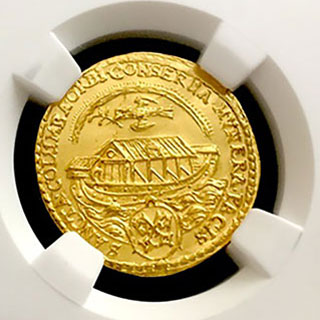
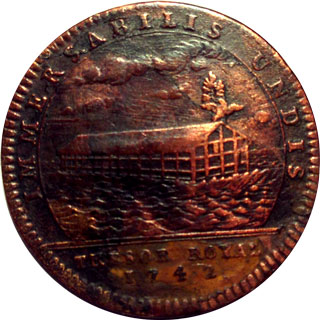
The Ark has appeared on many later coins. Here are some examples. Constant reminders of a real event when God judged mankind.
God’s history book, The Bible, gives us an account of a future event when God will pour out His wrath upon the earth and sadly, the majority of people will be unprepared for that event as they were in the days of Noah.
1649 golden ducat, commemorating the end of the Thirty Years’ War, by the city of Regensburg (Germany)
1742 French Royal Token
Silver bullion 500-dram Armenian coin
1998 Israel commemorative two-shekel coin
information on Noah’s Ark on a Coin taken from article with same name by Phil Robinson http://www.creation.com
“He shall be a wild ass of a man; His hand against everyone, And everyone’s hand against him; He shall dwell alongside of all his kinsmen.” Genesis 16:12
The descendants of Ishmael are acting exactly as predicted in Biblical prophesy. Erdogan is intent on reestablishing the Ottoman Empire when Turkey ruled all of the surrounding Muslim countries. Moreover, of all the Muslim countries it is the most powerful, with an army of 350,000 active personnel and 360,500 reserve personnel and its Air Power similar in numbers to Israel.
The Turkish president called for an emergency session of of the Organisation of Islamic Cooperation (OIC) in Istanbul to be held on Friday to discuss the situation in Gaza. A massive anti-Israel rally is also scheduled to be held concurrently in Taksim Square in Istanbul.
On Monday, a six week Hamas-led protest-turned-riot culminated with 35,000 Palestinians challenging the security fence and approximately 60 Palestinians killed. Erdogan was quoted in the press as saying that Israel is a “a terror state” that has committed “a genocide.”
“Israel is wreaking state terror,” Erdogan said in a speech to Turkish students in London broadcast by state television. “Israel is a terror state. What Israel has done is a genocide. I condemn this humanitarian drama, the genocide, from whichever side it comes, Israel or America.”
The Middle East Media Research Institute, released a compilation of videos following Monday’s confrontations that give a much different perspective.
The videos show members of the tire-burning and wire-cutting units saying their highest aspiration is to die for the sake of Allah, to cut the Zionist enemy’s main barbed-wire fence and take it down with “the fingernails of their children.'”
One tribal leader declared that the Palestinian people will liberate its land with blood, women and children.
Israeli UN Ambassador Danny Danon called this a Palestinian cycle of death. “First, they incite people to violence. Then, they place as many civilians as possible – including women and children – in the line of fire to maximise civilian casualties. Then they blame Israel, and then they come here to complain to the UN,” Danon said.
Also, undaunted, Israeli Prime Minister Benjamin Netanyahu responded to Erdogan , issuing a statement that “Erdogan is among Hamas’s biggest supporters and there is no doubt that he well understands terrorism and slaughter. I suggest that he not preach morality to us.”
There is only one possible end to the Satanic inspired hatred of the Jews and it is prophesied in God’s Word.
This video reveals what happens when you stand up for the authority of Scripture particularly when it challenges the church about going out to preach the Gospel – disciples making new disciples.
Jesus clearly says that new wine in old wine skins doesn’t work (Mark 2:22). It will burst the wine skins and the wine is spilled. What we are seeing now is that churches are splitting. It is the work of the Holy Spirit and we will see much more of it in the future. The more the kingdom of God grows, the more families and churches will be divided.
We hope this video will bless you, encourage you and help you to not compromise for the sake of a false peace, but stand firm on the truth and on the word of God. You can see that Joel and Torben love the church, but there is a church system and a compromise that is not from God. Joël – a senior pastor – tells about how he got fired from his church after trying to reform it. Torben Søndergaard is also telling about how Christian leaders in Denmark are warning against and spreading lies about him and The Last Reformation. There are really a lot of lies and manipulation going on in churches. Let’s work together in the name of Jesus.
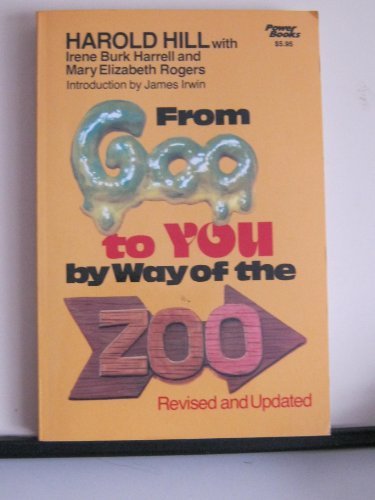
The original creation, which was declared by God to be “very good” (Genesis 1:31), did not contain such aberrations as death and suffering. Evolution claims, without any mechanism that could accomplish it, goo turned into you as a result of natural selection, survival of the fittest and therefore death, suffering and disease. Mutations don’t help, as they involve loss of DNA information not an increase, which is what would be needed to go from goo to you by way of the zoo.
The Bible provides the true reason for death, suffering and disease, the historical event of “The Fall” caused sin and death to enter and corrupt the created order (Romans 8:20–22). This can only be true within a ‘young-Earth’ framework.
Sadly, many Christian apologists who accept the evolutionary long-age paradigm of earth history are unaware of the massive inconsistency. Old-Earth belief directly undercuts the biblical defence against objections posed by death and suffering. The secular paradigm is built upon ‘dating’ methods and assumptions which place death, suffering, disease, cancer and carnivorous activity long before the Fall of man. Thus, pointing to the Fall as the terminus a quo2 for death and suffering is logically inconsistent, and many thoughtful sceptics have picked up on this.
Here is a typical sceptic question: “ … knowing the world as we see today, if extrapolating back millions of years, we have millions of years of death (as the engine of evolution), suffering, cancers, parasites and diseases. How is all that equated for if “The Fall” is responsible for it?”
The point made is that you cannot use “The Fall” as a response to why we have death and suffering if you also accept the evolutionary time scale, because they contradict each other! If you want to accept the old-earth view then you must acknowledge the history that goes with it, i.e. millions of years of death, disease and bloodshed before the Fall. But once you accept that, you have no option but to say that God did in fact create these things and even pronounced them “very good” (Genesis 1:31).
Long age Christian apologists will invariably say, “the effects of “The Fall” are a spiritual issue rather than a physical one”. And yet, the description of the effects of the Fall clearly includes physical elements: the serpent is cursed above all livestock, women will experience unpleasant pain in childbirth, the ground is cursed and will bring forth thorns and thistles, and growing food will be a laborious task (Genesis 3:14–19). Also, and most importantly, man was to die a physical death; ‘dust to dust’ (v.19). These unquestionably are physical changes.
The age of the earth is not a secondary, peripheral issue, related only to the creation-evolution debate. It is absolutely pivotal in determining how we answer fundamental questions relating to death and suffering. If we are inconsistent, astute sceptics will pick up on it. It also demonstrates the irrational fear that so many Christian apologists have over the age issue, causing them to repeatedly make these types of contradictory statements. This fear seems to be driven by the incorrect assumption that deep time has been irrefutably demonstrated. However, such an assumption is unwarranted given the abundant evidence available today that the deep time paradigm is flawed.
The solution really is quite simple: rather than trying to invent different explanatory models or interpretations of Genesis that can accommodate millions of years, we need to realise that the Bible can and should be taken at face value. Its explanation for the origin of suffering and death needs no alteration and the problem only appears when secular evolutionary assumptions are imported into our theology (see Plumbing and paradigms). It is those compromising assumptions that need to be thrown out! Only then can we present the biblical explanation of death and suffering without contradictions.
Excerpts from another great Creation Ministries article by Thomas Fretwell, “Christian apologists trip over the age of the earth … again“
I do hope this account of the first five books of the Bible by RABBI ERIC TOKAJER will bring them alive for you as it did me.
The Bible is a history of the world from beginning to end, and that history is told over and over, one page at a time. Every word written adds more colour to the picture, and every phrase written provides more depth and contrast to help us see the fullness of the story as it is retold. To lay the foundation for what I am saying, let’s simply look at the first words of each of the five books of the Torah.
The book of Genesis begins with the words, “In the beginning God created the heavens and the earth” (Gen. 1:1, TLV). So, Genesis begins by introducing us to GOD.
The book of Exodus begins with the words, “Now these are the names of the sons of Israel who came into Egypt with Jacob, every man with his family” (Ex. 1:1). ” Exodus begins with the word “and,” connecting us to the book of Genesis, which introduced us to GOD. Exodus introduces us to the children of Israel, who are in bondage because they went to Egypt.
The book of Leviticus begins again with the word “and.” “And the LORD called Moses and spoke to him from the tent of meeting, saying ..” (Lev. 1:1, MEV). The “and” connects Leviticus to Exodus and Genesis as the picture continues to be painted.In Leviticus, GOD calls Moses from inside of the Tent of Meeting while Moses is outside of the Tent of Meeting. We are introduced to a GOD who is inviting His people into His home.
At this point, we have been introduced to GOD. We have been introduced to His people in bondage in Egypt. We have been introduced to GOD calling to man.
The book of Numbers also begins with “and.” “And the LORD spoke to Moses in the wilderness of Sinai in the Tent of Meeting on the first day of the second month in the second year after they went out from the land of Egypt, saying” (Num. 1:1). The “and” in Numbers connects the book of Numbers to the book of Leviticus. In Leviticus, we are introduced to Moses as one who has entered GOD’s home.
So, in Genesis, we are introduced to GOD. In Exodus, we are introduce to GOD’s people in trouble/bondage. In Leviticus, we are introduced to a GOD who invites His people into His home. In Numbers, we are introduced to a GOD who has welcomed His people into His home.
The Book of Deuteronomy begins with the words, “These are the words which Moses spoke to all Israel on this side of the Jordan in the wilderness, in the plain opposite Suph, between Paran and Tophel and laban and Hazeroth and Dizahab” (Deut. 1:1). Deuteronomy, like Genesis, does not begin with the word “and” because it is the conclusion of the story being told in the Torah. What story, you may ask? The same story told with every word and every stroke of paint: the Gospel.
Genesis tells us about GOD. Exodus tells us we are in bondage. Leviticus tells us GOD wants us to dwell with Him. Numbers tell us how we dwell with Him. Deuteronomy tells us to tell others about Genesis through Numbers so they can participate in Deuteronomy themselves. You see, the Bible/Torah isn’t a bunch of commandments and a burden too heavy to carry.
The Bible/Torah is our history, yours and mine. Each word is a stroke of colour that introduces us over and over to GOD. And when we view it from the right perspective, we are impacted by the beauty and intricacy of the Good News in every word and phrase that GOD loves us so much that He wants to spend eternity with us.
Christians in Western culture today have to deal with subjects that even 20 years ago would have been almost unthinkable to most. And the issues of gender and sexuality are among the toughest that confront Christians today—recently, the Nashville statement was released as one attempt to define the Christian view of sex and gender.
The important question is: how do we maintain a biblical worldview when simply believing that there are two biological sexes, readily identifiable in humans and determined by genetics, is now considered by many to be hate speech?
Andrew T. Walker’s book God and the Transgender Debate seeks to help Christians walk through some of the complicated issues surrounding the discussion of transgender individuals.
One of the most helpful aspects of Walker’s book is that before he addresses the facts, he addresses the attitude with which we as Christians should come to the debate. He points to the compassion that Jesus showed to hurting people, even when he was correcting their unbiblical practices and ideas:
Jesus loved people. That’s important for me to remember as I write a book with the word “debate” in its title. And it’s good for you to remember as you read a book with the word “transgender” in its title. Because at its heart, this debate isn’t about a debate. It’s about people: precious people made in the image of God who are hurting, who are confused, who are angry, who are scared, who may have been told by their family that they are unwelcome. It’s about some people who are delighted with how culture has shifted when it comes to gender identity, and other people who are concerned about how culture has shifted (p. 14).
However, the grace Walker calls for in responding to transgender individuals does not exclude the truth taught in Scripture regarding what it means to be a man or a woman.
How we got here
To properly respond to the transgender issue, we have to understand how culture got to the place where we can be confused about such foundational truths regarding human identity. He points to various elements including the loss of Christianity’s influence in key areas of the culture and the rise of radical individualism.
The Christian’s foundation
In a context where fundamental definitions of human identity seem up for grabs, it’s necessary to return to the foundations of where the Christian worldview comes from. Walker identifies God, the Creator, as the authority. Furthermore, the Gospel shows that God is good and wants what is best for us. “A crucified Creator is a God who has the authority to tell us what to do, who has the wisdom to know what is best for us, and who has proved that he can be trusted to tell us what is best for us” (p. 44).
Furthermore, God has designed mankind as male and female. “Maleness isn’t only anatomy, but anatomy shows that there is maleness. And femaleness isn’t only anatomy, but anatomy shows that there is femaleness. Men and women are more than just their anatomy, but they are not less” (p. 54). And because this is such a foundational designed aspect of humanity, rebelling against this part of our identity “can never result in happiness, flourishing, and joy, whatever it promises” (p. 55).
However, this does not mean that the church should fall into the trap of enforcing stereotypical expressions of maleness and femaleness. Walker cites examples such as a boy preferring to play with dolls or a girl who prefers to watch football as examples where someone may mistakenly try to enforce stereotypes of what is considered acceptable for boys or girls, even though there is nothing inherently sinful about a boy playing with a doll or a girl watching football (p. 55).
Part of the reality of living in a sinful world is that we are all marred by sin, but the Gospel offers hope for restoration, and Walker beautifully expresses this truth.
Engaging the culture like Christ did
Walker helpfully gives specific advice about how to engage the issue without neglecting either truth or love, including how the church might respond to the conversion of transgender people and advice for talking with children about transgenderism, including children who feel like they might be transgender. One chapter is devoted to answer 12 ‘tough questions’ people have about practical issues related to the transgender debate.
As Christians, we are called to be prepared to engage the culture with biblical truth and the love of Christ. If we hope to share the Gospel with people who are confused regarding gender, we need to be educated about the biblical issues involved. And Walker’s book gives a good introduction to how Christians can think about this issue and engage the culture.




 LIVING ETERNAL NOW