PERSECUTION COMES WITH THE TERRITORY

Speaking your beliefs as a Christian now can result in a mixed bag of anger, frustration, hostility, and many people who decide they can “no longer associate” with someone like you.

Some of the beliefs that will trigger these sentiments are as follows:

1. Life begins at conception. Abortion is murder.

2. There are only two genders, and we don’t get to pick between the two.

3. Marriage is designed to be between one man and one woman and sex is confined to husband and wife. Homosexuality is an abomination to God.

4. Children deserve two parents — a mum and a dadwho are there for them.

5. There’s only one true God. There’s only one way to God, and it’s through Jesus Christ.

6. Jesus made it possible for our Heavenly Father to send the Holy Spirit to be our counsellor, teacher, helper, and comforter.

7. With the Holy Spirit and the word of God, we have all we need to live a Christian life. The word of God, being inerrant and infallible, is the source of all that is good, true, and beautiful.

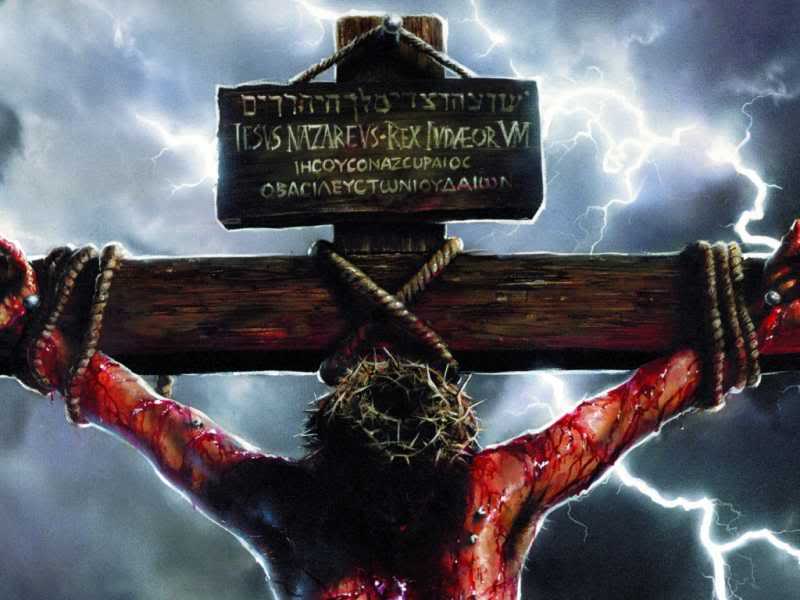
Redemption, for the Christian, is the freedom we have in Christ. But it was not free, for it cost Christ His life.

Isaiah revealed to the Pharisees and the Sadducees, the religious leaders of the day 700 years before Jesus Christ, their Messiah was born that he would die so that their sins could be forgiven and this is not the end of the story read what else God revealed to Isaiah.

But he was pierced for our transgressions; he was crushed for our iniquities; upon him was the chastisement that brought us peace, and with his wounds we are healed... he was cut off out of the land of the living, stricken for the transgression of my people… Yet it was the will of the Lord to crush him;
he has put him to grief… For a brief moment I deserted you, but with great compassion I will gather you. In overflowing anger for a moment I hid my face from you, but with everlasting love I will have ompassion on you,” says the Lord, your Redeemer.”
Isaiah 53:5-6, 8, 54:7-8

My concern is that just as the religious leaders of Jesus Day did not heed the prophecies of Jesus’ first coming, the religious leaders of our day are not heeding the many prophecies of Jesus’ second coming.

The Fall: Adam and Eve were banished from the Garden of Eden for disobeying God and eating from the tree of Good and Evil.

The Bible is full of these beautiful depictions of the reality of our redemption. We are free because Christ restored what was lost in “The Fall” through His death, burial, and resurrection! And so, with all this in mind, we understand what redemption is and can now rightly live out our faith.

Christians must understand how crucial it is to speak the truth in love. We’re called to extend a loving hand to our enemies. We must bring back healthy dialogue with our neighbours, and Christians should lead the charge! We were never meant to be silent or sit back in the face of adversity. Under a hostile government, we can understand the need to stand firm. 
IT’S THE PROUD WHO BELIEVE THEY HAVE NO NEED OF GOD

There seem to be many paradoxes in Scripture. Not in the sense that the Bible contradicts itself, but that the Bible proclaims truth that makes no sense to those who are not in Christ. Even for believers, we’re struck by the unfathomable workings of a God who makes all things work together for good to those who love Him.

For instance, Scripture proclaims that, for the Christian, to lose is to gain. We read that to be humble is to be exalted. Perhaps most amazingly, the Bible proclaims that Christ’s victory over the grave means that to die is to live and to live abundantly. But what I’m sure confuses many, in or out of the church, is this concept Paul writes about in 2 Corinthians 12:9-10, where he makes the case for how our weakness is our strength. It’s interesting, especially given the fact that weakness is often considered a grave flaw, and something meant to be hidden.

But he said to me, “My grace is sufficient for you, for my power is made perfect in weakness. Therefore I will boast all the more gladly of my weaknesses, so that the power of Christ may rest upon me. For the sake of Christ, then, I am content with weaknesses, insults, hardships, persecutions, and calamities. For when I am weak, then I am strong.” 2 Corinthians 12:9-10

How are we expected to boast about our weaknesses? We are far weaker than we ever care to admit. It is in ignoring our weaknesses that our lives become harder. In fact, Christianity only makes sense when you’ve reached the end of yourself.” Think about it — it is the proud who most believe they have no need for God. The plague of thinking, “I can do it,” has hurt countless relationships. But Christianity declares this profound truth that what often makes Christianity most understandable is rooted in the fact that we need help. We need saving. Why? Because we are weak and helpless.

James 1:9 tells us, “Let every person be quick to hear, slow to speak, slow to anger,” we shrink back in shame as we reflect on the fact that, more often than not, we’re actually slow to hear, quick to speak, and quick to resort to anger.

And if you take a step even further back, it becomes clear just how quickly we fail in many other areas of life — especially when compared to how Scripture calls us to live. We often covet, lie, steal, and cheat. We may not be as heinous as a murderer, yet murder occurs frequently in our hearts.

Thankfully the Bible provides stories such as David and Bathsheba: Scripture tells us that David is a man after God’s own heart, and yet David not only sleeps with Bathsheba and gets her pregnant but he tries to cover it up and when that is unsuccessful he conspires to kill Uriah, Bathsheba’s husband.

 In the morning David wrote a letter to Joab and sent it with Uriah. 15 In it he wrote, “Put Uriah out in front where the fighting is fiercest. Then withdraw from him so he will be struck down and die.” 2 Samuel 11:14-15

Though David made a horrible decision, he took responsibility and had remorse for his actions. He earnestly sought God’s forgiveness. David penned Psalm 51, “A Contrite Sinners Prayer for Pardon,” after his sin of adultery with Bathsheba and the murder of Uriah. In this Psalm, David brokenheartedly confesses his sin and asks for God’s forgiveness and restoration. David never stopped worshipping God.

Jealousy is such a blinding emotion that consumes us easily, and our hearts are hardened toward those we feel have wronged us. Scripture says to “bear with one another in love,” forgive “seventy times seven,” and “value others above” ourselves, but how often do those commands actually take priority in our lives?

Suddenly, when the world is crashing down around us, and we can’t seem to get anything right, we realize: “Wow, I truly am weak.” And it’s not just the rude awakening of becoming aware of said weaknesses that hurt, but the harsh reality of the fact that the world is quick to use them against us. Far too commonly, weakness is abused in the machinations of manipulation and mockery. And if the world was all we had to turn to, we’d likely find ourselves wondering: what’s the point of it all?

But thanks be to God because He does not define us by these weaknesses. Indeed, Psalm 103 declares, “The Lord works righteousness and justice for all who are oppressed. … The Lord is merciful and gracious, slow to anger and abounding in steadfast love. … He does not deal with us according to our sins, nor repay us according to our iniquities.” Don’t you see? We may struggle, fail, or feel dismayed, but our God does not treat us as weak, failing sinners. He treats us as forgiven and free children of His promise!

Perhaps among several seemingly paradoxical yet joyous truths in Scripture is this understanding of our weakness being our strength, for it is in embracing our weaknesses that we can see Christ’s strength. And this strength resides within us, for Galatians 2:20a states, “I have been crucified with Christ. It is no longer I who live, but Christ who lives in me.” By the power of the Holy Spirit, we are new creations, and yet we still fail Him daily grieving the Holy Spirit. And yet, He never fails us. We neglect time with Him and time in His word, yet He never leaves us nor forsakes us. We made it necessary for God to send His Son to die on the cross, yet He has loved us with an everlasting love that leads us into eternity with Him. We take blessings for granted, yet He never stops blessing us. How astounding and unfathomable, this God we serve. May we never tire of singing His due praises, just as He never tires of holding us in His embrace of sovereign grace.

Adapted from an article in The Washington Stand 19/07/2024: Embracing Weakness Allows Us to Understand Our Strength Is Found in Christ by Sarah Halliday

TIM SCOTT CALLED IT RIGHT AT THIRD REPUBLICAN DEBATE

Tim Scott: ‘America does not work without a faith-filled Judeo-Christian foundation’

Scott insisted that “the loss of faith in this nation” has led to the “deep challenges” currently engulfing the U.S.

The South Carolina senator spoke of the importance of “restoring faith, restoring our Christian values that will help this nation once again become the city on the hill.”

He noted how former President Ronald Reagan’s description of the U.S. as a “city on the hill” originated from Matthew 5.

He also cited former President Abraham Lincoln’s warning that “a house divided against itself cannot stand” as a reference to the Gospel of Mark. 

“Our founding documents speak to the importance of the faith foundation,” he added. “You don’t have to be a Christian for America to work for you, but America does not work without a faith-filled Judeo-Christian foundation.”

Scott made his pitch to voters as a leader who can help “restore faith in God, faith in each other and faith in our future.” He contends that “without that focus, none of the issues, the policies matter.” 

“We have to get back to being a nation that is, in fact, the city on the hill that believes in each other enough for us to fight for that future,” he concluded. 

OUR HEAVENLY FATHER’S PROVISION OF THE HOLY SPIRIT

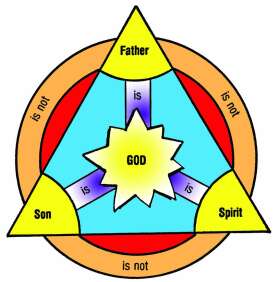
Jesus said the most important thing that He accomplished on The Cross was to enable our Heavenly Father to send the third person of the Trinity, the Holy Spirit, to indwell our spirit to be our counsellor, teacher, and comforter. When we are baptized, we die to ourselves. and are born again by the Holy Spirit. Without the Holy Spirit, it is impossible to live a Christian life.

It’s the Holy Spirit who does a work of renewal inside us. He breaks the power of canceled sin and sets the sinner free. He delivers us from the slavery of our habits and perfects us. David says it well:

The LORD will fulfill his purpose for me; your steadfast love, O LORD, endures forever. Do not forsake the work of your hands.” Psalms 138:8

The Holy Spirit changes our lives for the better, He produces these fine attributes in our lives:

But the fruit of the Spirit is love, joy, peace, patience, kindness, goodness, faithfulness, gentleness, self-control; against such things, there is no law. And those who belong to Christ Jesus have crucified the flesh with its passions and desires. If we live by the Spirit, let us also keep in step with the Spirit.Galatians 5:22-25

He provides the gifts for service and ministry

Now there are varieties of gifts, but the same Spirit; and there are varieties of service, but the same Lord; and there are varieties of activities, but it is the same God who empowers them all in everyone.” 1 Corinthians 12:4-6

For to one is given through the Spirit the utterance of wisdom, and to another the utterance of knowledge according to the same Spirit, to another faith by the same Spirit, to another gifts of healing by the one Spirit, to another the working of miracles, to another prophecy, to another the ability to distinguish between spirits, to another various kinds of tongues, to another the interpretation of tongues. All these are empowered by one and the same Spirit, who apportions to each one individually as he wills.” 1 Corinthians 12:8-11

Have you repented of your sins, and of your rejection of God and His values? Have you rejected Jesus’ amazing offer of forgiveness of sins? If you have you do not know the wonderful presence of the Holy Spirit in your life to enable you to live life as your Creator God intended from the beginning.

Sadly, many people including me have grieved the Holy Spirit and quenched His work in their lives. It is so easy to ignore the Holy Spirit. Every day, we need to say as Jesus did when He was on earth, not my will but your will be done in my life today.

“Father, if you are willing, remove this cup from me. Nevertheless, not my will, but yours, be done.” And there appeared to him an angel from heaven, strengthening him.Luke 22:42

MOST ADULTS SAY BELIEF IN GOD IS NOT NECESSARY TO HAVE MORAL VALUES

Adults in more than a dozen countries say it’s not necessary to believe in God to lead moral lives or have good values, according to a recent study. 

The majority of respondents were based in secular Western European countries of Sweden (90%), France (77%), the United Kingdom (76%), the Netherlands (76%), Spain (74%), Belgium (69%), Italy (68%), Germany (62%) and Greece (60%). Most respondents in other countries located outside Western Europe but still considered to be part of Western civilization, including Australia (85%), Canada (73%), and the United States (65%), also maintained that a belief in God is not necessary to “be moral and have good values.” Majorities of respondents in the Eastern European nations of Poland (67%) and Hungary (63%), which have governments sympathetic to traditional values and religion, said the same.

People in Israel and Singapore were more evenly divided on the question, with 50% and 54% of those surveyed, respectively, saying that a belief in God was a prerequisite for morality and having good values. Malaysia, a Muslim country, was the only country where the overwhelming majority of participants (78%) saw belief in God as necessary for leading a moral life with good values.

In the U.S., those who believe religion is not important (92%) and the religiously unaffiliated (88%) were most likely to view a belief in God as unnecessary for living a moral life and having good values. Majorities of all subgroups based on partisan identification, education level, gender, and age group indicated that a belief in God was not necessary to live a moral life. Even among those who described religion as “important” to them, a narrow majority (51%) suggested that a moral life is possible in the absence of a belief in God.

If God does not exist then how do we know what is good or bad or right or wrong? To say that something is objective is to say that it is independent of what people say or think, e.g. the Holocaust was objectively wrong even though the Nazis thought it right. To say that there are objective moral values is to say that something is good or evil independently of whether or not any human believes it to be so.

The atheist Richard Dawkins says, “There is at bottom no design, no purpose, no evil, no good, nothing but pointless indifference… we are machines for propagating DNA… It is every living object’s sole reason for being.”

Without God, there is no basis for the objective moral values that do exist.

Paul wrote about “liars whose consciences are seared” (1 Tim. 4:2 ESV). What did he mean? What is a seared conscience? For that matter, what is the conscience? Our conscience is given by God; the inner voice that inflicts us with feelings of guilt when we have sinned.

They show that the work of the law is written on their hearts, while their conscience also bears witness, and their conflicting thoughts accuse or even excuse them on that day when, according to my gospel, God judges the secrets of men by Christ Jesus.Romans 2 :15-16

If you want proof that we are living in the prophesied last days before Jesus returns these Poll results are just one of the prophesied signs being revealed in our day.

But understand this, that in the last days, there will come times of difficulty. For people will be lovers of self, lovers of money, proud, arrogant, abusive, disobedient to their parents, ungrateful, unholy, heartless, unappeasable, slanderous, without self-control, brutal, not loving good, treacherous, reckless, swollen with conceit, lovers of pleasure rather than lovers of God, having the appearance of godliness, but denying its power. Avoid such people. For among them are those who creep into households and capture weak women, burdened with sins and led astray by various passions, always learning and never able to arrive at a knowledge of the truth.2 Timothy 3:1-7

For in those days, there will be such tribulation as has not been from the beginning of the creation that God created until now and never will be. And if the Lord had not cut short the days, no human being would be saved. But for the sake of the elect, whom he chose, he shortened the days.Mark 13:19-20

VALUES WORTH DEFENDING

Read what Konstantin Kisin an immigrant from Russia to England says about what he sees as the biggest threat to the country he has grown to love over the past 25 years. It is extracted from his new book “An Immigrant’s Love Letter to the West, by Konstantin Kisin”. 

I can still remember the day I arrived in the UK with a wonderful sense of promise and expectation. Twenty-five years on, that feeling of freedom has never gone away. Nor has my adopted country ever disappointed me. Despite all the ups and downs, it has always been wonderful to me. That’s why I’ve written this love letter to Western civilisation. In short, Britain – and the West in general – saved me from a terrible fate. Now, as people seek to destroy it, I want to save it in return.” [p. 26]
Konstantin Kisin was born in Russia and immigrated to England on his own as a child of eleven; sent there by his parents who knew his life would be much better there than in newly post-Soviet Russia. He has since become a prominent British comedian, social commentator, and podcaster, who has stood up to censorious mobs in his own field of comedy and lived, indeed, thrived to tell the tale. He describes himself as a political centrist and does not fit easily into either of the major British political parties. Kristin claims:

  • The biggest threat to the West is internal, especially accusations that Western institutions and heritage are intrinsically and irredeemably racist, sexist, and oppressive
  • ‘Woke’ ideology sees free speech as a threat to diversity, because ‘woke’ diversity is really uniformity of thinking about gender, sexuality, and race relations
  • To control the meaning of words is to control public debate
  • The ideological activism of the media has encouraged widespread distrust not only in the media but in other authorities, like science.
  • The prosperity and political freedom of the West has allowed people to live healthier, longer, and freer than ever in human history – the Christian and Enlightenment values upon which this is built are worth defending.

Several chapters should be required reading for all switched-on citizens, particularly the section on why people have lost trust in our institutions, which is a tour de force and worth the price of the book [96-104]. Kisin’s book is an especially ideal read for young people because it is written in a very engaging and non-technical style. For an engaging and honest introduction to what is good and bad in the modern West, and why it is worth defending against its critics, An Immigrant’s Love Letter to the West will be hard to surpass.

HALLMARK COMPROMISING WITH THE WORLD’S VALUES

Candace Cameron Bure starred in thirty Hallmark Channel movies, ten of which were Christmas films. Many of her fans were surprised when she announced last April that she was leaving Hallmark Media to develop, produce, and star in projects for the new traditional family-oriented network Great American Family.

Now she has explained her career move in an interview with the Wall Street Journal: “My heart wants to tell stories that have more meaning and purpose and depth behind them. I knew that the people behind Great American Family were Christians that love the Lord and wanted to promote faith programming and good family entertainment.”

By contrast, Hallmark will release The Holiday Sitter next month, the network’s first original film to focus on a same-sex couple. Bure has no plans to follow suit: “I think that Great American Family will keep traditional marriage at the core.”

While Bure did not touch on her departure from the Hallmark Channel, she did say, “It basically is a completely different network than when I started because of the change of leadership.”

I know that in the past Hallmark was a Christian motivated company as I met Mr. Hall and members of the Hallmark family when they purchased the Christian card company Dayspring in 1999. My company at the time, Care & Share Products was the distributor of Dayspring cards and gifts in Australia. Hallmark had a distributor in Australia so I was concerned that I would lose distribution of Dayspring in Australia. Dayspring called for a meeting with all of its international distributors in Siloam Springs, Arkansas to explain what the acquisition of Dayspring by Hallmark would entail particularly with regard to its international operations. It was encouraging for all the international distributors to hear from Mr. Hall that nothing would change with Dayspring. It would be managed as an independent entity. Hallmark was at the time wholly owned by the Hall family and the Hallmark employees. If an employee left the company they had to sell their share back to the company. I am not sure if that is still the case. This radical change with Hallmark jettisoning Christian values leads me to believe that the Hall family is no longer in control.

Predictably, Bure is being criticized by some in the industry. Actress Hilarie Burton Morgan slammed her as “disgusting” and a “bigot,” adding, “I don’t remember Jesus liking hypocrites like Candy. But sure. Make your money, honey. You ride that prejudice wave all the way to the bank.” Dancer and actress JoJo Siwa called Bure’s stance “rude and hurtful to a whole community of people.” Siwa shared her thoughts on Instagram. “Honestly, I can’t believe after everything that went down just a few months ago, that she would not only create a movie with intention of excluding LGBTQIA+, but then also talk about it in the press,” she wrote.

PROGRESS ACCORDING TO WHO?

The Air We Breathe: How we all came to believe in freedom, kindness, progress, and equality Glen Scrivener Good Book Company, 2022

I gave a brief review of this book by the Australian pastor Glen Scrivener (now living in the UK) in a recent post. However, I would like to share more and encourage you further to purchase his book. It will equip you to engage in good conversations with the lost and with the Holy Spirit’s guidance help you to bring them to a knowledge of the truth. As a reminder Scrivener’s main thesis for his book:

Today in the west, many consider the church to be dead or dying. Christianity is seen as outdated, bigoted, and responsible for many of society’s problems. This leaves many believers embarrassed about their faith and many outsiders wary of religion. But what if the Christian message is not the enemy of our modern Western values, but the very thing that makes sense of them?

SCRIVENER ON PROGRESS

Progress does have a dark side. Darwin proclaimed biological progress (evolution by random chance versus creation by an intelligent designer), Hegel, historical progress (Hegel’s providence is not the providence of the Judeo-Christian God. Rather, Hegel argues that universal history is itself the divine Spirit or Geist manifesting or working), Freud, psychological progress, and Marx, economic and political progress. The ugly fruit of such philosophies notwithstanding, Christian ideals run through them like veins in blue cheese. But without a vertical reference (God unacknowledged), the desire for progress all too easily spawns violence. The 20th century was the most blood-stained in history, the ‘murder century’. Think of Stalin’s Holodomor (Ukrainian: murder by famine) and purge of tens of millions in the 1930s, or of Chairman Mao’s ‘Great Leap Forwards’ (1958–1962), where over 45 million died of overwork, starvation, or murder—not to mention the horrors of death camps like Auschwitz. Post-WWII, a moral standard was needed to establish the ‘self-evident’ moral truths so bespattered by the Nazis. As with slavery, those atrocities were deemed “crimes against humanity” but few admitted they were crimes against God. If they were mere “crimes against humanity”, we have a dilemma, for humanity was on both sides (evil oppressors and their victims). Scrivener states pithily, “If
we’re all squabbling apes, then there’s no transcendent justice in condemning Nazism” (p. 181). So what price progress?

Secularism today, having fled past evils, now pursues values like rights, freedom, and progress, but divorces them from their source. This concurs with Tom Holland’s thesis in Dominion—without Christianity’s humanity-enhancing teaching about the image of God, the ruthless suppression of weaker minorities fits evolutionary logic: “To believe that God had become man and suffered the death of a slave was to believe that there might be strength in weakness, and victory in defeat. Darwin’s theory, more radically than anything that previously had emerged from Christian civilization, challenged that assumption. Weakness was nothing to be valued. Jesus, by commending the meek and the poor over those better suited to the great struggle for existence, had set Homo sapiens on the downward path toward degeneration. For eighteen long centuries, the Christian conviction that all human life was sacred had been underpinned by one doctrine more than any other: that man and woman were created in God’s image.”

Transgender advocates want equality, compassion, and consent, but they divorce these from Christianity and recombine them
differently. Equality becomes a radical individualism as people emphasize rights over institutions and community. Compassion risks becoming what sociologists have termed ‘competitive victimhood’, and perceived victim status is used to gain an advantage. This leads to clashes between different minority groups—e.g. feminists versus trans-rights activists—so whose suffering takes precedence? Divorcing sexual consent from Christian values is a wrecking ball as far as marriage, family, and the wider community are concerned. As Scrivener points out, “Consent is vital, but it is not a sufficient foundation for sexual ethics” (p. 194). Progressive secularization is not a sustainable strategy! The WEIRD (Western, Educated, Industrialized, Rich, and Democratic) values upon which Scrivener’s book focuses are strongly believed by all, but people in Western society are
making a hash of applying them in everyday life. Compared to the ancient world, equality, compassion, consent, enlightenment, science, freedom, and progress were given a makeover by Christianity, and these are dear to the hearts of modern people. As
Scrivener says, “These are our creedal convictions, and, by and large, we are a society of believers” (p. 197). But even as people are straining to discard Christianity, they continue with their moralizing: “If anyone blasphemes our WEIRD values … we ‘cancel’ them—that is, we ostracise them socially and professionally. This is really a modern form of ‘ex-communication’ for modern kinds of ‘heretics’” (p.198). And anyone can find themselves a target, especially, as the author wryly observes, with the turbo-charging of outrage made possible by social media. In today’s ‘cancel culture, there is plenty of guilt, but without grace, forgiveness is nowhere in sight! Scrivener is right on the money in noting that the denial of King Jesus while trying to retain Christian ideals,
brings judgment, not liberation: “In order to pursue the kingdom without the King, we have had to dethrone the person of Christ and install abstract values instead. … [But] Values can only judge you” (p. 200). People need the Gospel of hope, so the author invites readers to consider how history will judge them— more especially how will God judge them? Wonderfully, Christ came not to police people’s morals so much as to heal them, cleanse them, and forgive needy, despondent human beings.

Scrivener skilfully defends the Gospels and their accounts of Christ, and he does so in a highly original and compelling manner,
demonstrating their sheer genius. The strong evangelistic approach is fresh, not hackneyed. Jesus, the History Maker, is the One behind the values so cherished by the West—He embodies them. In fact, Christ loved this world to death, pioneering life for all violators of those values through His Resurrection. This is not a book that fizzles out toward the end. In its closing pages,
Scrivener appeals in turn to the three categories of readers mentioned in the second paragraph of this review. It is refreshingly honest and very well executed. To Christians, he writes, “In all this, great wisdom is needed to discern the Christian-ish values of a
WEIRD culture from true Christianity” (p. 230). Absolutely, and this book deserves to be very widely read to equip us to convey the truth to those the Holy Spirit brings across our path.

CHRISTIANS CANNOT COUNSEL TRANSGENDER YOUTH

The recent U.S. Executive Order on Advancing Equality for Lesbian, Gay, Bisexual, Transgender, Queer, and Intersex Individuals calls on the administration to “safeguard LGBTQI+ youth from dangerous practices like so-called ‘conversion therapy’—efforts to suppress or change an individual’s sexual orientation, gender identity, or gender expression.” It contends that conversion therapy is a “discredited practice that research indicates can cause significant harm, including higher rates of suicide-related thoughts and behaviors by LGBTQI+ youth.” Biden also directed the Federal Trade Commission to determine “whether so-called conversion therapy constitutes an unfair or deceptive act or practice, and to issue such consumer warnings or notices as may be appropriate.”

In my recent post on SELLING THE TRANSGENDER STORY, I showed a very appealing video that attempts to sell the transgender agenda as a positive step forward whereby we are told that tens of thousands of children out there identify as transgender. We are also told that Ryland and the Whittington family is a typical ‘American family’. As well, we are told that gender and sexuality are different. All three claims are false. If you have not viewed this video can I suggest you do. It was posted five days ago.

God and his commandments have been rejected by the majority of people as they were by the people of Noah’s Day bringing God’s judgement upon them. Jesus warned us that the world would reject God and His values prior to His return. Persecution of active Christians (living out their faith) will be considered just.

Is the church preparing Christians for this escalating persecution?

This is another appealing video selling Ryland’s transgender conversion beginning at age 3.

TRUE EQUALITY

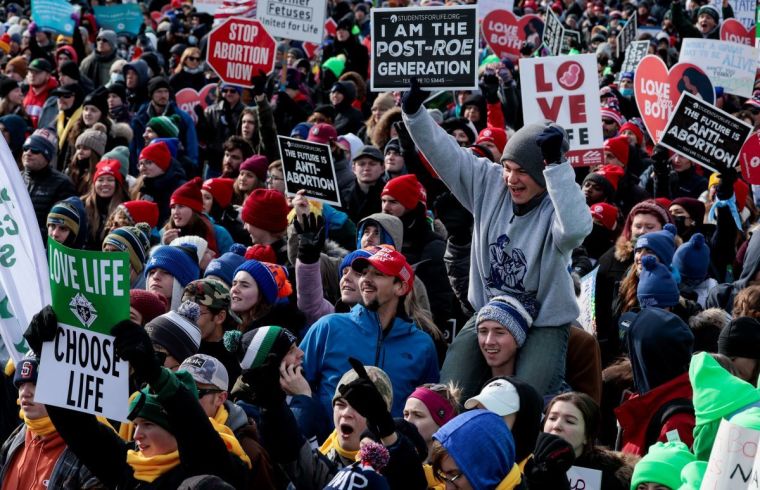
Equality Begins in the Womb’: Tens of Thousands of Pro-Lifers Defend the Unborn in Washington, D.C.

AP Photo/Pablo Martinez Monsivais
EQUALITY BEGINS IN THE WOMB
March for Life
Many young people attended for the first time which is a great sign

Tens of thousands of pro-life citizens took to the streets in Washington, D.C., on Friday to affirm a powerful message about the importance of protecting the unborn: “equality begins in the womb.”

That proclamation — the official theme of the 2022 March For Life — is one that has been echoed for decades by activists and advocates seeking to reframe the abortion debate in America.

The annual march is a peaceful demonstration aimed at visually showing that the 1973 Roe v. Wade Supreme Court case legalizing abortion across the U.S. did anything but solve or dismiss the moral quagmires surrounding abortion.

The first March For Life unfolded in 1974 in the wake of the Roe decision, but the annual event has only grown and intensified over the years. The group initially assumed the March For Life would be a one or two-time event. They based this speculation on their belief that Roe was an inappropriate legal ruling that stretched beyond what the Supreme Court was called to do. Thus, they didn’t believe it would stand for long. “They thought it would go after a year or two, and so they planned this one or two-time event,” she said. “And were shocked.”

But once it was clear the law wasn’t changing, Gray decided to make the march an annual happening — pledging to hold the event until Roe v. Wade would one day be overturned.

Will Roe v. Wade ever be overturned? Yes, it will be, maybe not before Jesus returns, but it will be when He does in the not too distant future.