The effects of the pandemic, the growing cultural disdain for “organized religion,” and the socio-politico turn to secularism have reduced church rolls. A Gallup report going all the way back to 1937 shows formal church membership has dropped from a high of 70% to 39% in 2020.
“Continued decline in future decades seems inevitable,” predicted Gallup Senior Editor Jeffrey M. Jones.
Is it over for American churches? Are we living in the era of end-times apostasy signaling an inevitable, irreversible slow fade of church life as we know it?
Movements come and go, say some historical observers, and it just may be that the church’s journey in finite time from the launch at Pentecost has sputtered out. Institutional atrophy seems inevitable.
Sadly, the institutional quest causes a church to become introverted, focusing more on its institutional survival than on incarnational mission. The focus on survival and reconstruction on the ruins of a collapsed institution means a church’s own survival becomes more important than the Lord who created it, the truth He gave it, the call to which He summoned it, and the people to whom He sent it.
The biblical view is the kairological outlook: God so often uses catastrophes for His purposes and no doubt this will be a new day for the Church of Jesus Christ. The church Jesus intended as described in the Book of Acts.
The focus must not be on trying to breathe life into dying institutions. In the biblical scheme, death leads to resurrection. Rather than seeing this period with the desperation of hopeless people watching the creep of finite time bringing death to antiquated hulks, the better focus should be that of the infusion of new life. Rather than pre-occupation with sustaining structure, the energy should be spent on building ministry, making disciples of Jesus. Instead of mourning the death that is inevitable in chronos-time, it is better to rejoice at the new kairological day that is rising before us.
adapted from an article in Christian Post: A New Day for the Church Part 1 by Wallace B Henley
Even as far back as the 1970s many church goers began to be suspicious of ordination and all that went with it. The spectacle of some leaders being given special status among the people of God seemed contrary to the essential equality of all people in creation, fall and redemption. When accompanied by the wearing of special clergy robes and designation as “Rev” and then the clambering for such giddy titles as “Right Rev.” and “Very Rev.”, the whole ordination thing seemed reminiscent of Matt 23:1-12 (Scribes and Pharisees). Women clamoured after these top jobs.
The liturgical construct separated ordained clergy from the people of God and from the eldership. Clergy were placed on a pedestal (with all its perils), the eldership was diminished (with all its perils) and the people of God were left behind in this hierarchical understanding of church (a tragedy).
The present rising pattern of non-ordained persons being entrusted with significant pastoral ministries in our churches may be a reaction against the abuse of ordination as noted above. Which makes it time to look at what God’s Word says about the appointment of pastors and leaders.
1 Timothy bear witness to an orderly process:
1 Tim 2:7 on Paul’s appointment as a preacher, apostle and teacher;
1 Tim 3:1-13 on the criteria of character and gifting applicable to church leaders;
1 Tim 4:6 on the value of training in the ‘words of the faith’ and ‘doctrine’;
1 Tim 4:13 on the key word ministries to be undertaken by leaders;
1 Tim 4:14 on the recognition of the role of the ‘council of elders’ (πρεσβυτέριον) in recognising gifts of ministry (see also 2 Tim 1:6b);
1 Tim 6:2 on expected standards for the content of teaching by church leaders.
The context of 1 Timothy is relevant to this discourse. Paul had left Timothy in Ephesus to continue his own ministry elsewhere (1 Tim 1:3). This was an apostolic delegation which many see as part of the transition from the extraordinary and time-bound office of apostle to the more enduring office of pastor or shepherd. We do know that Timothy had been well-reared in the faith by his maternal ancestors (2 Tim 1:5; 3:14). However, he was also young, subject to youthful passions (2 Tim 2:22), possibly subject to self-doubt (2 Tim 1:7) and open to dismissive treatment because of his youth (2 Tim 4:12). The recognition and affirmation of Timothy by Paul and the council of elders was important as testimony both to him and to the church as to his suitability for ministry.
Therefore, by all means let’s scrap the titles, robes and assumed status that can be implied by the traditional construct of ordination. Equally, let’s locate the work of pastor within the eldership rather than as a separate order and let’s recognise the gifting and service of the whole people of God. However, let’s not lightly dismiss the value of orderly processes to test and affirm those called to pastoral ministry.
Of course, the same applies to all roles in church service. The youth leader, small group leader or teacher of children all need processes of testing, training and affirmation before being appointed to their roles. However, the high potential of pastoral leaders to do good or harm demands that they receive particular scrutiny before their ministry is recognised.
This article is adapted from an article by David Burke “Rethinking Ordination” David was a lecturer at Christ College. He was almost refused ordination in 1979 for his views on clergy titles and robes.
“Now those who were scattered because of the persecution that arose over Stephen traveled as far as Phoenicia and Cyprus and Antioch, speaking the word to no one except Jews. But there were some of them, men of Cyprus and Cyrene, who on coming to Antioch spoke to the Hellenists also, preaching the Lord Jesus. And the hand of the Lord was with them, and a great number who believed turned to the Lord. The report of this came to the ears of the church in Jerusalem, and they sent Barnabas to Antioch. When he came and saw the grace of God, he was glad, and he exhorted them all to remain faithful to the Lord with steadfast purpose, for he was a good man, full of the Holy Spirit and of faith.And a great many people were added to the Lord” Acts 11:19-24
It was the church at Antioch that first reached out to non Jews and note the “hand of the Lord was with them”. “And a great many people were added to the Lord.”
When a famine struck Judea, the church at Antioch was the first church recorded in Scripture to voluntarily collect resources and send them to assist another church.
“Now there were in the church at Antioch prophets and teachers, Barnabas, Simeon who was called Niger, Lucius of Cyrene, Manaen a lifelong friend of Herod the tetrarch, and Saul. While they were worshiping the Lord and fasting, the Holy Spirit said, “Set apart for me Barnabas and Saul for the work to which I have called them.” Then after fasting and praying they laid their hands on them and sent them off.” Acts 13:1-3
The church at Antioch had prophets and teachers. It was a worshipping church and its members fasted. It was Holy Spirit led, sending out disciples to spread the gospel and plant new churches.
How do our churches line up today to the Antioch model? It is an important question to ask. Could they be more like the church in Paul’s day back in Jerusalem? They were busy forcing Peter to defend his action of entering a gentile’s home and trying to get the gentile Christians to become Jewish. In other words, they were involved in activities other than those Jesus commanded church to do.
available on Amazon as a paperback and ebook.
I was prompted by the Holy Spirit in late 2013 to start a website http://www.livingeternal.net. The circumstances were strange. I was in Isaiah 52 and 53 and had been thinking about the Pharisees and Sadducees and how blind they had been to Jesus first coming and yet so many Scriptures presented the facts of Him coming as a “suffering servant” and “pierced for our transgressions”. Suddenly, the Holy Spirit cut across my thoughts and it was as if Jesus, Himself, said, “Let me tell you Ron, there are many more Scriptures about My second coming and the church is blind to it, they are asleep and are not prepared for the coming tribulation and persecution of Christians that is already upon us and will escalate in the years ahead. I have now published 1413 posts on livingeternal.net and into my seventh year. Its purpose is to not only alert the church to understand we are living in the “end times” exactly as prophesied in the O.T and N.T Scriptures but to convict Christians that church is about making disciples who make disciples as described in the Book of Acts and to connect them with movements that can help them get in step with God’s call on their life in these last days. This book is a distillation of the posts on livingeternal.net and is also available as an eBook on Amazon. “Take hold of the eternal life to which you were called and about which you made the good confession in the presence of many witnesses.” 1 Timothy 6:12. I am a pharmacist by profession. I worked in the pharmaceutical industry in senior management positions: General Manager, Hospital Products Division of Abbott Laboratories Australia. General Manager, Abbott Diagnostics Division Australasia, Managing Director, The Ramsay Group, Division of C.R Bard.
After being born again in 1982, I purchased Christian Press in 1983 and managed it and Care & Share Products Pty Ltd for 30 plus years. God now has me now preparing the saints for His second coming with livingeternal.net and powerpointsermons.net.
In just 11 minutes Francis Chan describes what the Bible says about church and then he describes the short comings of church today. And even more importantly what we can do to get back on track.
Nicky shares with us the A-B-C process of Discovery Bible Study. I love this simple explanation of how to make disciples. Allow God’s Word to speak into their lives and expect the Holy Spirit to do His work. As Nicky explains in this video, in a group of four or five people the Holy Spirit will use one verse to speak a different message into the lives of each of them. It is awesome and confirms what the following two scriptures tell us.
“For the word of God is living and active, sharper than any two-edged sword, piercing to the division of soul and of spirit, of joints and of marrow, and discerning the thoughts and intentions of the heart. And no creature is hidden from his sight, but all are naked and exposed to the eyes of him to whom we must give account.” Hebrews 4:12-13
“so shall my word be that goes out from my mouth; it shall not return to me empty,Isaiah 55:11
We just need to bring God’s Word and our own testimony to people who are willing to listen and allow the Holy Spirit to do the rest. People need to experience God for themselves our words will accomplish little. I am reminded of the KISS principle.
The most common religious identity among young adults in the U.S. is “none,” and the majority of Americans don’t believe it’s necessary for a person to believe in God to be moral and have good values, a new survey has found. The survey on American Life investigating contemporary religion in the U.S. found that among young adults (age 18 to 29), the most common religious identity today is none. More than one in three (34%) young adults are religiously unaffiliated. Nearly nine in 10 (87%) Americans report they believe in God, but just over half (53%) report they believe in God without any doubts at all. Overall, 42% of Americans have a close social connection with someone who is religiously unaffiliated — up from 18% in 2004. Additionally, most Americans say it’s not necessary for a person to believe in God to be moral and have good values. Close to six in 10 (59%) Americans say a belief in God is not a precondition to being moral and having good values, while 41% of the public say a belief in God is essential. These statistics, the authors say, mark a “remarkable shift in recent years. The study also found that Americans are almost equally divided over whether it is better to discuss religious beliefs and ideas with those who do not share the same perspective, and most Americans have never been invited to church. A majority (54%) of Americans say they have not been asked to participate in a religious service in the past 12 months or have never been asked.
The survey corroborates a 2019 Pew Study survey that documented the decline of Christians and rise of religiously unaffiliated. Pew noted that the religiously unaffiliated group rose to 22.8% share of the population in 2014, eclipsing the number of Catholics in America, who fell to 20.8%. Christians as a whole fell from 78.4 to 70% of the population between 2007 to 2014, with every major group experiencing a decline. Similarly, the 2018 General Social Survey found that the number of religious “nones” in the U.S. are now statistically equal to the number of evangelicals. Ryan Burge, a political science researcher at Eastern Illinois University who analyzed data from the survey, told The Christian Post that the religious “‘none’s’ are not slowing down.”
THE GOOD NEWS
Russell Moore, president of the Ethics & Religious Liberty Commission of the Southern Baptist Convention, previously said the “increasing strangeness” of Christianity is actually “good news” for the church. “Christianity isn’t normal anymore. It never should have been. The increasing strangeness of Christianity might be bad news for America, but it’s good news for the church. The major newspapers are telling us today that Christianity is dying, according to this new study, but what is clear from this study is exactly the opposite: while mainline traditions plummet, evangelical churches are remaining remarkably steady,” Moore said.
He added that statistics indicate there are honest atheists in America today, and that they are rejecting what’s called “almost-Christianity,” or traditions that “jettison the historic teachings of the Church as soon as they become unfashionable.” “The churches that are thriving are the vibrant, counter-cultural congregations that aren’t afraid to not be seen as normal to the surrounding culture. This report actually leaves me hopeful. The Bible Belt may fall. So be it,” he continued. “Christianity emerged from a Roman Empire hostile to the core to the idea of a crucified and resurrected Messiah. We’ve been on the wrong side of history since Rome, and it was enough to turn the world upside down.”
Rev Christina Beardsley is a transgender priest in the Church of England and author of numerous resources on trans experience in the church. She engages with Preston Sprinkle, author of ‘Embodied: Transgender Identities, the Church, and What the Bible Has to Say’ who takes a grace-filled but traditional Christian approach to sexuality. They discuss how churches should engage with trans people, theological questions of ‘bodily’ and ‘gender’ identity, and the issue of Rapid Onset Gender Dysphoria.
Contrary to what Beardsley stated, we don’t have enough data to recommend puberty blockers, hormone therapy or the surgical removal of normal body parts. Physicians are not engineers, they are repair men and women. Medicine needs to be very careful when it gets into the business of treating desires and not diseases. When humans try to create better living through chemicals they all too often fail to read the warning label.
Beardsley tried to make the case that there was a medical consensus concerning the role of transitioning in the treatment of gender dysphoria and pointed to several multidisciplinary transgender medical societies. The problem with these organizations is that dissenting voices are not allowed to be part of the discussion. Multidisciplinary should mean different perspectives on a problem and not the same perspective expressed in academically different languages.
Sex-reassignment surgery and hormone therapy are experimental medical measures that potentially cross a therapeutic line and need to be rigorously studied before they are embraced as the “treatment of choice” for gender dysphoria. I fear that entering into such a grand social experiment will leave behind many medical casualties.
It was unsettling for me to watch this video but it was valuable to do so to learn of Beardsley’s journey and the decisions he made along the way to now present as a woman. I concluded that Preston Sprinkle had done a credible job of presenting the Biblical viewpoint.
These interviews and testimonies will help you to acknowledge the necessary actions we need to take to disciple and make a difference in other peoples lives. There is 6 minutes of introductory music so you can do something else while you listen to the delightful music but the testimonies that follow are worth the wait. The TLR movement is being used by God mightily to bring many into God’s Kingdom. The healings and the miracles demonstrate that the power is back in the church as disciples move out into the marketplace totally dependent upon the Holy Spirit to do ministry. For me in Australia it was wonderful to learn what God is doing in Eastern Europe. It is wonderful to see how God was moving in wonderful ways so it was obvious God was doing the work. His children were just doing His will. The testimony of the couple Abraham and Annemarie Levy is powerful. You must listen to them on “love”, Abraham makes three important observations of being a disciple that stand out: “You cannot follow Jesus without sacrifice”, “You must deliberately bury your own life”, “The flesh will always war against the spirit”, tough but exciting when you learn what God has done and is doing with their lives. If you live in Poland make sure you connect with this couple.
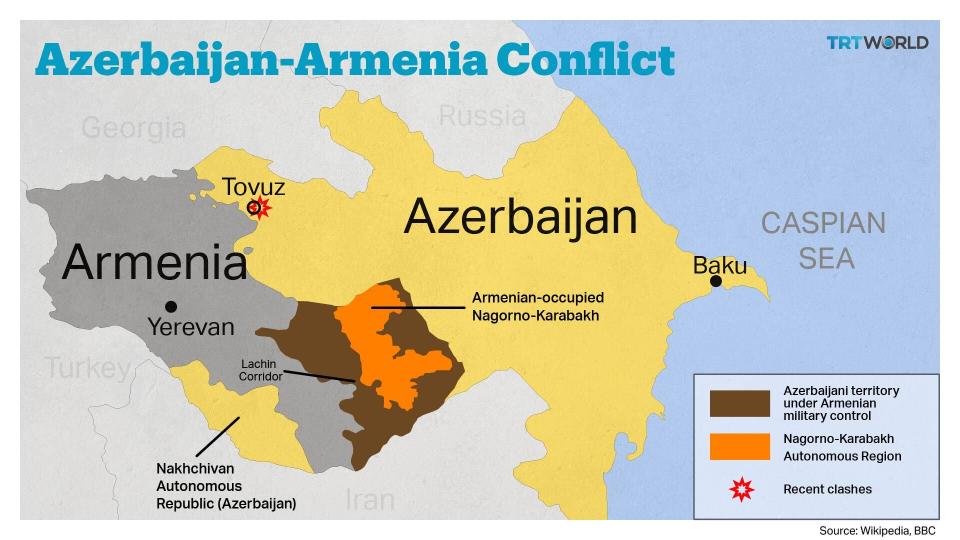
The conflict in Armenia has taken the lives of many soldiers and displaced over 100,000 people. All the while, the world has kept silent and preferred not to know about it. In November a Russia-brokered peace deal was agreed between Armenia and Azerbaijan. It ended six weeks of war in which thousands of people were killed and displaced. In these conditions, the role of the Church has increased. People just have nowhere else to go. The church becomes the only place where people can be helped. The churches have become the beacons of hope for scared and suffering people. They don’t do services on Sundays because of the coronavirus but they continue serving refugees every day sharing their bread and their homes as well as words of comfort and hope. Even before the war, more than 32% of the population lived below the poverty line. Now with the conflict raging on, these alarming rates are growing every day. Asatur Nahapetyan, pastor and general secretary of the Baptist Union of Armenia, anticipates this conflict to linger and asks everyone to get ready for a hard winter. Over 100 families from Karabakh have been placed by Baptists in their homes and 42 people were accommodated in a conference hall in Razdan.
The church with a symbolic name Noah’s Ark (in Ararat) is providing shelter for 40 people. At first, the refugees were really afraid of Christians regarding them as sectarians but now they don’t want to leave. Pastor Araik says that people from Karabakh are not very religious and many of them still retain the Soviet spirit, but there are no atheists in trenches. The church in Ararat has 700 members. They all minister to refugees as one strong united team. “It’s the only place where we are welcomed,” say women refugees, who didn’t want to know anything about God just yesterday. They learned to pray in the church and when their husbands who are on the front lines call their wives many now say, “We didn’t believe in God but it was your prayers that kept us safe” women and children say to their pastor often, “When you pray we sleep well and we stop having nightmares.” Everyone lives on prayers here. It all started on the first day of war when the pastor called the mayor’s office and said that the church was ready to take in refugees. It’s been filled with people since then. It’s important to understand that the church prepared themselves for this ministry even before. The pastor says that successful work with young people changed the way the society viewed the church. “We fed 40 people every Saturday and took hot lunches to 20 families even before the war. Everyone knows us as the ark of hope and salvation. For people, we are not just a religious organization but a charitable organization. Although it’s interesting to see how the state church starts to imitate us. Priest David started doing what we do, preaching the Gospel, visiting people in their homes, meeting them and talking to them. Even the police say to people, ‘contact the church; they’ll help you there.’ Everyone respects us now.” Pastor Vazgen from the church in Abovyan says something similar: “Almost all the refugees that we received in our church have made a decision to follow Jesus.” The church in Artashat is also filled with refugees and it’s also filled with the spirit of hope.
While evangelical churches of Armenia are serving their people we have an opportunity, even responsibility to pray for this ancient Christian nation.
2020 has proven to be a challenging year for Christians. But I believe God is using Covid to get His church to move back to church as He had planned it as described in the Book of Acts, largely house churches. Good examples of how God has used catastrophe to refine His church are China and even more recently nations such as Iran. Persecution has refined His church to get it to be totally dependent upon Him, even for survival.
Christians must meet in person for corporate worship. On line communication is a dreadful replacement for real community. Come pandemic or martyrdom, we must find a way to meet in person. Isolated we are prone to wonder from the faith, tempted by the world’s allure, and even more prone to depression.
We were never promised safety in Christ. The opposite is true; we are promised persecution (2 Timothy 3:12). A time is approaching when going to church will be dangerous (and I do not mean because of a virus). Now is the time to prepare and reinforce healthy habits. Instill in your children the need and benefit of attending church weekly. Go and be fed the gospel. Even if your church is not perfect (none are), be present and love others.
On the importance of attending church, it is helpful to look at Mosaic Law. While Christians are no longer slaves to the law. The law reflects the character of God. The law is good, valuable, and worthy of our delight. We can learn much about God’s holiness and desires in the law. Consider the absolute seriousness by which God treats the Sabbath, the day of worship, and rest: Exodus 31:12-17.
God cares deeply about the Sabbath. He cares about how He is worshiped. At one point in time, failure to honor the Sabbath as God intended was a crime punishable by death! Friends, corporate, in-person worship is non-negotiable for Christians. Go to church and do not stop.
If Christians are to spiritually flourish in a nation that hates them, they must dedicate time to understanding the significance of worldview, how it is formed, and how it can rightly engage our culture. The following summary of a Biblical world view is the only one that presents an accurate history of the cosmos:- 1. Creation by God of a perfect cosmos 6000 years ago. 2. Entrance of sin and death by man’s rebellion against God. 3. God’s judgement of the World with the worldwide flood of Noah’s day. 4. Confusion of languages at the Tower of Babel that established the nations. 5. God establishes his nation Israel that would birth the Redeemer, Jesus, God’s Son, born of a virgin. 6. Birth of the church at Pentecost. 7. 2000 year history of the church which is soon coming to its prophesied end with Jesus return, first to rescue the Saints at which time His wrath will be poured out on an unbelieving world. Then Jesus returns to earth with the Saints to rescue His nation Israel at the battle of Armageddon. 8.We then have the Millennium. Jesus will rule the nations with the glorified Saints with a rod of iron for 1000 years.
Part an extract from the article in Patheos: Persecution: The New Reality for Biblical Christianity in America by Jack lee



 LIVING ETERNAL NOW