THE CHURCH HAS LOST ITS FEAR OF GOD

The real issue before us today is not differences in style or methods, but whether the Church still fears God enough to proclaim his truth without compromise.
Church Has Lost Fear of God

In Orange, NSW, Australia, the Easter “Family” Festival organisers used banners promoting the event with the word “Easter” barely visible. On Palm Sunday, the beginning of Holy Week, the festival that should have been a clear, unapologetic proclamation of the crucified and risen Christ, the redeemer of sinful humanity, was diluted, softened, reshaped – and made “safe.”

On Resurrection Sunday, the very foundation of our faith, the event without which there is no Christianity, the highlight at one local church was a helicopter dropping 7,000 Easter eggs on the church lawn for the excited crowd.

The concern isn’t about the eggs – it’s about what is central. What will the children remember? Christ crucified and risen? Or the excitement of getting lots of chocolate Easter eggs? 

Charles Spurgeon was right: “The Church exists for the glory of God, not for the entertainment of men.”

When did the Church forget that? Surely, we knew it once. Easter is not ambiguous. It is not cultural. It is not a generic “family-friendly” moment designed to entertain. It is the central declaration of the Christian faith: Christ died for sin and every person is commanded to repent.  

He was pierced for our transgressions…” — Isaiah 53:5
“God commands all people everywhere to repent.
” — Acts 17:30 

Losing the Fear of God to the Fear of Man

Somewhere along the way, the Church has lost the weight of what it has been entrusted with. The day that proclaims Christ crucified and risen – the day that declares victory over sin and death – has been reshaped to make it acceptable to a world that does not know him.

The gospel is offensive. Yes. But it is the gospel that Jesus himself preached.

It confronts sin. It calls for repentance. It declares that man is not good, and that salvation is found in Christ alone. Yet, instead of standing on that truth with holy conviction, many have chosen to present it in a way that avoids offence and maximises appeal.

But the call of God has never been to make the message acceptable – or to entertain the crowds. The Apostle Paul said“I did not shrink from declaring to you the whole counsel of God” (Acts 20:27). And again, “Preach the word; be ready in season and out of season; reprove, rebuke, and exhort” (2 Timothy 4:2). 

Consider Daniel. In captivity, and under pressure to conform, he “resolved that he would not defile himself” (Daniel 1:8).

He would not bow to the culture. He would not dilute his obedience. He would not trade faithfulness for acceptance.

Not even in something as seemingly small as food.

When commanded not to pray, he opened his windows and prayed to God as he always had – even at risk of his life (Daniel 6:10). Yet he rose to positions of authority in two empires: without once compromising his faith.

God honours those who honour him (1 Samuel 2:30).

But today, many in the Church bend where Daniel stood firm. 

They soften, they accommodate, they adjust. Not under threat of death. Not under persecution, but under the pressure of culture, attendance, and public acceptance.

“For the time is coming when people will not endure sound teaching…” (2 Timothy 4:3).

That time is here.

Church Compromise over Biblical Conviction

The decline of the Western world is not accidental; it is the fruit of a Church that has too often chosen silence and compromise where God’s word demands truth and boldness.

The Great Commission was not about drawing crowds and entertaining them. It was a command: “Therefore go and make disciples of all nations… teaching them to obey everything I have commanded you” (Matthew 28:19–20). That command has not changed. The Church must come back to holiness. Come back to the Word of God. Come back to the fear of the Lord. Come back to the bold, unashamed proclamation of Jesus Christ – crucified for our sin, and raised to life by the power of God. The tragedy is not that the world rejects the truth; it always has. The tragedy is that the Church, more often than not, no longer has the courage to proclaim it as written. It is a fearful thing to handle the Word of God lightly: he will not overlook the dilution of his truth.

Those entrusted to preach his word will give an account. Not for how well they were received, but for how faithfully they proclaimed. It is the truth – not the compromise – not the spectacle – that sets men free.

Lord, search us, correct us, and bring us back to holiness.

Taken from an article by Kris Dhillon in the Canberra Declaration, 9 April 2026

REPENTANCE AND HOLINESS

Scripture is clear: “As He who called you is holy, you also must be holy in all your conduct” 1 Peter 1:15

From that time Jesus began to preach, saying, “Repent, for the kingdom of heaven is at hand.” Matthew 4:17

Look what A.W.Tozer said:

I look back and remember a day when it was common for men and women to come to an altar of prayer and kneel there, shake, tremble, and weep in agony of conviction over their iniquity. We do not see it now because the God we preach is not the everlasting, awful Holy One who cannot look upon iniquity. When we get a vision of the Holy One as he desires to reveal himself, this will come back as a mighty power to change us into his likeness.

Tozer then quotes this hymn by Charles Wesley:

Lord, incline me to repent; Let me now my fall lament, Deeply my revolt deplore, Weep, believe, and sin no more. 

Repentance is the lost word in the Christian dictionary. You may want to consider adding the sentiment of Charles Wesley’s words to your next prayer. I am sure you won’t use Wesley’s words exactly.

It is not as if we have to repent and be holy in our own strength. Jesus made it possible for our Heavenly Father to send the Holy Spirit to enable us to be holy. He will produce the fruit of the Spirit in your life and enable you to do the ministry that God has called you to do. We just need to submit to His leading day by day and not grieve Him or quench His work in our lives.


HOLINESS IS ESSENTIAL FOR THE MIRACULOUS

Before the Israelites crossed the Jordan they consecrated themselves. Before the Israelites took Jericho they circumcised the men. Before they defeated Ai they cleansed the sin from their camp. Holiness was needed for God to work the miraculous.

Ezekiel has a vision where the holiness of God pours out from the temple like a river, revitalising and purifying all the land it comes into contact with. Isaiah has a vision, where he enters the temple impure but is purified while he is there by a burning coal – a physical embodiment of God’s holiness.

The holiness of God is a term used in the Bible to describe both His goodness and His power. It is completely unique, and utterly all-powerful. In fact, the Bible gives us examples showing God’s holiness is so overwhelming it was perilous to approach Him.

These examples of God’s holiness purifying impure things all lead up to Christ. Christ, who is God’s holiness in human flesh, goes out into the land, healing the sick, raising the dead, and casting out demons – all of which are examples of God’s holiness now purifying the things it comes into contact with. God’s holiness is a powerful force that must be treated with the utmost respect.

Related image
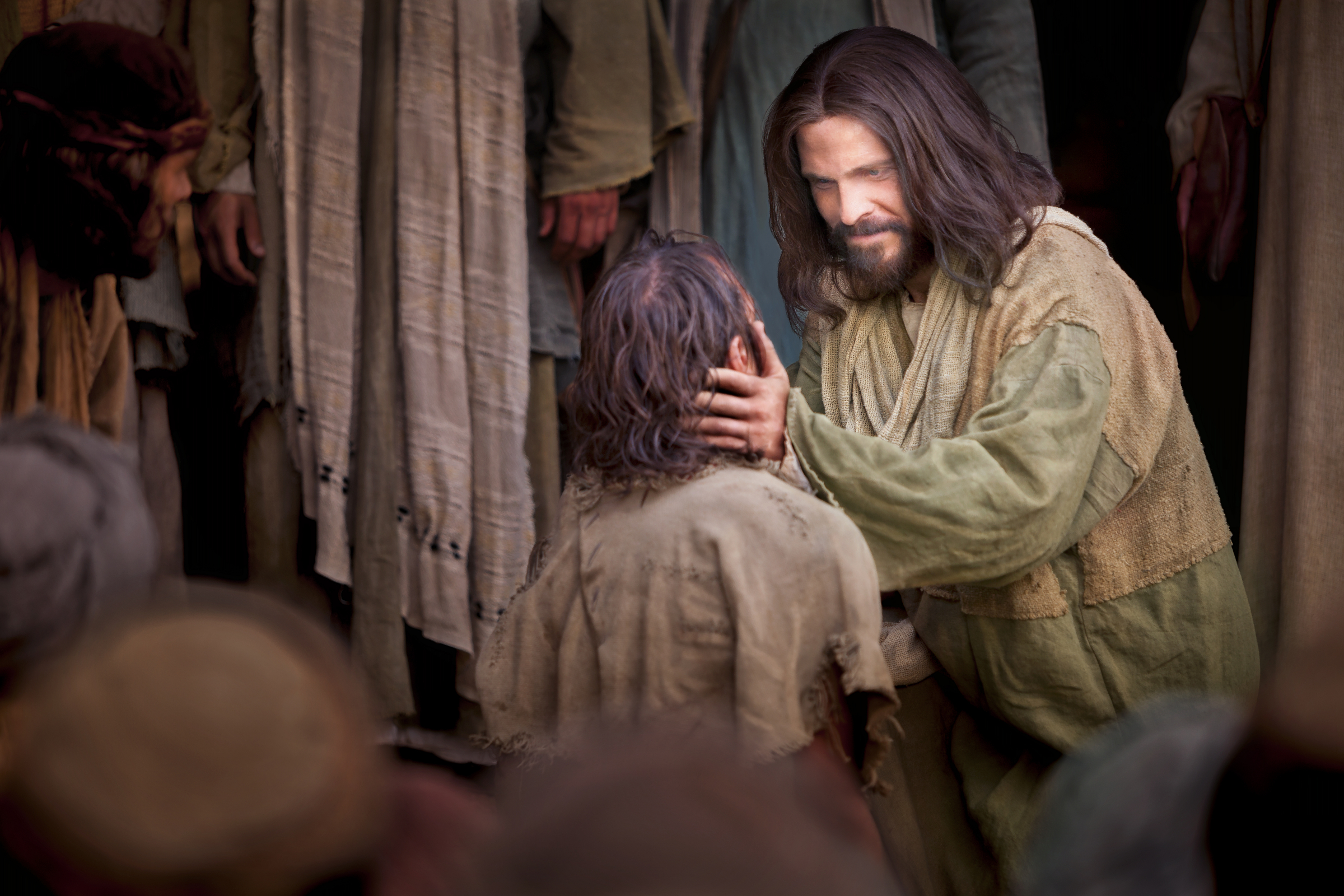
Jesus casting out demons from Jesus Film Project

In Hebrews 9 and 10 it tells me that the sacrifice of Jesus, the blood of Christ, is what sanctifies and makes me holy – once and for all.

 Not only do I need Jesus, His blood sacrifice and the Holy Spirit, I also need the Word of God. Jesus, in His prayer to His heavenly Father in John 17:17 said, “Sanctify them, make them holy through Thy truth. Thy word is truth” (paraphrased).

Ephesians 5 says that God wants to cleanse and sanctify the church by the washing of water of the Word. It is the Word of God that the Holy Spirit uses.

At the same time, God’s holiness is a gift, able to heal a broken and impure world. Best of all, as followers of Christ, the Father has now sent the Holy Spirit to indwell our spirit, to be our counsellor, teacher and comforter. We can’t be holy without the Holy Spirit. He enables us to minister in the power of the Holy Spirit. Sadly, we are told, we often grieve Him, and quench the work He wants to accomplish in us and through us.

Do you want to serve God? Understand, we need holiness to serve Him.

“As obedient children, not conforming yourselves to the former lusts, as in your ignorance; but as He who called you is holy, you also be holy in all your conduct, [Whatever you do.] because it is written, “Be holy, for I am holy.” (1 Peter 1:14-16)

Is there some filthiness in disposition or attitude in your heart? Is there some bitterness or resentment or complaint? God says, “You clean it up.” Is there something that we are doing in our lifestyle that is demonstrating the lust of the flesh? Clean it up! We are to walk in holiness, fearing God, recognising our accountability to Him.

Among believers there is to be a practical holiness where we cleanse ourselves, where we get right with God. There is nobody who is going to cause you to stop sinning but you. There is nobody who is responsible for sinning but you. You will be tempted and baited and enticed by the enemy, but if we sin, we need to repent of our sins and seek forgiveness, on an on going basis, to keep our relationship with God intact. “If we confess our sins, He is faithful and just to forgive us and to cleanse us of all unrighteousness. 1 John 1:9.

We ask God to forgive us not to be re-justified but to walk before Him in confidence that Christ has paid it all.