KIRK CAMERON NO LONGER BELIEVES IN ETERNAL CONSCIOUS TORMENT AS FATE OF UNBELIEVERS

Traditionalist view of damnation ‘doesn’t seem to fit’ Old Testament, says Kirk Cameron.

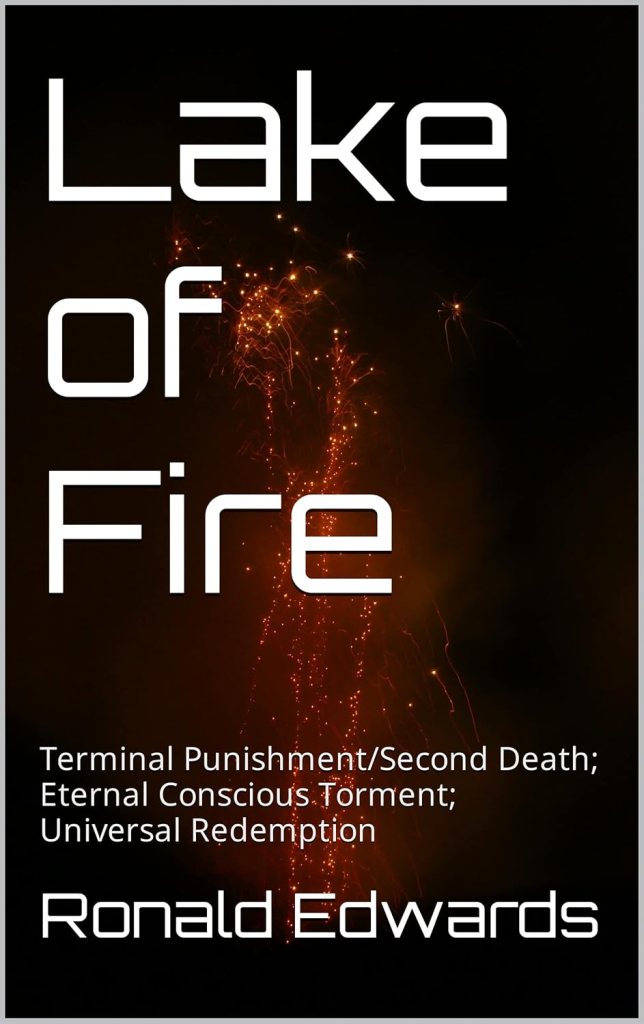
I am glad Kirk has realised Scripture does not teach eternal conscious torment for unbelievers. I came to this conclusion many years ago and have even wrote a book on the subject, Lake of Fire. It is available on Amazon as a Kindle edition for just $11.99.

The majority of denominational churches teach Eternal Conscious Torment but is this really what the Bible teaches? In the first five centuries, there were six known theological schools. Four of them taught that all men would eventually be rescued from Hell (Apocatastasis): these being the theological schools at Alexandria, Antioch, Caesarea, and Edessa/Nisbis. One school, Ephesus, taught Annihilationism (sinners are totally incinerated into nothingness in Hell). Only one theological school, Rome/Carthage taught eternal punishment. There is a case for presenting the early church fathers in the main believing God will eventually restore all mankind and that the Lake of Fire is restorative at least for mankind. However, it is difficult to know what they did with the second death which is in the lake of fire and is stated as the fate of the lost. “Blessed and holy is the one who shares in the first resurrection! Over such the second death has no power,” Revelation 20:6a. I review all the scriptures on Hell and the views of respected Christian theologian such as John Stott, C.S. Lewis and others.

“Jesus died so that we could have eternal life. But do the wicked have eternal life in Hell? And if they do, why does the Old Testament describe the fate of the wicked in the opposite terms?” Cameron asked, pointing to references using words like “destroy,” “perish” and “death” when describing the fate of the wicked.

“The soul that sins, it shall die,” he said, quoting from the prophet Ezekiel. “It will perish. It will be destroyed, which is like the ending of life, not the ongoing life forever in punishment.”

He also pointed to history and the rise and fall of nations as an illustration of what he believes happens to those who die apart from faith in Jesus Christ. “When you look at God’s judgment upon individuals or on nations, cities, empires, He says they’re gone … The symbolism is scorched earth, destroyed, gone, and their name is remembered no more,” he said. “… And they’re not coming back. It’s like forever. Which really is a better description of dying, of perishing. Not being granted eternal life so that you can be tormented forever. That doesn’t seem to fit.”

WHAT DOES THE BIBLE TEACH ON HELL?

It is good to see more Biblical teaching on the fate of unbelievers. It is certainly not eternal conscious torment that has been the teaching of most institutional churches. Gary Black of Life, Hope, and Truth Ministries (www.lifehopeandtruth.com) explains why hell is not a place of eternal torment and how the Christian world came to that mistaken idea.

The research I did for my own book on this topic: Lake of Fire – Terminal Punishment/Second Death; Eternal Conscious Torment; Universal Redemption? (available as an ebook on Amazon) revealed that in the first five centuries, there were six known theological schools. Four of them taught that all people would eventually be rescued from Hell (Apocatastasis): these being the theological schools at Alexandria, Antioch, Caesarea, and Edessa/Nisbis. One school, Ephesus, taught Annihilationism (that sinners are totally incinerated into nothingness in the Lake of Fire). Only one theological school, Rome/Carthage taught eternal punishment. Source: The New Schaff-Herzog Encyclopedia of Religious Knowledge, Universalism entry, p. 96, Baker Book House. In fact, a case can be made that when the Church rejected a high view of God’s goodness and replaced it with a view of God as an eternal torturer, the Dark Ages began, almost to the day.

NO REASONABLE PERSON DISPUTES THAT JESUS HEALED HUNDREDS IF NOT THOUSANDS OF PEOPLE

During His earthly ministry, “Great crowds came to Jesus, bringing the lame, the blind, the crippled, the dumb and many others, and laid them at His feet; and He healed them. The people were amazed when they saw people raised from the dead, dumb speaking, the crippled made well, the lame walking, and the blind seeing. And they praised the God of IsraelMatthew 15:30-31

Earlier in the previous century, even the New Testament skeptical scholar Rudolf Bultmann acknowledged that there could be no doubt that Jesus healed sick individuals and expelled demons. More recently, Jarl Fossum notes: “That Jesus was a miracle worker is central to the Christology of the New Testament Gospels and Acts.” Perhaps surprisingly, prominent Jesus Seminar member Marcus Borg attested quite strongly, “Despite the difficulty which miracles pose for the modern mind, on historical grounds it is virtually indisputable that Jesus was a healer and exorcist.” Further, Jesus’s healing cases cannot all be accounted for simply as “faith healings” alone, for we do not know how far Jesus’s powers actually extended. Prominent historical Jesus researcher John Meier states, “In sum, the statement that Jesus acted as and was viewed as an exorcist and healer during his public ministry has as much historical corroboration as almost any other statement we can make about the Jesus of history.”

Even Jesus’ opponents did not contest the proclamations that He did healings and exorcisms, but “they claimed that his powers came from the lord of the evil spirits,” thereby admitting the existence of the events themselves by their very criticism. In this way, Jesus’s disciples, the crowds of people who heard and saw Jesus, and even His adversaries all agreed to what happened and that at least these healings and exorcisms were due to Jesus’s skills and power.

What about you? Do you praise the Lord because of the mighty miracles Jesus performed? Or do you ignore Jesus and live life as your own god? It is easy to ignore the Lord while loving the world and loving your sin. None of us would ever turn to God apart from the power of the Holy Spirit who produces repentance and faith in a man’s heart.

So, are you resisting the Holy Spirit even as you read these words? Or are you open to the idea that you need Jesus and the forgiveness only He can give you? Do you realize why Jesus endured the agony of the cross? He did it to pay for your sins so that you do not suffer the consequences of your sins. You will face Jesus at the White Throne judgment and you will be thrown into the Lake of Fire for punishment and a second death.

But as for the cowardly, the faithless, the detestable, as for murderers, the sexually immoral, sorcerers, idolaters, and all liars, their portion will be in the lake that burns with fire and sulfur, which is the second death.” Revelation 21:8 Also, Revelation 2:11, Revelation 20:6, and Revelation 20:14

Did you ignore the cross once again this Easter? When will you finally get serious about your sin and your need for the Savior?

Like everyone, a day will come when you experience tremendous storms in your life. Perhaps you are going through a terrible storm right now. Jesus has the power and authority to calm storms, just like He did when His disciples encountered a “furious squall” one day while out in a boat (see Mark 4:35-41. Jesus rebuked the wind, and it became completely calm, His disciples were “terrified and asked each other, ‘Who is this? Even the wind and the waves obey Him!’”  

Who will you turn to during the personal storms ahead of you? The longer you ignore the Messiah, the harder your heart will become toward the Savior. On the other hand, the miracle-working Messiah will save your soul the moment you come to Christ in faith. The Apostle John explained it beautifully:

Jesus did many other miraculous signs in the presence of His disciples, which are not recorded in this book. But these are written that you may believe that Jesus is the Christ, the Son of God, and that by believing you may have life (eternal life) in His name.” John 20:30-31

One day “the Jews demanded of Jesus, ‘What miraculous sign can you show us to prove your authority to do all this?’ Jesus answered them, ‘Destroy this temple, and I will raise it again in three days’” (John 2:19). The miracle of miracles was the resurrection of Jesus from the dead. The Messiah who had raised Lazarus (see John 11:38-44) and others from the dead (see Matthew 9:23-25; Luke 7:11-17) would Himself come back to life after His crucifixion.

After His resurrection, Jesus appeared to many of His followers, including “more than 500 of the brothers at the same time” (1 Corinthians 15:6). Why else would the apostles have laid down their lives for the Gospel? If they had not seen and touched the risen Christ, Christianity would never have gotten off the ground (see John 20:24-31). Christ’s enemies couldn’t track down His body because Jesus did in fact rise from the dead.

So, are you spiritually dead, or spiritually alive? Have you risen from your tomb of unbelief? You can either ignore the miracle-working Messiah or trust Him to forgive your sins and perform the miracle of the new birth within your soul (see John 3:1-8; 1 Peter 1:3-5). You will never know what you have been missing until you give your life to Christ and become one of His followers. Whatever you do, please don’t ignore this soul-saving invitation: “Believe in the Lord Jesus, and you will be saved” (Acts 16:31).

Adapted from an article in Christian Post “Why Multitudes Ignore the miracle-working Messiah” by Dan Delzell and excerpts from On the Resurrection, Volume 1: Evidences by Gary R. Habermas (B&H Academic, 2024).

DO WE HAVE AN IMMORTAL SOUL?

Modern, mainstream Christianity teaches that our bodies die, but we live on as souls. So why does the Bible teach something else entirely? Knowing what your soul is—and what happens to it after you die—is a core concept of Christianity. Join Gary Black as he explains both the biblical teaching of the soul and how that teaching became corrupted over the centuries.

Then when death comes to a man, the mortal part, it seems dies, but the immortal part goes away unharmed and undestroyed withdrawing from death.” Plato, Phaedo 106e

Understanding the soul is not immortal is critical to understanding that eternal conscious torment is not the fate of the unrepentant.

Then Death and Hades were thrown into the lake of fire. This is the second death, the lake of fire. And if anyone’s name was not found written in the Book of Life, he was thrown into the lake of fire.” Revelation 20:14-15

But as for the cowardly, the faithless, the detestable, as for murderers, the sexually immoral, sorcerers, idolaters, and all liars, their portion will be in the lake that burns with fire and sulfur, which is the second death. Revelation 21:8-9

And do not fear those who kill the body but cannot kill the soul. Rather fear him who can destroy both soul and body in hell.Matthew 10:28

WHY PEOPLE REJECT GOD

The reason a young former pastor renounced his Christian faith and rejected God was because: “How could a loving God reject people who were sincere in whatever faith they held? Would He truly condemn them because they understood Him differently than those professing faith in Jesus Christ as their Savior and Lord?”

This young man’s issue was not the historical credibility of the resurrection of Jesus or the reliability of the Genesis narrative regarding the Fall of Man. Instead, he was offended by the idea that a God of mercy would not welcome into eternal life everyone who seemed to be earnest in whatever faith they have. Put simply, this former pastor decided to create a new god, one in his own image.

Former evangelical pastor Rob Bell turned from biblical faith several years ago by denying the reality of Hell. He like so many leaders of denominational churches believe the Bible teaches non-believers will be tormented for all eternity in the Lake of Fire and yet the Bible clearly teaches that after the White Throne judgement, there is a second death in the Lake of Fire.

For the wages of sin is death, but the free gift of God is eternal life in Christ Jesus our Lord.” Romans 6:23

Bell was right in believing eternity in Hell is hardly just, and is inconsistent with the nature of the God – Who is love. This belief cost him eternal life with his Creator.

My book on the Lake of Fire is available as an ebook on Amazon.

But as for the cowardly, the faithless, the detestable, as for murderers, the sexually immoral, sorcerers, idolaters, and all liars, their portion will be in the lake that burns with fire and sulfur, which is the second death.” Revelation 21:8 (also see Revelation 2:11, 20:6, and 20:14)

In reading various “de-conversion” stories, accounts by and about people who have left their Christian faith, there is a persistent theme. It’s not about the reasonableness of Christianity, its intellectual coherence, or the credibility of its propositional claims. Rather, they come to a point where their dislike of certain doctrines or practices leads them to abandon their walk with Christ. They jettison their faith because it does not comport with their preferences. Or, put another way, the God of Scripture is not Who they want Him to be.

I often wonder if these people were been born again by the Holy Spirit. Jesus made it possible for God the Father to send the Holy Spirit to indwell our Spirit to be our Counsellor, our Teacher, and our Comforter. Jesus said He will bring us into all truth if we let Him.

We need to know God is not like us. He cannot denigrate the purity of His character by acting as though our transgressions really aren’t a big deal. And that’s the sticking point: the eternal Triune God is not concerned with conforming to our expectations. His character is not malleable, and He is not accountable to us for what He does.

Consider the story of Job. God allows Job’s entire family to be murdered, his vast wealth stolen, and his health broken. Job calls out to God, demanding to know why He has permitted these things given that he, Job, has been so faithful to Him. God is uncompelled to justify Himself to Job. Instead, He says, “Will the faultfinder (Job) contend with the Almighty? Let him who reproves God answer it” (Job 40:1).

Similarly, when Paul debates with an imaginary rhetorical opponent about God’s sovereignty and human free will, the apostle does not try to dissect something beyond man’s grasp. Instead, he affirms that “there is no injustice with God” and asks, “Who are you, o man, to answer back to God?” (Romans 9:14, 20).

But this same God is infinitely loving and desires no one to perish but all to come to repentance and faith in His Son (2 Peter 3:9). This is why He invites us into a relationship with Himself. In His great, undeserved kindness, God has revealed Himself to us. “His invisible attributes, namely, His eternal power and divine nature, have been clearly perceived, ever since the creation of the world, in the things that have been made,” Paul asserts (Romans 1:20). His power, intelligence, and love are displayed in a world that is complex, ordered, and abundant. The heavens, “the work of His fingers,” declare His glory (Psalms 8:4, 19:1).

He has revealed Himself in our very natures, with the weight of moral duty “written on our hearts” (Romans 2:15) and eternity placed within them (Ecclesiastes 3:11). He has revealed His character and desires, His demands, and His offer of everlasting life, in the pages of text composed by numerous men over the course of many centuries. The Bible is His written revelation.

Most profoundly, He has revealed Himself in the person of Jesus of Nazareth, the Son of Man and Son of God, sinless and righteous, Who took the penalty for sin we deserve as He died on the cross, and whose resurrection heralded His victory over sin, death, and the devil. Trusting in Him and Him alone for forgiveness, we receive life, eternal life, that He alone can give. Moreover, Jesus made it possible for us to receive the third person of the Trinity, the Holy Spirit into our Spirit to enable us to live the Christian life.

This is news so grand that it invites adoration of the One offering it. It should create in us a longing to know and follow Him, not turn our backs on Him because He does not seek to appease our finite indignation about things we can’t grasp. Would you really want to serve a God so eager to be liked He debases His Majesty to plead for our approval?

“A man can no more diminish God’s glory by refusing to worship Him,” wrote C.S. Lewis, “than a lunatic can put out the sun by scribbling the word ‘darkness’ on the walls of his cell.” He is Who He is and invites us to know Him — and that’s the best news of all.

WHITE THRONE JUDGEMENT OF THE DEAD, SMALL AND GREAT.

The remains of the 2,411 unborn infants found in Illinois following the death of abortionist Ulrich Klopfer have been laid to rest. Klopfer was described by one local newspaper, The Journal Gazette, as “Indiana’s most prolific abortion doctor,” noting his record of performing tens of thousands of abortion procedures over the course of his career.

Seeking to honor the infant lives horrifically lost and unceremoniously maintained, Indiana Attorney General Curtis Hill held a mass burial service at a cemetery in South Bend on Wednesday.

Their lives were memorialised with a shared headstone:

View image on Twitter

Ulrich Klopfer will have to account for his life’s work when he appears before Jesus Christ at the White Throne judgement.

“Then I saw a great white throne and Him who sat on it, from whose face the earth and the heaven fled away. And there was found no place for them. And I saw the dead, small and great, standing before God, and books were opened. And another book was opened, which is the Book of Life. And the dead were judged according to their works, by the things which were written in the books. The sea gave up the dead who were in it, and Death and Hades delivered up the dead who were in them. And they were judged, each one according to his works. Then Death and Hades were cast into the lake of fire. This is the second death. And anyone not found written in the Book of Life was cast into the lake of fire.Revelation 20:11-15

.

WHY HELL IS NOT ETERNAL TORMENT

There is no “immortal soul” doctrine in the Bible. Tradition about the fate of the lost (as torment forever) is unbiblical and hermeneutically incorrect.

Jesus and James teach the soul is destructible.

“And do not fear those who kill the body but cannot kill the soul. But rather fear Him who is able to destroy both soul and body in hell.” Matthew 10:28

“There is one Lawgiver, who is able to save and to destroy.” James 4:12

Paul teaches that immortality is brought through the gospel.

“but has now been revealed by the appearing of our Savior Jesus Christ, who has abolished death and brought life and immortality to light through the gospel,” 2 Timothy 1:10

Image result for pictures of biblical lake of fire

Hell was prepared for Satan and his angels. They will be tormented forever but not unbelieving humans.

  • “Then He will also say to those on the left hand, ‘Depart from Me, you cursed, into the everlasting fire prepared for the devil and his angels. Matthew 25:41
  • Revelation 20:10 says the devil, the beast and the false prophet will be tormented forever.

“The belief in the immortality of the soul came to the Jews from contact with Greek thought and chiefly through the philosophy of Plato, its principal exponent…” (The Jewish Encyclopedia). However, the scriptures teach the soul is destructible and immortality is part of the gospel. As shown, Paul teaches that immortality is brought through the gospel. Paul did not believe the Greek philosophy of his day which taught the immortality of all souls.

“To those who by persistence in doing good seek glory, honour and immortality, He will give eternal life.” Romans 2:7

I am the living bread that came down from heaven. If anyone eats of this bread, he will live forever. (John 6:51)

Why would Jesus Himself make this plain offer to “live forever” if everyone lived forever? Also, why would Jesus say people perish (die) unless they believe the Gospel.

“For God so loved the world that He gave His only begotten Son, that whoever believes in Him should not perish but have everlasting life.”

It is important to note that in Hebrew, the word for “life/soul” (nehphesh) is never used in conjunction with the word “everlasting” in the Old Testament writings

Likewise, in the New Testament writings, the word for “soul” (psukee) is never used in conjunction with the words “eternal” or “everlasting.”

A growing number of well-known Christian leaders, such as Dr. David R. Reagan, John R. Stott, Greg Boyd, Roger Forster (co-founder of the March for Jesus events), Philip Hughes, Michael Green, Stephen Travis, and Clark Pinnock have declared support for part, or all, of the biblical doctrine of Conditional Immortality. Even the British Bible translator, William Tyndale, defended Conditional Immortality during his lifetime. Also, the very well respected scholar F.F. Bruce states, “Eternal conscious torment is incompatible with the revealed character of God” so he chose to write the forward to an excellent evangelical book on this topic called, The Fire that Consumes by Edward Fudge.

SECOND DEATH

Then Death and Hades were cast into the lake of fire. This is the second death. And anyone not found written in the Book of Life was cast into the lake of fire. Revelation 20:14 

But the cowardly, unbelieving, abominable, murderers, sexually immoral, sorcerers, idolaters, and all liars shall have their part in the lake which burns with fire and brimstone, which is the second death. Revelation 21:8 

Why would God use “second death” if He did not mean death?

The first death is temporary. In the first death, only the body is destroyed in the graveyard. However, there will be a resurrection one day of all humanity, a bodily resurrection.

The second death will never be followed by a resurrection. In the second death, the body and soul are both destroyed (not preserved), (Matthew 10:28) forever.

Paul also tells us exactly what the punishment of the lost is:                                               

“Who shall be punished with everlasting destruction.” 2 Thessalonians 1:9   

Whose end is destruction. Philippians 3:19

But we are not of them who draw back unto perdition. (Greek: destruction) Hebrews 10:39 

That raging fire “will consume the enemies of God“ Heb. 10:27

“…it would seem strange … if people who are said to suffer destruction are in fact not destroyed; and … it is difficult to imagine a perpetually inconclusive process of perishing.“(J. Stott and D. Edwards, Essentials: A Liberal-Evangelical Dialogue, London, Hodder & Stoughton, 1988, p. 316)

The future that unbelievers face on judgement day is:

1) Suffering in proportion for their sins. Justice, in its proper amount, will be served.“And that servant, which knew his lord’s will, and prepared not himself, neither did according to his will, shall be beaten with many stripes. But he that knew not, and did commit things worthy of stripes, shall be beaten with few stripes.” (Luke 12: 47-48)

2) Destruction. “For the wages of sin is death, but the gift of God is eternal life in Christ Jesus our Lord.” Romans 6:23“, “the soul who sins shall die” (Ezekiel 18:4),“He who overcomes shall not be hurt by the second death.” Revelation 2:11

They (sinners) will be cast into “unquenchable fire prepared for Satan and his minions”. It is an enduring fire which none can extinguish as Satan and his minions will be there forever. Humans who are cast into the fire will eventually BURN UP. This is the Greek word katakaio which means to burn up; consumeJesus informs us that sinners will NOT be preserved in the fire (like in Moses and the burning bush), but rather will be “burned up“ just the opposite of preservation. “Their destiny is destruction…” Philippians 3:19. “Who shall be punished with everlasting destruction” (2 Thessalonians 1:9).

Doesn’t Revelation 14 tell us that people will be tormented forever?

They are “in the presence of the holy angels and in the presence of the Lamb.” This is obviously when they are standing before the Great White Throne of God on Judgement Day and not in hell.

The parable that Jesus tells in Luke 19:27 teaches us that these ones will ultimately be slain in the presence of the King.

But what about the word “forever”; doesn’t the text say torment will go on forever? No. Read it very carefully. It clearly says “the smoke” will rise forever.

Doesn’t Revelation tell us that people who take the mark of the beast will have no rest day or night?

Yes, they will indeed have “no rest,” but when will this happen? It will be during the tribulation period while on this earth. It is in the Greek present tense. John also tells us that painful sores break out on their body. How can anyone “rest day or night” when they have painful such sores on their body and are forced to worship the beast?

Jesus quotes from Isaiah 66:24 “Their worm does not die And the fire is not quenched.” in Mark 9:44,46,48

The righteous “go out and look” on their enemies” corpses… They look at corpses (Hebrew: pegerim), not living people. They view their destruction, not their misery.  The figure of unquenchable fire is frequent in scripture and signifies a fire that consumes (Ezekiel 20:47, 48), reduces to nothing (Amos 5:5,6) or burns up something (Matt 3:12).

“There shall be weeping and gnashing of teeth, when ye shall see Abraham, and Isaac, and Jacob, and all the prophets, in the kingdom of God, and you yourselves thrust out.” Luke 13:28 

He means on that day:

  • There will be many sad people “weeping” at the realization that they have just lost the chance for immortality and will soon be put to death forever.
  • There will be many very angry people gnashing their teeth at God. It is they who will probably be cursing at God (i.e. gnashing their teeth) all the way to their last breath before being destroyed.

What about the rich man and Lazarus in Luke 16?

The teaching of Conditional Immortality means that the soul of man is finally destroyed on the Day of Judgement at the end of this age. Therefore, technically speaking, this scripture has no bearing on this doctrine.

  • There is sufficient reason for understanding this passage of scripture as a parable.
  • The previous four stories were all parables (Luke 15:4, 15:8, 15:11, 16:1) The parable which He just told them, also began with the exact same words “There was a certain rich man,” (Luke 16:1).
  • These two stories both have to do with “mammon” (money) and the misuse of it. If the first is clearly a parable, why not the second, for it is in the exact same section of scripture?
  • The point of the parable is at the end, “And he said unto him, If they hear not Moses and the prophets, neither will they be persuaded, though one rose from the dead.” (Luke 16:31)
  • The Greek word used in this passage is not Gehenna (hell), but it is Hades (temporary abode of the dead). It is a different Greek word.
  • Hades will be itself emptied and destroyed one day. Revelation 20:14.

Does the one who told us to love our enemies intend to wreak vengeance on his own enemies for all eternity? No! thank God.