LOCUSTS PLAGUES NOW DEVASTATING PAKISTAN AND INDIA

I have written several posts on locusts plagues and “end times” famines and pestilences devastating Africa and parts of the Middle East and now we are reading “Tens of millions are on the verge of facing massive food shortages on the continent of Asia after a new plague of locusts has ravaged a path of destruction across India and Pakistan according to a report from The Express.

And there will be famines, pestilences, and earthquakes in various places. All these are the beginning of sorrows.Matthew 24:7

PAKISTAN: According to the report, In Pakistan, a national emergency has just been declared after an outbreak of locusts’, of “Biblical Proportions has reportedly wreaked havoc across farmland in Eastern Punjab, southern Sindh, and southwestern Baluchistan provinces. Meanwhile, In western and central India up to 125,000 acres of crops have been completely destroyed during the worst outbreak the country has faced in decades.

Pakistan declares national emergency over locust swarms | News ...
Pakistan’s government declared a national emergency 

INDIA: According to the Bhagirath Choudhary, director of the New Delhi-based South Asia Biotechnology Centre, an agriculture think-tank said: “We have never, ever seen what we have in the last six months in India – never in the history.” According to a shocking report from National Geographic, a desert locust can consume its entire body weight in a day – as a result, such a swarm would decimate 423 million pounds of crops.

UN REPORT: Then we have a report from the United Nations (UN) that estimates that a swarm of locusts can contain anywhere between 40-80 million of these insects and is capable of consuming the same amount of food in a day as three million people. The scale of this devastation has forced officials from India and Pakistan to work together to combat the outbreak. The UN Food and Agriculture Organisation has described the danger posed by the swarm of locusts as “an extremely alarming and unprecedented threat” and fear the devastation could endanger the food security and livelihoods of around 25 million people.
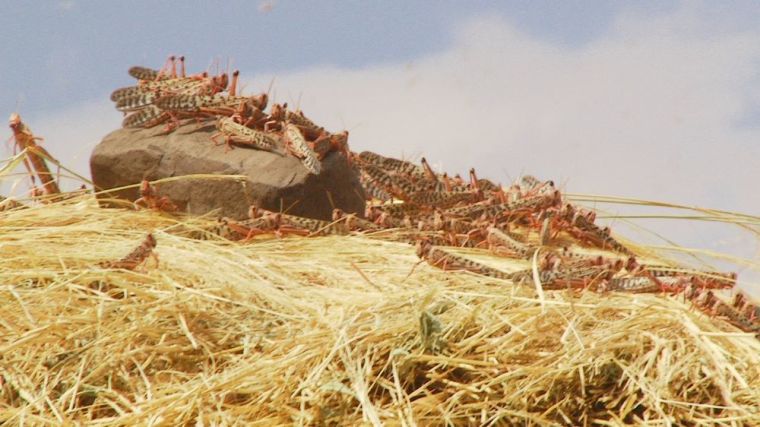
CITY-SIZED SWARMS OF LOCUSTS THREATEN FAMINE IN EAST AFRICA

A historic desert locust infestation in East Africa could cause the next major famine as people in the region are already struggling with hunger after droughts were followed by cyclone flooding, one of the world’s leading evangelical charities has warned. 

God tells us that He commands the locusts to devour the land and why. He also tells us what we need to do resolve the problem.

When I shut up heaven and there is no rain, or command the locusts to devour the land, or send pestilence among My people, if My people who are called by My name will humble themselves, and pray and seek My face, and turn from their wicked ways, then I will hear from heaven, and will forgive their sin and heal their land.” 2 Chronicles 7:13-14

When the disciples asked Jesus, “what will be the sign of Your coming, and of the end of the age?” Jesus answer included; “And there will be famines, pestilences, and earthquakes in various places.”

A growing spread of city-sized swarms of locusts has reached seven East African countries in recent months. The invasion has been described as something similar to an account from the book of Exodus as the grasshoppers have torn through crops, grass and other green vegetation. 

Desert locusts infest crops in the Habru District of Ethiopia on Feb. 4, 2020. | World Vision

Experts say the crisis might be the result of exceptionally wet weather from rare cyclones that hit the Arabian Peninsula and East Africa in December. The crisis is expected to grow as locusts are breeding and migrating. Additionally, drier weather could lead to an exponential increase in the number of locusts in the region. 

The U.N. has warned that the outbreak has already damaged tens of thousands of hectares of cropland across the Greater Horn of Africa, signifying the worst locust outbreak in Kenya in over 70 years and the worst outbreaks in Ethiopia and Somalia in 25 years. 

According to the U.N., one swarm can eat as much in vegetation as 35,000 humans. 

The biggest worry, Joseph Kamara, World Vision’s regional director for humanitarian and emergency affairs in East Africa, said, is if the crisis is not controlled by the time cropping season rolls around. He stressed that the region is already facing food deficits after many crops were destroyed by flooding last year. 

“So if we haven’t controlled them, then the region is facing famine, not just a food crisis, but a potential famine,” he stressed.