When Elon Musk’s Grok AI was asked to scan every prayer in the Bible, people expected it to find contradictions and problems. But what happened next shocked both scientists and religious leaders. The AI discovered patterns that have been hidden for thousands of years. Patterns that change everything we thought we knew about prayer and faith. Let’s find out what Grok really found. In late 2023, Elon Musk’s company XAI launched Grok, a new artificial intelligence system. This wasn’t just another chatbot giving safe, boring answers. Grok was different. It had personality. It could access real-time information from X, formerly Twitter. Most importantly, it was built to tackle questions other AI systems avoided.
GROK Revealed Four Patterns of Prayer Content:
1. Acknowledges God’s character and faithfulness, righteousness and power.
2. Aligns with God’s purposes,
3. Trusts in God and surrender,
4. Persistence – pray, keep praying.
AI found other patterns in prayers including numerical, mathematical, etc. This can only be possible if Scripture is God ordained.
I am impressed with Grok 4 and its response to questions on Scripture. Go take a look for yourself. It is much better than Chat GPT.
What about prayer in Jesus coming Millennial Kingdom. Will people still pray with Jesus on earth. Yes they will continue to pray to God the Father in Jesus name as we do now. Go to http://www.millennialkingdom.netfor more on all aspects of Jesus coming Millennial Kingdom and be prepared to rule and reign with Jesus.
A silent revolution is unfolding inside Amazon—and it’s far more than a warehouse upgrade. Leaked internal documents reveal that the company plans to automate up to 75% of its operations by 2033, using robots like Cardinal, Blue Jay, Sparrow, and Robin to replace what would have been over 600,000 human jobs. The implications stretch across every sector of the American economy. In this video, you’ll uncover how Amazon’s robotic workforce is reshaping the meaning of employment, why businesses are prioritizing efficiency over labour, and what kinds of skills—and investments—will actually survive the coming automation wave. From AI-driven logistics to the rise of collaborative robotics, this isn’t science fiction; it’s the new economic reality unfolding in real time. You’ll also learn how artificial intelligence has accelerated Amazon’s transformation, why other corporations are preparing to follow, and what steps individuals can take to protect their financial and professional futures. The question isn’t if automation will replace jobs—it’s how fast it will happen, and who will be prepared when it does.
This is not only happening at Amazon, UPS has disclosed about 48,000 job cuts this year.
Governments that have rejected God have already descended into chaos on all fronts so this move by companies to shed jobs will only further heighten the mayhem. There is only one answer to the problem and that has been revealed to us in God’s Word. Jesus returns as king first to rescue His Saints and then to pour out His wrath upon an unrepentant world with the Trumpet and Bowl judgements of Revelation 8 & 16. The battle of Armageddon follows and then Jesus sets up His Millennial Kingdom. To prepare for Jesus coming Millennial Kingdom go to http://www.millennialkingdom.net
What should Christians think about AI? Artificial Intelligence is reshaping culture, business, education, and even the way we think about human identity. In this roundtable conversation, Sean McDowell talks with 3 Biola professors to explore how believers can navigate the rapidly changing world of AI with wisdom and clarity. This is an intriguing conversation that I am sure you will appreciate and learn from.
This is what is ahead says Jensen Hwang and Elon Musk and they are not wrong. Are we ready for this?
Elon Musk and Jensen Huang have officially joined forces in shaping the next era of AI dominance. NVIDIA’s new Blackwell chip isn’t just an upgrade—it’s a revolution, redefining what machines can learn, build, and become. Musk is betting Tesla’s future on it, investing in a million GPUs to power full self-driving and humanoid robots at scale. Huang, meanwhile, says we’re only scratching the surface. In this video, They break down how NVIDIA’s unstoppable hardware is fuelling Musk’s AI empire, how this alliance could reshape robotics and automation, and whether humanity is ready for the power they’re unleashing.
This is all leading to the Mark of the Beast when you will not be able to buy or sell without this mark. Think about it, Jesus disciple, John, in the book of Revelation revealed this over 2000 yearsago.
“Also it causes all, both small and great, both rich and poor, both free and slave, to be marked on the right hand or the forehead, so that no one can buy or sell unless he has the mark, that is, the name of the beast or the number of its name.” Revelation 16:16-17
When one of America’s most influential tech leaders champions AI for the Christian community, it’s a story worth your attention.
In this exclusive interview, Christian Post sits down with Pat Gelsinger, former Intel CEO and current Executive Chairman and Head of Technology at Gloo, who’s on a mission to ensure artificial intelligence serves—rather than side-lines—the Church. From his early pull to ministry that led him into the tech world, to his vision for “values-aligned AI,” Gelsinger shares why he believes we’re living through a “Gutenberg moment” that Christians cannot afford to miss.
After leading one of America’s largest technology companies, you’ve now taken on the role of Executive Chair and Head of Technology at Gloo, a faith-based AI platform.
What drew you to make this transition — and why focus specifically on AI for the faith community?
I’ve always lived my life at the intersection of faith and technology. Early on, I actually felt a strong pull to enter the ministry. But I discovered that my calling was to be a workplace minister in the tech industry seeking to make the lives of everyone on the planet better through technology. AI is the biggest technology shift of our time; it’s a Gutenberg moment. Since AI will profoundly impact people’s lives, it is essential for the faith community to actively shape its development in ways that promote human well-being and serve the common good.
Gloo’s mission is to “catalyze the faith ecosystem through AI and other breakthrough technologies.”
Practically speaking, what does this look like for a typical church, ministry, or Christian organization?
Historically, the Church has been slow to adopt technology, and it has also been radically underserved. Organizations across the Christian ecosystem need access to the right technologies that truly serve their needs. Gloo is filling this gap, by offering a trusted technology platform that connects and meets the needs of the entire ecosystem – from churches, ministries and frontline organizations to the growing network of trusted providers that serve them. At the center of these efforts is Gloo AI, Gloo 360 and Gloo Workspace. From better understanding and supporting members of a congregation to connecting various channels and partners through underlying technology, Gloo is creating the digital backbone that will shape technology for good and help the Church thrive.
Many Christian leaders feel overwhelmed or even intimidated by emerging AI tools.
What would you say to those who are hesitant to explore AI in their ministries or day-to-day operations?
AI is yet another monumental technology shift that is both confusing and scary. Much like the printing press, radio or television, the Church must learn how to shape this technology and ensure it supports our communities instead of harming them. AI is just a tool – it’s not inherently good or bad. It’s our responsibility to shape it for good. If pastors and Church leaders are not already familiar with the technology, I encourage them to start small but… get started! Start exploring AI tools, consider joining ministry-centered learning groups, talk with your staff about how to use AI in Godly ways, and follow faith leaders who are exploring the space.
You’ve spoken about the potential for AI to enhance core functions of the Church.
How do you see it transforming areas like pastoral care, discipleship, community building, or evangelism? What excites you most about these possibilities?
AI can be a force multiplier for the Church’s core mission; sharing Scriptures, guiding people towards resources, and meeting people where they are with personalization. It can help with the low-impact work of running a church or faith organization and free up more time for Church leaders to minister to their flock. It can translate and localize materials (and even help with Biblical translations) to help with outreach and evangelism.
One of Gloo’s unique differentiators is its focus on developing “values-aligned AI models.”
What does that mean in practice, and how do you ensure these systems reflect Christian values and biblical principles?
I’ve always been vocal that technology must support human flourishing and align with human values. It’s not enough to show the absence of harm, you must show the presence of good. A “values-aligned” AI model should be based on human values, and its answers and actions should encourage human well-being.
At Gloo we’re working to build this. Core to that mission is understanding how AI and large language models (LLMs) impact human wellbeing. Based on the work of the Human Flourishing Project of Harvard, Baylor and Gallup, we created the Flourishing AI Benchmark. FAI measures how industry LLMs perform across the seven key areas of human flourishing, which includes faith and spirituality. By better understanding that dynamic, we can work as a community to build standards that will improve AI’s impact on humanity.
Beyond church operations, there’s also potential for AI in Bible translation, theological education, and content accessibility.
How do you envision AI expanding the global reach of Christian resources and training?
This is one of the areas that I find most inspiring. AI can already translate across hundreds of languages, but we could soon see Scriptures in languages for every person on this planet. There are approximately 7,000 languages with most yet to be conquered—AI will dramatically accelerate our ability to present God’s word to every single language and people group on the planet in text, speech and cultural relevant manners.
I see this also as a huge accelerant to educate every person on the planet. Today, we are close to 70% connected and we’re projected to reach over 90% by decades end. AI will also dramatically improve teacher productivity. With the trifecta of language, connectivity and teacher productivity, we can envision teaching every child on the planet, including all 333 million living in extreme poverty today. This will be the single most powerful way to eliminate extreme poverty.
For accessibility, AI can adapt content for the hearing and visually impaired and those with special learning needs. That’s the work of the Kingdom—so that all can hear the teachings of the Bible.
Gloo frames its annual “Gloo AI Hackathon” as a space to create redemptive technology that supports human flourishing.
What do you ultimately hope to accomplish through these events — and what are you most looking forward to seeing emerge from this year’s hackathon?
Hackathons bring together creators, innovators and dreamers in a powerfully collaborative way. We want participants to think outside the box and push the boundaries of what AI can do in an ethical, faith-driven environment. I’m looking forward to seeing young developers and seasoned leaders come together, fueled by faith, to build technology that will help people flourish. That, to me, is a glimpse of the future of the Church. I can’t wait to explore their builds and use cases.
The Church’s AI Moment
As artificial intelligence continues to reshape our world, the question isn’t whether AI will impact the Church, but whether the Church will impact AI. Pat Gelsinger’s vision of “values-aligned” artificial intelligence offers a compelling alternative to the often dystopian narratives surrounding this technology, presenting instead a future where AI amplifies human flourishing and advances God’s Kingdom.
From accelerating Bible translation to every language on earth to freeing pastors from administrative tasks so they can focus on shepherding their flocks, the possibilities are as vast as they are inspiring. But realizing this potential requires Christian leaders to overcome their hesitation and engage with AI tools—not from a place of fear, but from a position of faith-driven leadership.
The Gutenberg printing press didn’t just change how information was shared; it democratized knowledge and accelerated the Reformation. Similarly, AI’s potential to personalize discipleship, expand global evangelism and eliminate barriers to theological education could usher in a new era of Christian impact.
The question that remains is whether the Church will shape this technology or be shaped by it. As Gelsinger reminds us, “It’s our responsibility to shape it for good.”
Learn more about Gloo’s mission to catalyze the faith ecosystem through AI at gloo.com.
The AI and Robotics technological breakthroughs in 2024 set the stage for 2025 as outlined in my previous post: Review of Economic Events for 2024.
The chart below shows exponential growth but not the kind we like to see. In fact, it’s the kind that can result in the outright debasement of a national currency and a collapse in its bond markets. U.S. national debt-to-GDP now stands at 123%. The U.S. government is already running a cumulative fiscal deficit for fiscal year 2025 (starting October 1) of $622 billion. Current forecasts for fiscal year 2025 exceed $2 trillion.
U.S. National Debt Outstanding 1900–2024 | Source: U.S. Treasury
When the fiscal irresponsibility of any government reaches this level, there are usually only two choices to address the problem: Austerity, which is the least politically desirable. Reductions in spending and entitlements always have a degree of economic impact and certainly don’t make voters happy. Devalue the national currency. This is obviously what has been taking place. About 27% of U.S. national debt has been created in the last four years. Money “printing” always results in the devaluation of U.S. dollars and reduced purchasing power.
JEFF BROWN (BROWNSTONE RESEARCH) SUGGESTS THERE IS A BETTER WAY OUT OF THIS MESS
A large productivity boom would accelerate economic growth, lessen the impact of the current debt load, help reduce interest rates, and – if done right – could result in a fiscal surplus.
The USA is on the cusp of the greatest productivity boom in history. And it will be entirely technology-driven. Artificial intelligence (AI), robotics, and automation technologies will be the underlying productivity drivers. With cheap energy, the USA will compete with China as robotics beats cheap labour. Robots operate 24 hours a day 7 days a week: no time off, sickies, or holidays, and do not make mistakes.
With Trump at the helm, the U.S. regulatory environment will shift quickly in support of technological innovation, investment, onshoring of manufacturing, blockchain technology as the next generation of payment and settlement rails, and energy production to support economic growth.
The Department of Government Efficiency (DOGE) will materially reduce the fiscal year 2025 deficit by at least $250 billion, and by more than $1 trillion by fiscal year 2026 under the leadership of Vivek Ramaswamy and Elon Musk.
The Centers for Disease Control, the Department of Health and Human Services, the National Institutes of Health, and the Food and Drug Administration will return to evidence-based medicine practices and streamline the clinical trials process with higher standards for drug approvals, driven by the leadership of Robert F. Kennedy Jr. and Jay Bhattacharya. This will be a net benefit for the biotech industry.
Interest rates will decline mostly in the second half of the year by another 50–75 basis points. It will take some for the fiscal and economic policy changes to tame inflation. The larger cuts will come in 2026, an even better year for the economy and the markets.
Not surprisingly, AI will continue to be the hottest growth trend in 2025. Hundreds of billions will continue to be spent on the hyperscale “AI factories” being built to train AI foundation models. Jeff believes that we’ll see at least one company develop an artificial general intelligence (AGI) by the end of 2026. We’ll see the equivalent of genius-level IQs from the foundational models of OpenAI, Anthropic, Meta (Llama), Alphabet (Gemini), and xAI (Grok). And the outlier – the big surprise in 2025 will be from Elon Musk and his team at xAI. The entire industry has discounted xAI because it was a bit late to the game of building a foundation model for AI. That’s a mistake, for two reasons. Within a few months, xAI will have the largest training cluster of GPUs, at least 200,000 GPUs developing Grok 3.0. xAI is also developing a “maximum truth-seeking AI.” When training an AI, the quality and accuracy of a model’s outputs depend heavily upon the quality and accuracy of the inputs. Other companies trying to program their foundational models with clear bias and/or political narrative actually slow down their own technological development. Doing so adds complexity. xAI is avoiding that trap by designing, building, and performance training. This is a large competitive advantage that will catch the rest of the industry off guard. xAI’s Grok will outperform the rest of the industry.
2025 will also be the year when we experience Level 5 autonomous transport without any geofencing, entirely driven by vision models. This is different than Waymo, Cruise, or others that are heavily dependent upon LIDAR and require very precise maps allowing them only to operate in geofenced areas. And there is only one company capable of this technology – Tesla.
This year will be the first year when we experience unsupervised full self-driving technology. Unsupervised means that no one will have to sit in the front seat and monitor the full self-driving software for safety. Tesla will succeed in “turning on” this technology in at least one U.S. state this year. This will also enable Tesla to launch a robotaxi network, enabling Tesla owners to opt their Teslas into the network, enabling their electric vehicles to earn income. This will change the entire dynamic of the automotive industry, as Teslas will become affordable to an even larger percentage of the market. And it will, of course, be bullish for Tesla as the only EV company capable of this technology.
Humanoid Robots Overtake Offices & Factories
We’ll also see impressive advancements in AI in the manifested form of humanoid robots. Again, Tesla will lead here with its forthcoming release of Optimus Gen 3, which will be capable of autonomous operations in both industrial and consumer settings. While I don’t expect Tesla to start external sales of Optimus until 2026, it will widely use its production of Optimus in both its own office and factory settings. Optimus will set the standard for humanoid robot productivity, and investment will increase dramatically in other major players in this field. 1X Technologies, Agility, and Boston Dynamics will work hard to catch up to Tesla’s technology.
LLM’s (Large Language Models): The Year of Agentic AI
Let’s define agentic AI. Unlike traditional AI, which linearly executes commands, agentic AI systems interact with tools and databases autonomously and in logical order to achieve more reliable and robust results. If you were to query an agentic AI system with a multi-step problem, it would parse your request in the most logical order instead of moving from the top down.
These Agentic AI agents will be capable of reasoning and solving tasks that require multiple steps to complete. Agentic AI will be capable of transacting on behalf of anyone. The technology will be able to interface with the internet and fill out fields to complete assigned tasks. This technology will extend even further to the blockchain industry, where AI agents will be capable of managing smart contracts and engaging in self-directed economic activity. Blockchain technology is particularly conducive to agentic AI technology because of the ease of transacting with digital assets and the construction of smart contracts using blockchain technology. Which brings us to the digital assets industry.
The Year of Digital Asset Revitalization
The Trump win means pro-crypto, pro-innovation, and a plan to put clear regulations in place for digital assets. Fortunately for the digital assets industry, we’re already seeing a complete revitalization of the blockchain industry concerning investment in the U.S. 2025 will be a big year for crypto.
New regulations will be put in place, providing clarity and clear guidance on industry rules. And the enforcement of baseless and antagonistic actions against the leaders in the industry will come to an end. This will be bullish for high-quality cryptocurrencies. We should expect to see a lot of speculation in the industry, as well.
Jeff has relaunched his Neural Net Profitsresearch service. It is powered by a sophisticated neural network that Jeff’s team developed at a cost of more than $1 million, called The Perceptron. It picks up on short-term trading signals in cryptocurrencies. Additionally, we’ll see U.S. dollar stablecoin projects thrive this year, as more and more financial transactions happen and settle on blockchain technology.
Lift Off for the Space Economy
Jeff expects that Boom Supersonic will succeed in flying its one-third-scale aircraft supersonic in the first half of this year. Boom is the most advanced aerospace company in building a supersonic commercial aircraft capable of traveling at Mach 1.7 with 64-80 passengers. It is an answer to what comes next after the Concorde.
The Trump/Musk partnership will also put NASA back on track for its return to the moon program – Artemis – by 2026. SpaceX will launch at least 15 Starships this year, as it refines the technology of the largest rocket and spacecraft in history.
Radical Shifts in Defense Spending
The U.S. will stop the absurd spending and funding of overseas wars and focus instead on rebuilding a technologically advanced defensive capability for the U.S. military… a peacekeeping military. Representative companies will be Anduril and perhaps General Atomics. The key will be uncrewed, autonomous drones and aircraft. Given the advancements in artificial intelligence and autonomous technology, the nature of warfare has dramatically changed. The use of autonomous drones and uncrewed aircraft will be an explosive trend in 2025, as will the development of intelligent cybersecurity agents to protect against nation-state attacks – most notably those of China on U.S. infrastructure that has commanded an alarming number of headlines in 2024.
Investment will accelerate in advanced technologies in the defense sector, as opposed to the more traditional technological approaches. Western adversaries are using unconventional weapons to infiltrate and fight, and the industry must adjust. We’ll also see an increase in spending on defense as it applies to the U.S. Space Force. The progress with hypersonic technology in 2024 will make space-based defense systems and communications that much more critical as a deterrent to war.
Nuclear’s Next-Generation Renaissance
Energy policy will also become a cornerstone development in 2025 for the new administration. The “pause” that we witnessed in natural gas production in the last four years will be lifted and the industry will start to invest heavily again in natural gas. Energy produced from coal will drop, just as it did during the first Trump administration. There will also be a major policy push to bring both oil prices, and thus gasoline prices, down. The last four years seriously depleted the U.S.’s strategic petroleum reserves – to levels that we haven’t seen since the early ‘80s. Lower prices will be critical to refill those strategic reserves and to ensure energy security for the U.S. economy.
In parallel, there will be strong regulatory support for the recommissioning of nuclear reactors in the U.S., as well as for the commissioning of new fourth-generation small modular reactors (SMRs) to address the shortages in energy production. Nuclear energy will experience a rebirth in 2025. That will be true for both nuclear fission as well as nuclear fusion technology.
Front runners in the nuclear fusion race are General Fusion, Helion, Zap Energy, Commonwealth Fusion, and China-based private company ENN. There may even be a national laboratory in South Korea, China, Japan, Germany, or the U.K. that may make the claim. Jeff predicts record levels of investment in nuclear fusion companies in 2025… precisely because the path is so clear toward net energy production. Institutional capital can now see a path toward commercialization – and ultimately returns – on their invested capital.
The solar power industry will continue to thrive. Investment will continue in solar in markets where it makes sense. And as interest rates come down, solar will benefit from improved project financing.
Energy production from wind, however, will suffer, as it should. Wind power is not economical and environmentally destructive. The carbon footprint of wind turbines is terrible when considering all the minerals that need to be mined, and petroleum needed to keep the wind turbines turning. Not to mention the short lifespans and the fact that turbine blades cannot be recycled. They simply end up in a dump.
AI WILL DRIVE A BIOTECH RESURGENCE
Novel therapies will be developed in a fraction of the time and for a fraction of the cost of the traditional drug discovery process. The use of AI will also reduce toxicity and improve the safety of drugs. When we couple the positive impact of AI on the drug discovery process with the cleanup and streamlining of the relevant health agencies in the U.S., we will naturally see an increase in investment in the biotech sector.
Jeff is confident that 2025 is the year when the government will step back from destructive policies, restore trust, and push ahead on pro-energy, pro-growth, and pro-innovation policies.
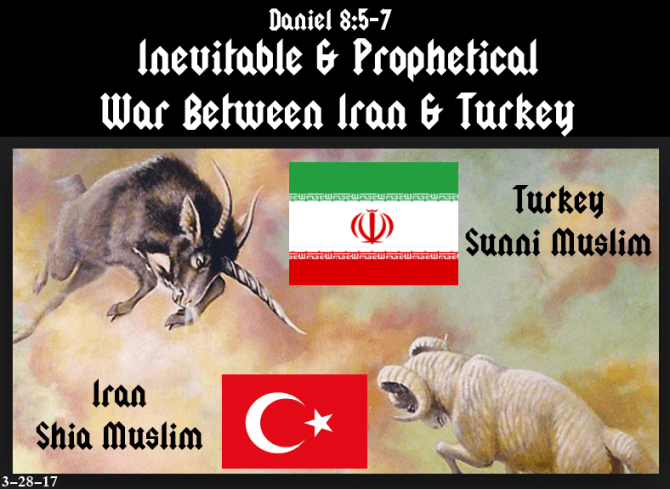
How does all of the above fit into Biblical end-times prophecies? It doesn’t, Biblical end-times prophecies is Middle-East centric with Satan’s focus still on destroying Israel. The next major battle is given in Daniel 8, the goat (Yvan) Sunni Turkey putting down (Persia) Shia Iran in an attempt to re-establish a Neo-Ottoman Empire. Watch for it and use it to prove the Bible is God’s word. We know how this ends.
It was a pretty remarkable year in the world of high-tech: The shining light and path towards a world of abundance. 2024 marked the beginning of what Jeff Brown of Brownstone Research calls manifested AI. It is a good framework for how we think about this concept. It is that we humans will manifest artificial intelligence (AI) into forms that will be easy for us to understand and interface with and this is an unstoppable trend and it will be the key driver behind the gains in the NASDAQ in 2025.
The composite index rose an impressive 32% this year. The rise wasn’t across the entire market. The Magnificent Seven, Alphabet, NVIDIA, Amazon, Apple, Microsoft, Tesla, and Meta had an outsized impact on the index returns for the year. A further rise was fueled by the explosion of artificial intelligence (AI), which defined the year’s performance. And of those seven stocks, it was really NVIDIA, Tesla, and Meta – that drove the average returns of the seven of almost 70% this year.
OpenAI’s ChatGPT became a household name this year. Generative AI from various tech companies is now common in households and workplaces across all demographics and industries. Further, the rate at which AI technology is advancing is astonishing.
Microsoft has been closely linked to the success of OpenAI due to its “controlling” interest in the private company. Meta has developed one of the leading large language models (LLMs). NVIDIA has released its new Blackwell GPUs, which is an impressive jump in performance compared to last year’s model. And Tesla has not only manifested AI in the form of its latest self-driving cars, trucks, and now robotaxis and robovans using its full self-driving (FSD) software – version 13.2, It has also manifested AI in the form of its humanoid robot, Optimus, which will ultimately become a market larger than that of electric vehicles. The incredible investment in AI and the application of AI in businesses is what drove the best gains in the stock market. For reference, hundreds of billions of dollars were spent this year building “AI factories” – data centers designed to both train – and run – AI applications. This has driven outsized share price gains for the key companies powering this trend forward.
The energy required to power these AI factories is huge. The USA with its oil and natural gas reserves and commitment to nuclear energy is well placed to maintain its leadership in the AI space.
Nvidia (NVDA) is finishing up the year with a gain of about 183%. And several of Jeff’s recommendations in Exponential Tech Investor have done even better: AppLovin (APP) is up 732% for the year (and it was up as high as 935% in early December). Credo Technology (CRDO) is up 276% in 2024. Real Brokerage (REAX) has gained 206% this year. In addition, Vertiv (VRT) is up 152% this year. The bottom line is that the right AI stocks were the place to be in 2024.
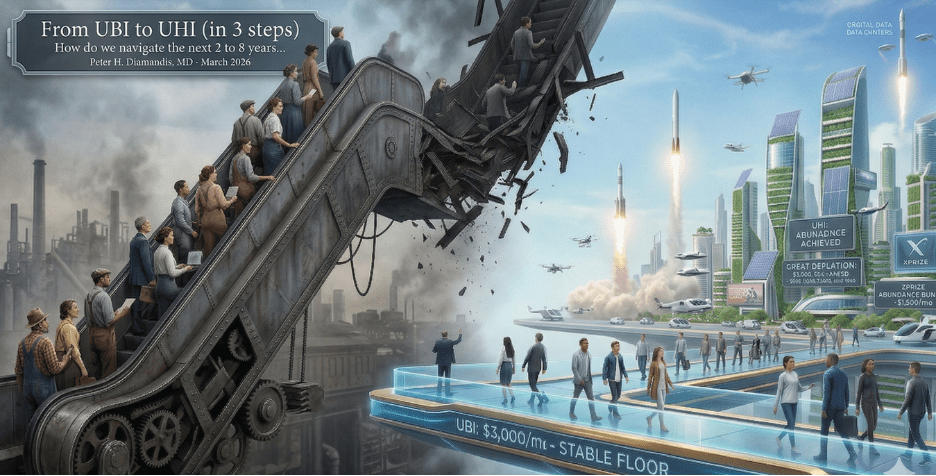
A look at the video below reveals the big issue facing the USA in the years ahead: robots and AI replacing workers. Amazon was the first to introduce robots to replace workers in their warehouses and now Walmart, Costco, and others are following their lead. Also, imagine the impact driverless cars and trucks will have on jobs. 2025 will be a year of massive change and I am not including the spiritual battle that is coming to a final showdown between Jesus and Satan at the Battle of Armageddon.
In the next post we will take a look at what Jeff Brown thinks of 2025.
Geoffrey Hinton and John Hopfield were awarded a Nobel Prize in Physics on October 8th, 2024.
Hinton was awarded the prize for his work on “foundational discoveries and inventions that enable machine learning with artificial neural networks.” It’s why he’s known as the “Godfather of AI.” Hinton is responsible for laying the groundwork for how AI functions today.
Since May 2023, he’s been warning folks about the dangers posed by this burgeoning technology. In fact, he publicly resigned from Alphabet Inc. (GOOG) to be able to speak out more freely about it.
And last Tuesday, when asked about the effect that AI would have on our society, he said:
“It will be comparable with the industrial revolution. But instead of exceeding people in physical strength, it’s going to exceed people in intellectual ability. We have no experience of what it’s like to have things smarter than us.“
Thanks to AI, we will soon ride in Robotaxis, have personalized treatment plans for major diseases, and much more… totally transforming the way we work, live, and play.
However, some things will change for the worse…
A couple of weeks ago, I wrote about the dockworker’s strike and how one of their aims was a total ban on further automation at the nation’s ports. I believed that this was a hopelessly futile endeavor – that AI-driven automation was eventually coming whether they liked it or not. Just as Amazon and Walmart warehouses are becoming totally robotic. They can function 24 hours a day, seven days a week, with no people, no mistakes, no meal breaks, no sickies, and no holidays.
But it’s not just the dockworkers that should be worried. AI is coming for tech jobs, too. In fact, TechCrunch reported that Amazon, Apple, Alphabet, Meta, and Microsoft laid off roughly 94,400 people in 2023! And so far this year, the total for tech layoffs is about 141,076! Some of these layoffs are due to workers who were reluctant to return to the office. But many of these layoffs are related to AI as companies rely on software, rather than people, to become more efficient.
Unfortunately, this is just the beginning. We will see layoffs in law enforcement, customer service, medicine, mining, transportation, and much more. Up to 800 million global workers could lose their jobs by 2030, according to a McKinsey study, and 70% of all existing occupations could see a pay cut, according to Wired magazine. We’re talking about a massive wave of economic and societal change.
City-sanctioned safe sleeping site on Fulton Street between Hyde and Larkin Streets in San Francisco, Calif., on Friday, June 12, 2020. Four years later it is much worse.
Governments that have jettisoned God and His commandments are already unable to cope with the consequences. Lawlessness, even anarchy will abound exactly as Scripture prophecies for the last day before Jesus returns to Earth.
Government debt levels are already astronomical so they will not be able to provide relief for AI-induced unemployment. The stage is being set for the Antichrist and a one-world government.
Jesus warns us that increasing persecution is ahead for Christians and we need to trust God no matter the circumstances confident that He will see us through it.
“Then they will deliver you up to tribulation and put you to death, and you will be hated by all nations for my name’s sake. And then many will fall away and betray one another and hate one another. And many false prophets will arise and lead many astray. And because lawlessness will be increased, the love of many will grow cold. But the one who endures to the end will be saved.” Matthew 24:9-13
Amazon, the online retailer behemoth, is the second-largest private employer in the U.S. – 1.5 million people. It’s also one of the largest investors in AI. It’s building out fully autonomous warehouses… It’s working to automate the delivery process with self-driving vans and delivery drones… and 30% of its “workforce” are already robots.
Robots don’t sleep. They don’t take vacations. They never need a break. So, let me ask you this: How much longer until Amazon decides these robots are ready to take on the full workload of its 1.5 million remaining workers? And what do you think will happen when 1.5 million hardworking Americans are suddenly out of a job?
Amazon is far from the only giant that has done this. Walmart Inc. (WMT), the largest private employer in the U.S., is rolling out fully automated distribution centers using a combination of AI and robots. The company’s distribution centers come with one big catch: No people.
Finding good critical thinkers is one of the most difficult things in business. I’m talking about “knowledge workers” – i.e., accountants, business strategists, lawyers, and doctors – who make optimal decisions, are good at problem-solving, can strategize, and always act in the business’s best interests.
The only thing more difficult than finding one good knowledge worker… is finding multiple. For most of the modern era, knowledge work was difficult to scale. These professions typically require years of education, on-the-job training, and experience. That adds up to lots of time and money.
But now, ChatGPT and other forms of AI are killing that paradigm. It makes it so that businesses can scale critical thinking and knowledge work. It doesn’t matter if you have a blue or white collar: AI could threaten your job.
The Quantum Leap
AI is more of a threat now than it was when ChatGPT made its debut in 2022 because of quantum computing.
In classical computing, data is encoded in binary bits. Transistors are like tiny switches that can either be in the on or off position – represented by ones and zeroes.
Every app you use, website you go to, and photo you take is made up of millions of combinations of ones and zeroes. However, a new kind of computing power surpasses the binary limitations of classical computers.
Quantum computers use quantum bits, or qubits, which can represent both 0 and 1 simultaneously due to a concept called superposition. If this all sounds a little confusing, don’t worry. Here’s the critical thing you need to know… Quantum computers allow for multiple computational pathways to be explored at the same time, opening new avenues and speeds for solving complex problems.
Imagine you have a large library and you’re trying to find a specific book. In classical computing, you would search for the book by examining each bookshelf and book one at a time until you find the right one. This approach can be time-consuming, especially if the book you’re looking for is in the back of the library. But imagine a computer so powerful it can explore all the books at once… That’s quantum computing.
It’s been said that the differences between quantum computers and classical computers are even more vast than those between classical computers and pen and paper. That may be an understatement.
We’re talking about machines so advanced that they can instantly execute calculations that would take the world’s most advanced supercomputers nearly half a century to process. It’s not like the transition from the horse and buggy to the automobile. It’s more like horse and buggy to the SR-71 Blackbird… the fastest jet ever made. The difference is utterly mind-blowing.
Quantum computing is real and it’s here. You can think of it as the turbocharger for artificial intelligence. It makes AI faster, more efficient, and more precise.
Quantum computing will give us the ability to solve intractable problems that take so long to tackle using today’s computers that no one even bothers trying. We’re talking about the ability to create, replicate, and commercialize complex analytical thinking and precise physical movement on a scale never seen before… This is the next huge leap forward for the digital elite… the people who have been getting rich while most Americans have been getting left behind.
With quantum computing, the digital elite will have AI that is not constrained by computational speed. Quantum-powered AI will drive efficiencies by getting rid of human workers and driving up corporate profits. No matter the job, robots, software and AI – powered by a new breed of computer – will be able to do it better and cheaper.
I expect that in the quantum era, we will see more technological progress in one month than we are seeing in three years from now. This is the societal and economic equivalent of a 10,000-foot mega-tsunami. It’s about to slam into our world and alter the trajectory of our country forever.
Governments that already have a debt problem that is out of control will be unable to address this unemployment problem and anarchy and lawlessness will be the outcome. The scene is being set for the Biblical prophesied rise of the Antichrist and a one-world government. The recent UN Pact for the Future where world leaders made a landmark declaration pledging concrete actions towards a safer, more peaceful, sustainable, and inclusive world for tomorrow’s generations is a significant move towards a one-world government. My next post will give more detail on the Pact for the Future.
One week from tomorrow, Elon Musk and Tesla will hold its “We, Robot” event
It’s expected that the company will reveal its first dedicated robotaxi. This is being heralded as a “game changer” for the future of autonomous transportation.
“We, Robot” is expected to be a watershed moment for Tesla wherein the company introduces its first dedicated robotaxi, tentatively called the “Cybercab.” Tesla is also expected to showcase groundbreaking advancements in Full Self-Driving (FSD) software and artificial intelligence as the company pushes toward a future where human drivers are obsolete.
At the heart of this transportation revolution is a convenient, driverless ride at a fraction of the cost of traditional services. If it’s everything it’s cracked up to be, this will send ripples throughout the automotive, technology, and investment sectors.
Consider what a rollout of Tesla’s robotaxi would mean… With the tap of a button, you can have a car at your disposal, 24/7, at a much lower all-in cost than owning a car (or purportedly, calling an Uber).
Today, car ownership can be a major financial burden. AAA reports that last year, the average annual cost to own and operate a car in the U.S. was about $10,000. A fully autonomous, reliable, ever-present robotaxi would enable consumers to save thousands of dollars by eliminating the need for car ownership.
Yes, there will be plenty of Americans who will still want their own. But if you’re one of the 66.2% of Americans living paycheck-to-paycheck today (according to MarketWatch in August), are you not going to seriously consider letting go of your car to free up thousands of dollars per year?
According to a 2022 study by McKinsey & Co., 25% to 30% of urban dwellers would consider using shared autonomous vehicles as their main transportation mode if it were widely available. And if 25% to 30% of Americans decide to stop buying cars, get ready for a financial earthquake.
First and obviously, we have the major car manufacturers that would be rocked by this size of a reduction in auto demand. We’re talking unprecedented disruption that would require a business-model pivot, and potentially, enormous layoffs.
Cars are parked 95% of the time. If you’re merely “renting” your car, when you’re done with it, it speeds away to service someone else. Such collective ownership of cars will radically explode car efficiency, reducing how many are needed, which would impact how many workers are required. Also, you do not need a garage at home or at work.
Now, consider the knock-on effects… With 25% to 30% fewer drivers (at the beginning – expect this percentage to grow), what happens to the auto insurance industry? According to Benzinga, U.S. auto insurance premiums amount to more than $308 billion per year. So, what happens with far fewer car owners? Do we lose loads of related insurance jobs? Or does the insurance model switch from vehicle coverage to some sort of ride-based individual coverage? What would be the impact on business models?
Next, what about car mechanics and chain repair shops?
What happens when autonomous driving hits our trucking industry? In the U.S., that’s a $216 billion market with roughly 3.5 million drivers. Think “robotrucks” might be disruptive there?
Now, consider the investment implications, good and bad… What will be the impact of all this on the share prices of not just Tesla, but Ford… Alphabet (which owns Waymo, another autonomous driving company)… Uber… Insurance companies… Auto parts manufacturers, and retailers, the list goes on and on… And what about the stocks of the companies that make the components for Tesla’s fleet or robotaxis? All the sensors and semiconductor chips? The plastics? The electronic circuitry?
It is all about technology replacing the need for humans. In 2013, Amazon used about 1,000 robots in its warehouses. Last year, that number clocked in at 750,000 and the savings have been incredible. The warehouses work 24 hours a day non-stop and seven days a week.
Think about the coming impact of AI and automation on, well, everything… It’s already affecting jobs for customer service agents… paralegals and legal assistants… accountants… medical diagnosticians… radiologists… financial analysts… journalists… recruiters… insurance underwriters… and marketing specialists… to name a few. Should we expect it to stop?
It will lead to a chaotic workplace as shown by the International Longshoremen’s Association strike that began yesterday, with dockworkers demanding assurances that the United States Maritime Alliance will never replace human workers with automation? As well, the Screen Actors Guild/Writers Guild of America strikes in 2023, wherein Hollywood workers demanded protection from the rising capabilities of artificial intelligence. Unions will not stop the use of AI and robots and lawlessness and chaos will erupt across cities.
In Matthew 24:12, Jesus told his disciples what will unfold in the end times before He returns to Earth. He says, “And because lawlessness will be increased, the love of many will grow cold”. Christians know what is coming and we need to use Biblical end-times prophecies to evangelize the lost. As these end times prophecies are fulfilled, people will realise God is real and the Bible is God’s word.