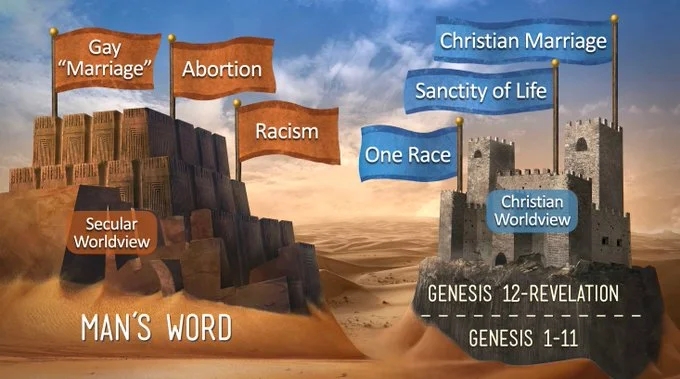
Christians are at risk of being branded “extremists” under the UK government’s new definition of extremism published this week, a campaign group has warned.
The new definition says that “extremism is the promotion or advancement of an ideology based on violence, hatred or intolerance, that aims to” among other things “negate or destroy the fundamental rights and freedoms of others.”
Christian Concern said that Christians who are pro-life, gender-critical, or have traditionalist beliefs about marriage might fall foul of the new definition.
Christians who are pro-life could be seen as being opposed to an ‘assumed fundamental right’ to abortion and thus to be intolerant and hence extremist. It is already the case that being anti-abortion is on a Prevent list of ideologies.
Prevent is a national program “that aims to stop people from becoming terrorists or supporting terrorism seen as potential extremism”, the organisation said.
Christian Concern said that the new extremism definition was “vague” and could lead to Christians being excluded from influencing government policy.
Andrea Williams, chief executive of Christian Concern, said the definition was “not fit for purpose” and that she expected to see more Christians being reported to Prevent.
“It is absurd that Christians could be deemed ‘extremist’ for believing in real marriage or for being pro-life,” she said.
“Christian Concern has supported Christians referred to Prevent for expressing their Christian beliefs. The new definition of extremism should have ensured this would not happen again.
“Sadly, I now expect to see more referrals of Christians to Prevent, not less.”
She called on the government to clarify that ‘fundamental rights’ do not include abortion, same-sex marriage, or identifying as the opposite sex.
“Without this clarification, Christians who express their legitimate belief that marriage is between a man and a woman would risk being deemed ‘extremist’ by the government,” she said.
Over the eight years, I have been posting on Living Eternal Now persecution of Christians has been escalating and many other end times prophecies are being fulfilled. Thank goodness, God has told us what will unfold as we approach the time of Jesus second coming. Jesus told us it would be like the days of Noah when God poured out His wrath upon the earth for the first time; godlessness and lawlessness will abound.
The tragic shooting at Joel Osteen’s Lakewood Church in Houston is another sad reminder that sin is irrational, evil, and enduring.
The mayhem caused when a woman with a rifle opened fire led Osteen to say, “In the face of such darkness, we must hold onto our faith and remember evil will not prevail.” That’s good theology: In the long run, the God of the Bible triumphs. But that long run is much less temporal than it is eternal. Christians know no immunity from pain in a world cursed by sin. Instead, they look to a universe cleansed from sin and everlasting life in the presence of their Lord and King.
Osteen seems eager to talk about other things. According to him, “We’ve got to make our [church] services good. They’ve got to uplift people. They’ve got to walk away saying, ‘You know what, I feel better today.”’
Walk away feeling good? “Uplift?” Is this why God became both a man and, on the cross, the very essence of sin (II Corinthians 5:21)? This is Christianity without Christ, a spiritual oxymoron that removes the centre of the gospel and then throws only a shadow of hope on those in desperate need of transformation. It is grace reduced to psychological slobber and truth as a buffet from which you can select only those things you find appealing.
Lakewood’s statement of belief is sound, although basic. It’s my hope that Osteen and those on his large staff truly believe in the necessity of new birth in Christ and the need for faithful obedience to Him. But these things are not what Osteen preaches. His best-selling “Your Best Life Now” is hundreds of pages about how to obtain fulfillment without a single mention of dying to self and the cost of following Jesus. Instead, Pastor Joel recommends “letting go of the past” and tells us that we must “find strength through adversity.” In themselves, these things can aid you in regaining your emotional equilibrium. But is that it? Is this the message of the cross? Is this why, all over the world, martyrs are dying for their love of Jesus?
John Piper has outlined six problems with the “feel good” gospel. His analysis is a useful summary of where preachers like Osteen go far afield from “the faith once delivered” (Jude 1:3). According to Piper, such ministries as Osteen’s are characterized by:
An absence of a serious doctrine of the biblical necessity and normalcy of suffering
An absence of a clear and prominent doctrine of self-denial
An absence of serious exposition of Scripture
A failure to deal with tensions in Scripture
Church leaders who have exorbitant lifestyles
The prominence of self and marginalization of the greatness of God
The “serious exposition” of the good news of Christ involves things sinners often dislike hearing. As theologian Ray Ortlund reminds us, “The good news of the gospel begins with some really bad news. Our sins only provoke a bigger problem: the wrath of God. Our real problem is not our sins but God. He is angry, he isn’t going away, and there is nothing we can do about it.”
Nothing. We. Can. Do. About. It. No self-talk, no therapy, no learned technique to quell genuine guilt or silence the voice of divine conviction. This is the broad way against which Jesus so vividly warned, the way of Oprah and mysticism and prideful self-reliance. It might indeed lead to transient happiness but invariably takes one through the gates of hell.
The bad news of human sin and our inability to redeem ourselves is not the end of the story. “You were dead in the trespasses and sins in which you once walked … and were by nature children of wrath,” Paul writes to the Christians in Ephesus, “But God, being rich in mercy, because of the great love with which he loved us, even when we were dead in our trespasses, made us alive together with Christ.” Once dead, now alive: this is the key to your best life now and forever. “For by grace you have been saved through faith. And this is not your own doing; it is the gift of God, not a result of works, so that no one may boast”Ephesians 2:1-9
Followers of Jesus should pray that God would so arrest the heart and mind of Joel Osteen and all like him that they would repent of the false gospel they so happily broadcast and issue a new message, one that announces the righteous anger of a holy God and the gracious offer of a loving Father. He is one and the same, and His offer of hope, meaning, transformation, and life itself never changes.
Sadly, Joel and Lakewood Church represent the church of Laodicea that is left behind to go through the Trumpet and Bowl judgements of God.
‘I know your works: you are neither cold nor hot. Would that you were either cold or hot! So, because you are lukewarm, and neither hot nor cold, I will spit you out of my mouth. For you say, I am rich, I have prospered, and I need nothing, not realizing that you are wretched, pitiable, poor, blind, and naked. I counsel you to buy from me gold refined by fire, so that you may be rich, and white garments so that you may clothe yourself and the shame of your nakedness may not be seen, and salve to anoint your eyes, so that you may see. Those whom I love, I reprove and discipline, so be zealous and repent.” Revelation 3:15-19
Compare this with the church of Philadelphia which is the church that is raptured at the trumpet blast at the opening of the seventh seal.
“‘I know your works. Behold, I have set before you an open door, which no one is able to shut. I know that you have but little power, and yet you have kept my word and have not denied my name… Because you have kept my word about patient endurance, I will keep you from the hour of trial that is coming on the whole world, to try those who dwell on the earth. I am coming soon. Hold fast to what you have, so that no one may seize your crown. The one who conquers, I will make him a pillar in the temple of my God.” Revelation 3:10-12
Deep in the capital of Lebanon, thousands of Christians recently gathered to praise Jesus in a one-night worship experience that organizers say became “a beacon of hope and joy” for the Middle East. “Beirut 2024” was an ecumenical musical event that brought together believers from different Christian faith traditions to worship God and instill hope in its attendees. The event was held as part of celebrations for the annual Week of Prayer for Christian Unity and the 50th anniversary of the Middle East Council of Churches (MECC).
The MECC organized the gathering and estimated that about 10,000 people were in attendance. According to the “Beirut 2024″ website, the celebration was an event that sought to “showcase the Holy Spirit’s presence in the Church’s worship across ages.” With escalating tensions in the Middle East, leaders also decided to hold a “unique prayer meeting” to unite “diverse Churches in praise, fostering unity as outlined in Ephesians 1. Additionally, it symbolized a beacon of hope and joy for Lebanon and the wider Middle East.” “It is an opportunity to pray for peace in Lebanon and repentance for its people,” the website shares.
A choir of 300 singers and musicians from different churches led the congregation of church leaders and worshippers through the night of prayer and praise. “No one is surprised that this blessed choir speaks with multiple languages, for it is filled with the Holy Spirit who gave it to speak in this way, as happened on the day of Pentecost. Our chant tonight will be ascending to heaven, with the power of the Spirit that unites us, and it will be stronger than the screams of haters and murderers of man, and louder than the blast of their bombs,” said Professor Dr. Michel Abs, Secretary General of the MECC. “Our ecumenical spiritual evening is the product of the Holy Spirit, through believers, who worked with persistence and determination to make it happen and bring together the one Church of Christ with its cultural diversity and richness, in which the Middle East abounds,” he added. Those who attended reflected on the importance of praying for unity and peace in the Middle East. The event was broadcast live on the Lebanese MTV channel and other Christian stations.
Younger Americans are more likely to dissociate from organized religion, according to a recent Pew Research study on religious “nones.
Fully 69% of ‘nones’ say they believe in the God of the Bible or some other higher power, but only 3% “go to religious services at least monthly,” and a plurality (43%) says religion does more harm than good. These numbers don’t show “a rejection of God,” Perkins interpreted, but rather a rejection of “organized religion, that in many ways has become milquetoast and has abandoned truth. ‘So,’ [think the ‘nones’], ‘why bother?’”
An exploding number of young Americans are drifting through life without any theological mooring. Many of them were raised in the church, yet they remain largely ignorant of the Bible and its teachings
The real reason is that churches and Bible Schools have compromised God’s Word by accepting evolution and billions of years as fact. The Bible reveals that God made a perfect world about 6000 years ago. Adam was made in God’s image on the sixth day and given dominion over all the earth. He was there at the beginning. Death and suffering entered the world as a consequence of Adam and Eve disobeying God. The world rejects this true history as it does the Biblical account of the worldwide flood of Noah’s day when God judged the world and destroyed all but eight people and the animals that God had brought to the Ark. The entire topography of the Earth was changed due to the catastrophic flood “All the fountains of the great deep burst forth, and the windows of the heavens were opened” Genesis 7:11. It is the reason we find billions of dead things buried all over the world including buried vegetation (fossil fuels). The world denies this event ever happened but has difficulty explaining the geological evidence.
Children are taught in schools that the universe started with the Big Bang. Life started in a primordial soup. Creatures evolved into more complex creatures as a result of natural selection and mutation. After much death and suffering men and women evolved from apelike ancestors. The survival of the fittest. God is not necessary and therefore does not exist. Does science support this theory?
The recent Encode project investigated DNA and its role in controlling the functions of all cells in the body. It revealed that DNA is a multi-dimensional assembly of information that controls the machines and transport devices in cells. Darwin did not have access to an electron microscope to see these complicated machines and transport devices inside all cells nor the DNA, the Information System that controls these machines. Information does not derive from matter or energy. There is only one source an Intelligent Designer who was outside of the universe (Time, Matter, and Space) He created. There is no way even the simplest cell could have evolved over time. The DNA, the information controlling the machines, and the complex machines had to be created perfectly at the same time to function – irreducible complexity.
God has raised up ministries such as Creation Ministries International, http://www.creation.com, and Answers in Genesis, http://www.answersingenesis.org to provide resources to present the case for creation so make sure you connect and support them.
SpaceX CEO Elon Musk suggested last week that he agrees with the assertion that Western civilization is doomed without Christianity.
Nzube Olisaebuka Udezue, a British rapper also known as Zuby, posted on X last Friday that he thinks “the West is absolutely screwed if it loses Christianity.”
“Explaining this in full would require an entire book,” continued Udezue, who boasts 1.1 million X followers and has professed to be a Christian. “But I’ve thought about it a lot over the years and reached this conclusion.”
Udezue, who was born in London to Nigerian parents, said removing Christianity from Western culture is like “removing the foundations of a building but pridefully expecting it to remain standing forever … All while enemies both inside and outside are trying to knock the building over.”
He went on to liken the West’s historically dominant religion to its “immune system,” and said the presence of a Christian majority in the West has served as “a form of herd immunity” that has benefited both Christians and non-Christians alike.
“You can’t just have a cultural and moral vacuum,” he added. “It goes against the laws of human nature.”
Udezue’s initial tweet, which drew 1.7 million views and 28,000 likes, also prompted the response from Musk, who wrote: “I think you’re probably right.”
Jonathan Cahn shares the secret of seeing miracles, breakthroughs, and the promises of God in your life. What if there is a way to ensure that the promises of God’s Word will come to fulfillment in your life?
There is a pattern, first, God gives His promise, second, God gives His instructions, third, we must be obedient to follow those instructions, and only then will God’s glory come.
Check the Bible for how God gives His promises and note there are always instructions.
If you want refreshing then note the instructions:
“Repent therefore, and turn back, that your sins may be blotted out, that times of refreshing may comefrom the presence of the Lord,” Acts 3:19
Do you want to renew your strength?
“They who wait for the Lord shall renew their strength;they shall mount up with wings like eagles; they shall run and not be weary; they shall walk and not faint.” Isaiah 40:31
And for much more watch this message from Jonathan Cahn.
Ayaan Hirsi Ali, a former Muslim and renowned critic of Islam, has revealed her conversion to Christianity, describing her journey from Islam to atheism and ultimately to Christianity.
On Nov. 11, 2024, activist and author Ayaan Hirsi Ali published an essay titled “Why I am Now a Christian.” Her declaration has understandably made waves. For 20 years, Ali has written, spoken, and acted as a committed atheist. Rejecting the Islamic teachings she was indoctrinated with during her teenage years, she has long argued for secularism as the needed lens for furthering humanity and countering the world’s evils so often perpetrated by religious dogma. Hence, her conversion to Christianity is not being well received by the media.
Ali grounds the explanation for her conversion on the usefulness of Christianity. I do not mean “useful” in a trite way, as one might find a spoon more helpful to eat soup than a fork. Ali sees the use of Christianity as fundamental on a societal and personal level. In this way, Ali grounds her turn to Christianity on the same principles that led her to reject God and organized religion. She now sees Christianity not as a foe to her cause but as a needed ally.
Hirsi Ali traces her initial disillusionment with Islam following the 9/11 terrorist attacks when she questioned the justifications for the attacks in the name of Islam. During her teenage years in Nairobi, Hirsi Ali says she was influenced by the Muslim Brotherhood, which instilled in her a strict interpretation of Islam.- This period was characterized by a strict adherence to religious practices and a deep-seated disdain for non-Muslims, particularly Jews. However, her later exposure to atheism through figures like Christopher Hitchens and Richard Dawkins provided a stark contrast to her previous beliefs.
Hirsi Ali attributes her turn to Christianity to a broader concern for the challenges facing Western civilization. She cites threats from authoritarian regimes, global Islamism, and “woke” ideology as catalysts for seeking a unifying force. Christianity, in her view, offers a foundation of values and traditions that uphold human life, freedom, and dignity, and counters the divisiveness she associates with atheism.
Responding to her embrace of the Christian faith, conservative Christian philosopher Dr. Robert George wrote on Facebook: “Two decades ago, under the influence of the writings of Bertrand Russell, she became an atheist. Her thought was that atheism was smart and sophisticated — it was allegedly what really intelligent people believed (the ‘brights,’ as Daniel Dennett embarrassingly labeled himself and his fellow unbelievers). It was the way to a world of rationality and civil liberty. Hirsi Ali is not the first to have gone down that misguided path. She now sees that it is indeed misguided and that there is, if I may quote scripture, a more excellent way.
Hirsi Ali’s embrace of Christianity also stems from a personal quest for spiritual solace and meaning in life.
Hirsi Ali critiques atheism as leaving a “God hole,” which she believes has led to the rise of irrational ideologies and the erosion of Western values. She argues that Christianity provides a unifying story and foundational texts, similar to those in Islam, that can engage and mobilize people.
Christians should be thankful for Ali’s essay. It no doubt took plenty of courage to make, given her past commitments and social circle. The author of this article Adam Carrington, an associate professor of politics at Hillsdale College made the following comment. “We also should exercise cautious support of her. She mentions at the end of her essay that “I still have a great deal to learn about Christianity. I discover a little more at church each Sunday.” Judging by her essay, she still might need guidance in seeing the centrality of grace in Christianity and how that grace is most manifest in the person and work of the Son of God, made flesh. Sometimes, those truths take time to know and to feel. In some sense, we spend our entire lives trying to rest in God’s grace, not save ourselves as is the normal human inclination.
But we also should be thankful that Ali sees the political and social goods of Christianity, historically and today. In its witness, we see the dignity of humanity made in the image of its Creator. In its doctrine, we see the need for politics that protects the innocent, punishes the guilty, and guards the right. In Christianity, we also see the need for mercy, not just from God, but with each other as neighbors and citizens.
That such commitments to dignity, law, and mercy seem obvious to so many of us is not the insight of secular humanism. Ali has joined us in seeing its origins in the God revealed in the Bible.
MANY PEOPLE, both inside and outside the church, think that Christianity means abandoning the mind. Nothing could be more wrong! Jesus’ “greatest commandment” is to love God with all your mind: our love for God must include our mind. Furthermore, the Apostle Peter told us, “always being prepared to make a defense to anyone who asks you for a reason for the hope that is in you” (1 Peter 3:15). So our hope has a reason, and we should be prepared. And the Apostle Paul instructed us: “We destroy arguments and every lofty opinion raised against the knowledge of God, and take every thought captive to obey Christ” (2 Corinthians 10:5). That sounds radical: destroying arguments (but not people) against Christianity and bringing people’s thoughts (not emotions) to follow Christ.
Jesus Himself is called the Logos (John 1:1–14), from which we derive the word ‘logic’. We are supposed to be imitators of Jesus (1 Corinthians 11:1); thus, loving God with our mind should be logical. Furthermore, it was by and through Him that all things, including mankind in His image and likeness, were created. This divine image must include being programmed with language and logic.
Such programming is clear from the creation of Adam, “the first man” (1 Corinthians 15:45):
And the Lord God commanded the man, saying, “You may surely eat of every tree of the garden, but of the tree of the knowledge of good and evil you shall not eat, for in the day that you eat of it you shall surely die.” (Genesis 2:16).
The language was not just about things Adam could see but included abstract concepts such as logic. For example, Adam could eat the fruit of “every tree” but one—‘every’ is a logical concept called a universal quantifier. Adam didn’t need to see each tree to understand this concept. But there was one fruit Adam must “not” eat—‘not’ is a logical negation. And if he disobeyed God (sinned), then he would die. This command presupposed that God programmed Adam to understand logicalimplication.
This passage also logically links death to sin. Many Genesis compromisers deny this teaching by claiming that Adam could not understand death without seeing a dead animal. However, Adam didn’t need to see things to understand them. E.g., how could Adam have seen a ‘not’? But since God programmed Adam to understand negation, He also programmed Adam to know that death is a negation of life. God also programmed Adam (and Eve) as adults, ready to multiply and take dominion (Genesis 1:26–28).
Creation Ministries International (CMI), including their flagship Creation magazine, exists to help readers worldwide love God with their minds and imitate Christ in logical thinking. In every issue, They interview good examples of that; in the latest issue, geographer Dr Sarah Buckland from Jamaica (pp. 18–21) and biologist Dr KeeFui Kon from Singapore (pp. 36–39). They also show how biblical creation is logically illustrated by super designs, such as the golden plover (pp. 24–25) and even the air we breathe (pp. 50–52).
An important teaching is the Flood of Noah’s day, which must logically be global (Genesis 6–8). With an intense process like the Flood, we don’t need millions of years to form the geological strata that exist today. But millions of years are necessary for evolution from goo to you via the zoo. The Flood explains the spectacular ammolite (pp. 12–13) and the wide Nile valley (p. 56). But God rescued a remnant of people (such as Shem, pp. 46–48) and animals on a massive Ark (pp. 32–35). After the Flood, people and animals migrated around the world, such as rafting monkeys (pp. 14–17).
Another great article, by Jonathan Sarfati, from the latest issue of Creation magazine: http://www.creation.com. “LEAVING YOUR BRAINS AT THE CHURCH DOOR?” in the Editorial section
The Apostle Paul brought his intellect to bear against the best-of-the-best philosophers and religious practitioners of his day on Mars Hill in Act 17. At that time, Athens was the religious center of Greece and was marinating in every faith and philosophy that existed.
When he was delivering his address to that diverse audience on Mars Hill, Paul highlighted a few things all those in attendance had in common — their shared humanity and inherent religious nature — but then he took a hard right turn into the particulars of the Christian faith that makes it distinct from all others.
One important thing that the assertion “all religions are the same” ignores is the key distinction between universals and particulars. Universals are typically said to be abstract whereas particulars are concrete; i.e., a universal is something particulars have in common, but that commonality in no way means all particulars are the same thing.
No one does a better job of humorously pointing this out where religion is concerned than the English writer and poet Steve Turner in his short work called “Creed”:
We believe that all religions are basically the same. At least the one that we read was. They all believe in love and goodness. They only differ on matters of Creation, Sin, Heaven, Hell, God, and Salvation.
And, of course, the central difference in all religions that Paul highlighted to the Athenians was Christ Himself, which is exactly how you and I should deal with the “all religions are the same” argument as well.
If there was ever a time for a Christian leader to declare in a speech that we all believe the same thing and that every road leads to God, it was then. But that’s not what Paul did.
Why and how Christianity is distinct
Think about every religion you know without Christianity. The vast majority, if not all, take an approach to our human predicament that is either epistemic, pragmatic, or existential, with some blending two or all three.
The epistemic path is one that says, “If I just learn something, then I’ll be better.” For example, Buddhism has its four noble truths, its 8-fold path to enlightenment, etc. To the epistemic, knowledge leads to salvation.
The pragmatic approach says, “If I just do something, then I’ll be OK.” Nearly every religion other than Christianity follows this works-based plan, with a good example being Islam and its concept of the deeds scale. The pragmatist earns their salvation by the sweat of their brow.
The existentialist thinks, “If I just experience something, then I’ll be fine.” Those involved in spiritist and/or new-age faiths always look for a vision, a breakthrough, or some spiritual event that moves them from their current life to one that’s better.
But Christianity is different. It is not epistemic, pragmatic, or existential, but instead is something else.
The Christian faith is ontological.
Christianity rests completely on a Person — Jesus Christ. The prophets of other religions admit their faith does not depend on them to be true, i.e., you can take them out of the equation and the religion remains intact.
But if you take Christ out of Christianity, it completely collapses. Moreover, Christianity subsumes the approaches found in other religions and pours them all into the person of Christ.
As an example, the epistemic gains knowledge through words. And what do we read at the beginning of John’s Gospel?
“In the beginning was the Word, and the Word was with God, and the Word was God. And the Word became flesh, and dwelt among us, and we saw His glory, glory as of the only begotten from the Father, full of grace and truth” (John 1:1, 14). Jesus is the knowledge of God personified.
With respect to pragmatism and a works-based approach, Jesus was once asked: “What shall we do, so that we may work the works [plural] of God?” Jesus’ answer to them was, “This is the work [singular] of God, that you believe in Him whom He has sent” (John 6:28-29).
Lastly, existentialism concerns itself with experience and life. To that end, Jesus said, “I have come that they might have life and have it abundantly … I am the way, and the truth, and the life; no one comes to the Father but through Me” (John 10:10; 14:6).
Christianity diverges from all other religions because it is built upon the person of Christ, who, in His Person, embodies all approaches to spiritual truth.
Paul acknowledged this unique and ontological nature of Christianity when he spoke on Mars Hill and also when he wrote, “for I know whom [not what] I have believed … For God, who said, “Light shall shine out of darkness,” is the One who has shone in our hearts to give the Light of the knowledge of the glory of God in the face of Christ” (2 Tim. 1:12; 2 Cor. 4:6).
In other words, Christianity is Jesus. Period.
This post was taken from a great article by Robin Schumacher CP VOICES | MONDAY, APRIL 03, 2023 “All religions are the same and other lies”
When we hear the word ‘hospitality’ we often think of providing food, but for many of us, particularly males, we are not equipped or inclined to do it.
A more constructive view of hospitality is to see it as intentionally making space for others. The heart of hospitality is being welcoming and attentive to other people. This can, in itself, be something we may need to learn, but thought of in this way, hospitality can demonstrate God’s attitude towards others through the way we are. I know of one senior Christian leader, who as a young man from a secular background, was welcomed warmly by Christians into their home. Their hospitality towards him not only made a deep impression on him but actually opened up the start of his Christian journey.
Monasteries developed in the so-called Dark & Middle Ages and many offered shelter to travellers. By seeking to meet the needs of strangers they believed they were offering hospitality to Jesus himself (Matthew 25:40). This view reframes our simple acts of kindness, giving them great dignity. It transforms the value we put on performing menial, ordinary actions and it alerts us to the presence of God in others, particularly his presence with us in the shape of those in need.
Making the other person the centre of our attention can only happen when we ourselves withdraw and make space – either literally giving time to others, or metaphorically by focusing on another person, removing ourselves from the centre of attention.
Hospitality involves welcoming and attending to others. Most of us, even from a very early age, are naturally hospitable: children spontaneously chat with other children, making contact quite unselfconsciously. The desire to be hospitable carries its own reward in terms of friendship, even though, at times, it may be rejected. Whether our offer of hospitality is accepted or not, we are still cultivating God’s presence: Jesus liked a hospitable atmosphere and he is still attracted to the company of hospitable people.
Hospitality should come to characterise our churches and our lives. Hospitality cannot be formulaic and it doesn’t work if we try to imitate other people’s gifts – the important thing is that we welcome others in whatever way comes naturally to us. This will often be rewarding for us because we have a sense of fulfilment whenever we use our God-given gifts. Hospitality is best done when it expresses the genuine desire to serve others in our own unique way. It is less attractive when it is done as a dutiful exercise in self-sacrifice.
Once we discover our natural hospitality niche we experience for ourselves that it genuinely is more blessed to give than to receive (Acts 20:35). We can, of course, put on an act of being hospitable, simply to prove to ourselves we are good people, but genuine hospitality will always focus on the other person, not on the part we ourselves play.
Practising hospitality can have a further beneficial side effect: it enables us to become better people, despite our all-too-obvious imperfections. Acting hospitably can increase our sense of self-worth, as we often find we like ourselves better when we act hospitably. Furthermore, hospitality takes us beyond any tendency to introspection, since making someone else the centre of our attention helps us be less obsessed with ourselves. As we move away from self-absorption, the more likeable we become to other people and, again, their response to us will have a beneficial effect on our sense of self-esteem. Hospitality creates this virtuous circle.
The writer to the Hebrews encouraged us to be hospitable to strangers, holding out the tantalising possibility that we might be entertaining angels though being unaware of the fact (Hebrews 13:2). This injunction is in keeping with a long tradition among Semitic peoples, who count it a duty to provide hospitality to passers-by. The fact that we might, unknowingly, be entertaining a messenger of God suggests we might miss out on all that God has for us if we neglect hospitality. What is more, hospitality is a way of imitating God, as hospitality is the heart of the Gospel.
Once we were outsiders, but God shows his love towards us by inviting us into his inner circle; an act of pure hospitality. The parable of the prodigal son continues to be one of the most well-known stories told by Jesus. It demonstrates that motivated by (undeserved) kindness, the Father is truly hospitable, welcoming us into his presence with outstretched arms. even despite our bad choices (Luke 15:20). He has made it possible for us to become part of his family and continues to include us, forgiving our faults, often on a daily basis.
Having freely received such unmerited kindness our response is to express that same kind welcome to others so that hospitality is a way in which our gratitude naturally finds an outlet. In this way, our experience of God’s grace gets passed on to others. We see a similar dynamic in our everyday encounters: if when driving, someone lets you out of a side road you are then yourself more inclined to do the same for other drivers. How much greater than this is the debt of love we owe to the Father?
Hospitality is the natural outflow of our having experienced the Gospel. Grace causes us to be gracious. Once we begin to view situations or decisions through the lens of hospitality we become aware that it is everywhere in the Bible. It pervades the Scriptures and if we keep the word hospitality in mind when reading the Bible we become aware that different facets of hospitality are encapsulated in a variety of biblical stories and teachings. The main one was spoken by Jesus at the Final Judgement.
“Depart from me, you cursed, into the eternal fire prepared for the devil and his angels. For I was hungry and you gave me no food, I was thirsty and you gave me no drink, I was a stranger and you did not welcome me, naked and you did not clothe me, sick and in prison and you did not visit me.’ Then they also will answer, saying, ‘Lord, when did we see you hungry or thirsty or a stranger or naked or sick or in prison, and did not minister to you?’ Then he will answer them, saying, ‘Truly, I say to you, as you did not do it to one of the least of these, you did not do it to me.’ And these will go away into eternal punishment, but the righteous into eternal life.”