THE IMPORTANCE OF HOSPITALITY

When we hear the word ‘hospitality’ we often think of providing food, but for many of us, particularly males, we are not equipped or inclined to do it.

A more constructive view of hospitality is to see it as intentionally making space for others. The heart of hospitality is being welcoming and attentive to other people. This can, in itself, be something we may need to learn, but thought of in this way, hospitality can demonstrate God’s attitude towards others through the way we are. I know of one senior Christian leader, who as a young man from a secular background, was welcomed warmly by Christians into their home. Their hospitality towards him not only made a deep impression on him but actually opened up the start of his Christian journey.

Monasteries developed in the so-called Dark & Middle Ages and many offered shelter to travellers. By seeking to meet the needs of strangers they believed they were offering hospitality to Jesus himself (Matthew 25:40). This view reframes our simple acts of kindness, giving them great dignity. It transforms the value we put on performing menial, ordinary actions and it alerts us to the presence of God in others, particularly his presence with us in the shape of those in need.

Making the other person the centre of our attention can only happen when we ourselves withdraw and make space – either literally giving time to others, or metaphorically by focusing on another person, removing ourselves from the centre of attention.

Hospitality involves welcoming and attending to others. Most of us, even from a very early age, are naturally hospitable: children spontaneously chat with other children, making contact quite unselfconsciously. The desire to be hospitable carries its own reward in terms of friendship, even though, at times, it may be rejected. Whether our offer of hospitality is accepted or not, we are still cultivating God’s presence: Jesus liked a hospitable atmosphere and he is still attracted to the company of hospitable people.

Hospitality should come to characterise our churches and our lives. Hospitality cannot be formulaic and it doesn’t work if we try to imitate other people’s gifts – the important thing is that we welcome others in whatever way comes naturally to us. This will often be rewarding for us because we have a sense of fulfilment whenever we use our God-given gifts. Hospitality is best done when it expresses the genuine desire to serve others in our own unique way. It is less attractive when it is done as a dutiful exercise in self-sacrifice.

Once we discover our natural hospitality niche we experience for ourselves that it genuinely is more blessed to give than to receive (Acts 20:35). We can, of course, put on an act of being hospitable, simply to prove to ourselves we are good people, but genuine hospitality will always focus on the other person, not on the part we ourselves play.

Practising hospitality can have a further beneficial side effect: it enables us to become better people, despite our all-too-obvious imperfections. Acting hospitably can increase our sense of self-worth, as we often find we like ourselves better when we act hospitably. Furthermore, hospitality takes us beyond any tendency to introspection, since making someone else the centre of our attention helps us be less obsessed with ourselves. As we move away from self-absorption, the more likeable we become to other people and, again, their response to us will have a beneficial effect on our sense of self-esteem. Hospitality creates this virtuous circle.

The writer to the Hebrews encouraged us to be hospitable to strangers, holding out the tantalising possibility that we might be entertaining angels though being unaware of the fact (Hebrews 13:2). This injunction is in keeping with a long tradition among Semitic peoples, who count it a duty to provide hospitality to passers-by. The fact that we might, unknowingly, be entertaining a messenger of God suggests we might miss out on all that God has for us if we neglect hospitality. What is more, hospitality is a way of imitating God, as hospitality is the heart of the Gospel.

Once we were outsiders, but God shows his love towards us by inviting us into his inner circle; an act of pure hospitality. The parable of the prodigal son continues to be one of the most well-known stories told by Jesus. It demonstrates that motivated by (undeserved) kindness, the Father is truly hospitable, welcoming us into his presence with outstretched arms. even despite our bad choices (Luke 15:20). He has made it possible for us to become part of his family and continues to include us, forgiving our faults, often on a daily basis.

Having freely received such unmerited kindness our response is to express that same kind welcome to others so that hospitality is a way in which our gratitude naturally finds an outlet. In this way, our experience of God’s grace gets passed on to others. We see a similar dynamic in our everyday encounters: if when driving, someone lets you out of a side road you are then yourself more inclined to do the same for other drivers. How much greater than this is the debt of love we owe to the Father?

Hospitality is the natural outflow of our having experienced the Gospel. Grace causes us to be gracious. Once we begin to view situations or decisions through the lens of hospitality we become aware that it is everywhere in the Bible. It pervades the Scriptures and if we keep the word hospitality in mind when reading the Bible we become aware that different facets of hospitality are encapsulated in a variety of biblical stories and teachings. The main one was spoken by Jesus at the Final Judgement.

Depart from me, you cursed, into the eternal fire prepared for the devil and his angels. For I was hungry and you gave me no food, I was thirsty and you gave me no drink, I was a stranger and you did not welcome me, naked and you did not clothe me, sick and in prison and you did not visit me.’ Then they also will answer, saying, ‘Lord, when did we see you hungry or thirsty or a stranger or naked or sick or in prison, and did not minister to you?’ Then he will answer them, saying, ‘Truly, I say to you, as you did not do it to one of the least of these, you did not do it to me.’ And these will go away into eternal punishment, but the righteous into eternal life.”

IS CHRISTIANITY SHRINKING?

Glenn T. Stanton explains in his bookThe Myth of the Dying Church (2019): “The apparent shrinking of Christianity is both true and false. True in that nominal and weak ‘Christian-in-name-only’ folks are identifying as Christians less and less. But there is no indication whatsoever that serious faith is shrinking any.”

How Christianity Is Actually Thriving in America and the World

Stanton adds, “So is Christianity shrinking? Not if you’re talking about the biblically faithful congregations that call their people to genuine Christian discipleship. Only … the mainline churches … are free falling as if they have a millstone tied to their necks.”

“So the real story is,” notes Stanton, “this is a sheep and goats being divided thing. A clarifying of faith, rather than shrinking of faith.”

In John Calvin’s Commentary on Isaiah 9:7, he provides an excellent reminder for Christians of all ages that we are truly on the winning side: “Though the kingdom of Christ is in such a condition that it appears as if we are about to perish at every moment, yet God not only protects and defends it, but also extends its boundaries far and wide, and then preserves and carries it forward in uninterrupted progression to eternity.”

Dr. Byron Johnson, Distinguished Professor of Social Sciences and Founding Director of the Institute for the Studies of Religion at Baylor University is one of the country’s leading researchers on the role of religion in public life. He gave this bit of advice: “the secular media will continue to push out the narrative that religion is dying … why not focus on the hundreds and thousands of peer-reviewed studies that show the power of faith to transform people’s lives for the better?”

The church as we know it, the institutional church is certainly dying as it is not the church Jesus established. In the last days before Jesus returns, we will return to House Churches as described in the Book of Acts. In fact, it is already happening. Francis Chan is leading the way in America. Can I also suggest you get a copy of Jim McCotter’s good book, Church Revolution Today to discover the truth about the church Jesus established and what God is doing through house churches that are following Jesus’ command to make disciples that make disciples.

GOD THE FATHER’S ROLE IN OUR SALVATION

GOD THE FATHER’S ROLE IN OUR SALVATION

Jesus mentions the Father’s role when He says, 

No one can come to me unless the Father who sent me draws him. And I will raise him up on the last day” John 6:44

To make it even clearer, He says 

And he said, “This is why I told you that no one can come to me unless it is granted him by the Father.” John 6:65

So it is not we who found God, but God found us; He called us. Salvation is not a decision we make. It is an act of God upon those whom He brings to repentance and faith.

God has granted repentance that leads to life. Acts 11:18

God may perhaps grant them repentance leading to a knowledge of the truth, and they may come to their senses and escape from the snare of the devil, after being captured by him to do his will.2 Timothy 2:25

Jesus assures believers that 

All that the Father gives me will come to me, and whoever comes to me I will never cast out.” John 6:37

It is the Father’s promise to deliver you into the kingdom as Jesus again says, 

This is the will of him who sent me, that I should lose nothing of all that He has given me, but raise it up on the last day. John 6:39

Twice in three sentences, Jesus says that “All” will come to Him and of all given to Him (Jesus), so not one will be lost, as a result of the Father drawing us to Christ. I am not sure where I read this but I thought it was good enough to write in my Holy Spirit Journal.

God thought us; God sought us; God caught us; God bought us, and God taught us. It’s all about God and not about us.

Not to us, O LORD, not to us, but to your name give glory, for the sake of your steadfast love and your faithfulness! Why should the nations say, “Where is their God?” Our God is in the heavens; He does all that He pleases.Psalms 115:1-2

Moreover, Jesus will soon do all that He pleases on earth during His Millennial reign with the Saints.

“They came to life and reigned with Christ for a thousand years. The rest of the dead did not come to life until the thousand years were ended. This is the first resurrection. Blessed and holy is the one who shares in the first resurrection! Over such the second death has no power, but they will be priests of God and of Christ, and they will reign with him for a thousand years.” Revelation 20:4-6

STUPIDITY ABOUNDS IN OUR GOVERNMENTS, SCHOOLS, AND UNIVERSITIES

In this Sept. 8, 2018, file photo, a drag performer by the name of Champagne Monroe reads the children’s book “Rainbow Fish” to a group of kids and parents at the Mobile Public Library for Drag Queen Story Hour in Mobile, Ala. The Drag Queen Story Hour is coming to northern Nevada. Two drag queens plan to read stories to children at the Sparks Library on July 20, 2019, according to the Reno Gazette Journal. (AP Photo/Dan Anderson, File)

If your child attends almost any university in America (or Canada or anywhere else in the English-speaking world), the odds are that your child’s decency, intellectual acuity, faculty of reason, character, and moral compass will be damaged, perhaps permanently. A good example is the teaching of evolution as fact and banning the teaching of intelligent design despite many leading Ph.D. scientists like Dean Kenyon former Professor of Biochemistry at Stanford University and author of the evolutionary textbook Biochemical Predestination are now saying that the breathtaking complexity of the information on DNA (instruction manual) and the micro machinery of a single cell can only be explained by intelligent design and therefore a Creator.

The worse news is that sending your child to almost any elementary school or high school — public or private — is fast becoming equally toxic. More and more schools are being taken over by left-wing ideologues and by non ideologues who lack the courage to confront the ideologues.

Once infected with leftism, these schools teach children to hate reason, tradition, Christianity, whites, excellence, freedom, and masculinity. To cite one example, thanks to a million-dollar grant from Bill Gates through his Bill and Melinda Gates Foundation, the Oregon Education Department has announced that teaching there is “one right answer” in math — yes, in math — is an expression of white supremacy. Why, then, would an Oregon parent who cares about his or her child’s mind, send that child to an Oregon school?

God commands us to call out stupidity. This is especially the case if it is stupidity that is divisive to the faith delivered, once and for all, and to human flourishing in general. Moreover, without judging, how can we expect to fulfill Christ’s Great Commission to disciple the nations?” (Matthew 28:16-20). Moreover, if mankind is to be governed at all, then it must be through the basic precepts of the Christian religion and not in accordance with his own wild speculations and base desires.

The stupidity I am speaking about has to be distinguished from raw intelligence or the lack thereof. Dietrich Bonhoeffer identified in the German people of his day (including the church’s leaders), a kind of stupidity that is independent of raw intelligence. Nevertheless, it is a stupidity that supports evil and, in doing so, is itself a kind of evil. This stupidity is, in one sense, worse than the malice spawned by those at the top of society’s food chain. It is not evil in its essence but in its effect.

Konrad Kellen, writing the introduction to Jaques Ellul’s classic treatise on propaganda, confirms Bonhoeffer’s understanding of the stupid person, who is often quite intellectual. It is the educated intellectual who becomes the primary target for and vehicle of propaganda:

A related point, central in Ellul’s thesis, is that modern propaganda cannot work without “education”; he thus reverses the widespread notion that education is the best prophylactic against propaganda. On the contrary he says, education, or what usually goes by that word in the modern world, is the absolute prerequisite for propaganda.

Ellul is clear in his analysis: the “intellectual” is the most vulnerable in society to modern propaganda. Kellen summarizes Ellul’s reasons for thinking so:

1) they [intellectuals] absorb the largest amount of secondhand, unverifiable information; 2) they feel a compelling need to have an opinion on every important question of our time, and thus easily succumb to opinions offered to them by propaganda on all such indigestible pieces of information; 3) they consider themselves capable of ‘judging for themselves.’

Thomas Sowell, in an interview on his book, Intellectuals and Society, corroborates Ellul’s analysis, coming roughly to the same conclusions as the Frenchman. Sowell presses the issue of intellectuals and the unrecognized errors of their ways, arguing that it is their public role as “intellectuals” that forces them into so many mistakes in judgment. Sowell points out that these public intellectuals have a “huge ego stake” in their theories. Being confident in their own powers of intellection, and desiring to safeguard their societal roles, they are unwilling to entertain evidence that contradicts their views. Further, as “public intellectuals,” (a relatively recent social category in the history of human affairs), they feel they must pronounce on every domain of human life. This is how they stay relevant and powerful in the eyes of the culture they claim to serve. Finally, this intellectual class is driven by novelty. They are progressives in character and disposition because to acquiesce to something like past wisdom or prior modes of thought would be to diminish their identity as the truly smart ones in society.

The Bible clearly teaches that truth is objective, eternal, and inseparable from God’s character. Anything that contradicts the truth is a lie—but, of course, to call something a “lie” is to pass judgment. To call adultery or murder a sin is likewise to pass judgment—but it’s also to agree with God. When Jesus said not to judge others, He did not mean that no one can identify sin for what it is, based on God’s definition of sin. In the end, I am not really going after the person him or herself. Rather I am pointing out a noetic effect (how sin affects the mind) of sin that we all can manifest.

Stupidity, Bonhoeffer writes, in playing a supporting role to evil, “is a more dangerous enemy of the good than malice.” Malice, unlike stupidity, can “be protested against” and “exposed,” and, if need be, “prevented with force.” But one cannot protest, at least not much or very directly, the stupid person. One can try to expose the stupid in their dullness of mind, but the stupid have abandoned reason for the sake of a poetic narrative (or “poetic truth” as Shelby Steele calls it). They have exchanged reason for an emotional drama and, as such, they are irrational. The lie they have imbibed, which has consumed them, possesses an emotional appeal that overwhelms any lack of logical substance or factual basis. The stupid have jettisoned rationality for a cultural story, one which is essentially rhetorical and a blatant embellishment of the truth. Bonhoeffer says that when it comes to stupidity like this, “we are defenseless [against it].”

This stupidity, he goes on, does not necessarily have to do with intellect. There are many who are intellectual (high IQ) yet still stupid. This intellectually gifted yet stupid person acts like a drone, and no matter how many facts are presented to the contrary, he boldly holds on to the “slogans” or “catchwords” that have “taken possession of him.” This stupidity has more to do with human nature in general than with IQ. People are either “made stupid” or they “allow [stupidity] to happen to them.” In America, this making stupid comes mainly through education.

It is a particular form of the impact of historical circumstances on human beings, a psychological concomitant of certain external conditions. Upon closer observation, it becomes apparent that every strong upsurge of power in the public sphere, be it of a political or religious nature, infects a large part of humankind with stupidity.

It would even seem that this is virtually a sociological-psychological law. The power of the one needs the stupidity of the other.

The process at work here is not that particular human capacities, for instance, the intellect, suddenly atrophy or fail. Instead, it seems that under the overwhelming impact of rising power, humans are deprived of their inner independence, and, more or less consciously go with the flow.

The fact that the stupid person is often stubborn must not blind us to the fact that he is not independent. In conversation with him, one virtually feels that one is dealing not at all with a person, but with slogans, catchwords, and the like that have taken possession of him. He is under a spell, blinded, misused, and abused in his very being. Having thus become a mindless tool, the stupid person will also be capable of any evil and at the same time incapable of seeing that it is evil. This is where the danger of diabolical misuse lurks, for it is this that can once and for all destroy human beings.

Yet at this very point, it becomes quite clear that only an act of liberation, not instruction, can overcome stupidity. Here we must come to terms with the fact that in most cases a genuine internal liberation becomes possible only when external liberation has preceded it. Until then we must abandon all attempts to convince the stupid person.

This state of affairs explains why in such circumstances our attempts to know what ‘people’ really think are in vain and why, under these circumstances, this question is so irrelevant for the person who is thinking and acting responsibly. The word of the Bible that the fear of God is the beginning of wisdom declares that the internal liberation of human beings to live a responsible life before God is the only genuine way to overcome stupidity.

But these thoughts about stupidity also offer consolation in that they utterly forbid us to consider the majority of people to be stupid in every circumstance. It really will depend on whether those in power expect more from people’s stupidity than from their inner independence and wisdom.

AUSTRALIA JETTISONING ITS CHRISTIAN ROOTS

Bob Katter MP addressing the media July 28th 2022

KENNEDY MP, Bob Katter, has used a media address in Canberra today to slam the continued persecution of Christianity, after learning the Senate Chief has proposed to ban morning prayers[i].

An enraged Mr Katter used the opportunity to hold up the Holy Bible and rattle off a plethora of recent examples of religious persecution in Australia. He showed solidarity and support to the seven Manly Sea Eagles players, who stood down to defend their religious beliefs, praising them for their conviction.

“This Book for 5,000 years has been the heartland of religious belief, a concept that there is something bigger than me, but in sharp contrast, the persecutors believe that there is nothing bigger than themselves and their opinions,” Mr Katter said.

“For 5,000 years the persecution of the people who believe in this Book have been on public record. I will not go through the persecutions that go back to the dawn of time.  I’ll just mention one – just one.

“During WWII, six million people were murdered in cold blood, many in gas chambers, for no other reason than what they believed.  And remember, the Torah is based on the first five Books of the Hebrew Bible.

“This continued persecution is well and truly alive today. Just have a look at what’s happened to these seven boys from Manly. They have been persecuted for no other reason than they have moral conviction and whether you agree with their convictions, or not, is irrelevant.

“The conviction shown by these seven men is heroic and every decent member of society should admire them. Whether you agree with them or you don’t, they have stood up for what they believe in at great personal sacrifice and that is truly admirable.  

“This is what the people of self-righteous arrogance have done to them:  they have had their jobs taken off them, taken their family security off them, taken their incomes from them, they have put the house they live in in great jeopardy, their futures, their aspirations – all in jeopardy. 

“According to news reports[ii] today, these players have been confined to their houses; they have been locked up.  Apparently, they are doing this to protect the players, but do you know what they said to the First Australians when they rounded them up in chains and sent them to Palm Island? They said, “we are doing this to protect you.”

“To think that this is happening in Australia today is sickening. We Christians have no illusions that we are now under persecution.  

“First, they targeted the Hollingsworth and biggest church in Australia. He was torn to pieces. Having finished with the biggest church in Australia, they then started on the leader of the second biggest church in Australia. Tore him to pieces.  

“Then they turned to the Evangelicals. They started on Israel Falou. They took his whole life away from him and destroyed his career because he made a quote from this Book. He was punished for his quotation of this Book. Yet for 5,000 years people have based the foundation of entire societies on its teachings. More than half the world believes in this Book, or in parts of it.

“Is it an unreasonable thing to quote from a book that more than half the population is committed to?  In Australia it is!

“And now, we have been told today by some that we cannot say prayers in the Parliament. We can show allegiance to some lady in England, but we cannot say prayers.

“So, to my fellow Christians, Muslims, Sikhs, and people of other religious belief, I say this to you – Please will you circulate the names of those who persecute you. We must stop this cold-hearted persecution. They got Pell, they got Hollingworth, got Folau, they have got the Manly boys, so when will they start on you?!”

God is in control of all events in His world. This nation is setting itself up to come under God’s judgement. Perhaps we are already seeing His judgement with the floods and other calamities besetting this nation.

CHRISTIAN WORLDVIEW

Kristin Kobes Du Mez is a professor of history and gender studies at the increasingly liberal Calvin University, so she’s ostensibly an academic scholar, a trained historian. She is the author of Jesus and John Wayne: How White Evangelicals Corrupted a Faith and Fractured a Nation. It was published on June 23, 2020.

In the book, Du Mez argues — and read this slowly — that “white evangelicalism is characterized by patriarchy, toxic masculinity, authoritarianism, nationalism, anti-gay sentiment, Islamophobia and indifference to Black people’s lives and rights.” 

Kristin Du Mez, with podcasting mic and earphones on

The claims that “scholars” like Du Mez, Gushee, and Jacob Allan Cook are making are so cynical and unbiblical, not to mention corrosive to constructive discourse, that they merit attention and correction. 

Because a Christian worldview is not and has never been about “whiteness.” It’s about being faithful to God’s Word in all of life. And we shouldn’t let any progressive, elitist academic tell us otherwise. 

Du Mez is not the first, it began with David Gushee, professor of Christian ethics at Mercer University and senior columnist for Baptist News Global, publishing a piece called “The deconstruction of American evangelicalism.” Now, that title alone should raise your eyebrows. 

In his article, he highlights a rogue’s gallery of recent authors (Du Mez, Jemar Tisby, Samuel Perry, Andrew Whitehead, Beth Allison Barr) and their newly published books (The Color of CompromiseTaking America Back for God, etc.), contributing to this “deconstruction.” 

Arguably, each of these books makes the same, progressive, new-but-old argument, just from a different intersectional lens, depending on the book: “You (white) Christians think you are being biblical, but really you’re just a bunch of bigots.”

But Gushee makes a point to pay special attention to a book by a former student of his, Jacob Allan Cook. In Cook’s new book, Worldview Theory, Whiteness, and the Future of Evangelical Faith, Gushee exclaims that:

“Cook shows quite powerfully that what white evangelicals have labeled ‘the Christian worldview’ bears a striking resemblance to ‘whiteness,’ that is, white-centered and white-hegemonic ways of viewing and arranging the world and responding to human difference. In other words, all those worldview conferences and seminars really may have been about teaching us how to think like white people, not like Christian people.”

That’s right. Your Christian worldview isn’t actually a Christian worldview. It’s just whiteness.

This type of thinking, and pseudo-scholarship, is running rampant in some evangelical circles. They functionally deny Sola Scripture (by Scripture alone). They are sociologists and historians masquerading as theologians.

A Christian worldview, when applied correctly, both

1. interprets and challenges the culture, calling it to repentance, and

2. convicts the Christian when they, too, are out of line.

The newly formed Center for Biblical Worldview at the Family Research Council defines it like this: “We believe a person exhibits a biblical worldview when their beliefs and actions are aligned with the Bible, acknowledging its truth and applicability to every area of life.”

Dr. Andrew Walker, professor of ethics at Southern Baptist Theological Seminary, in his pushback on Du Mez, said it well:

“It is astonishing to me the incredulity of scholars who are unable (or unwilling) to understand that individuals might hold a good faith conviction due to honest biblical interpretation, and not out of some ulterior motive to protect one’s power or privilege.” 

MERE CHRISTIANITY

If you live in the USA, Canada or the UK watch for the release of the film about C.S.Lewis’s life. It is titled The Most Reluctant Convert: The Untold Story of C.S. Lewis” and released by the Fellowship of the Performing Arts, the film stars Alex McLean as Lewis. The work traces the author’s journey from passionate atheist to one of the most influential Christian writers of the past century.

Actor Max McLean will never forget the first time he read The Screwtape Letters by legendary author C.S. Lewis. 

Shortly after his conversion to Christianity in his mid-20s, McLean was given a copy of Lewis’ 1942 book by a friend. The book features instructions from a devil to his nephew, “Wormwood,” on ways to tempt followers of Christ.

“And I read one page, and I said, ‘I know this guy. This guy has been in my life for a long time, and now he was exposed.’ And the way Lewis exposed him, he made spiritual warfare very real,” the 68-year-old McLean told The Christian Post. 

“Being an adult convert, you bring a lot of doubts and baggage with you because … belief is hard,” he continued. “People that are raised in a faith, their souls, their conscience are formed. That belief becomes an integrated part of who they are. An adult convert has to undo so much. And Lewis had the same experience. So he just helped guide my way.”

What followed for McLean was a decades-long exploration into the life and works of the late Christian author. An acclaimed theater actor, the New York native has since spent much of his life adapting Lewis’ work for the stage, from The Screwtape Letters to ​​The Great Divorce.

Most recently, he adapted Lewis’ memoir, Surprised by Joy, into a play titled “C.S. Lewis on Stage: The Most Reluctant Convert.”

“[Lewis] captured my imagination at a very early age; he’s become my spiritual guide. He’s allowed me to see Christianity from a vantage point that captures my imagination in a huge way,” McLean reflected. 

“He had a steel trap mind where he remembered everything and had this wonderful ability to articulate it into this glorious prose and speech. So, to be able to articulate those words after him, especially for a 21st-century audience, is just a tremendous blessing and honor.”

Now, “The Most Reluctant Convert” has hit the big screen. Initially, in theaters nationwide for one night only on Nov. 3, the movie garnered more than $1.2 million in box office sales and captured the highest per-screen average.

The film’s popularity prompted the addition of theaters and date expansions. Distributors announced the film will now run through Nov. 18 nationwide.

In addition to U.S. expansion, “The Most Reluctant Convert” will also release as a special event in cinemas throughout the United Kingdom and Canada. I am confident that Australia will not miss out and I will phone around to see what I can find out. You should do the same in your country.

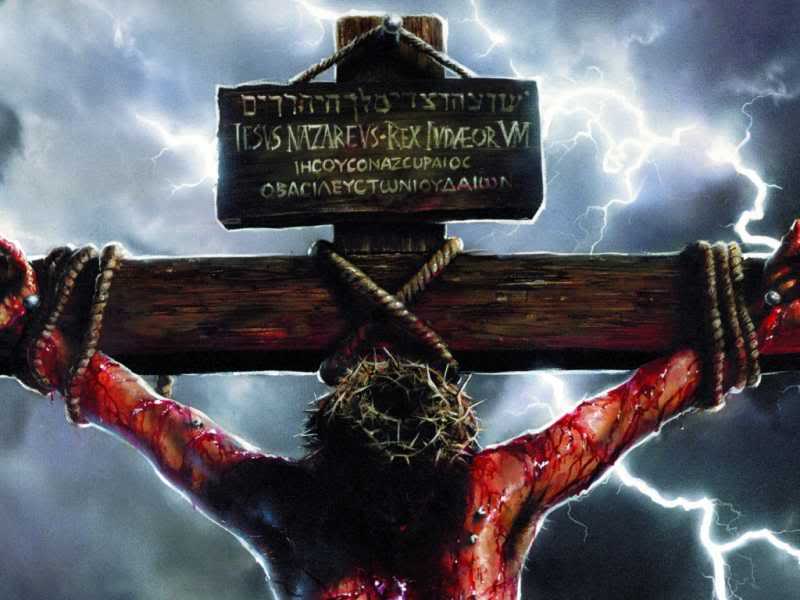
JESUS SPOKE THESE WORDS KNOWING SHORTLY HE WAS TO BE CRUCIFIED

These words are proof positive Jesus is the Son of God and the only person you can trust for truth about this world and your eternal destiny. He spoke these words shortly before He knowingly went to the The Cross.

Father, the hour has come; glorify your Son that the Son may glorify you, since You have given him authority over all flesh, to give eternal life to all whom you have given him. And this is eternal life, that they know you, the only true God, and Jesus Christ whom you have sent. I glorified you on earth, having accomplished the work that you gave me to do. And now, Father, glorify me in your own presence with the glory that I had with you before the world existed...

This image has an empty alt attribute; its file name is jesus-on-cross.jpg

For I have given them the words that you gave me, and they have received them and have come to know in truth that I came from you; and they have believed that you sent meI have given them your word, and the world has hated them because they are not of the world, just as I am not of the world. I do not ask that you take them out of the world, but that you keep them from the evil one. They are not of the world, just as I am not of the world. Sanctify them in the truth; your word is truth. As you sent me into the world, so I have sent them into the world. And for their sake I consecrate myself, that they also may be sanctified in truth.
“I do not ask for these only, but also for those who will believe in me through their word, that they may all be one, just as you, Father, are in me, and I in you, that they also may be in us, so that the world may believe that you have sent me.”

We all know that Jesus twelve disciples (fishermen and tax collectors) not the Pharisees and Sadducees went on to transform Rome and then the World with the Gospel (Good News) of Jesus Christ.

Whom will you put your trust in for the truth of this world and eternal life?

THE GREATEST PERSON WHO EVER LIVED

Megachurch Pastor Jonathan Stockstill recently released his debut bookThe Real Jesus, Challenging What You Know About the Greatest Person Who Ever Lived, as a way to combat cultural Christianity.

Here we have a megachurch pastor realising that the church has largely failed in its mandate to produce disciples who can produce more disciples but he is yet to realise that the church model he continues to pursue is a major part of the problem. Nevertheless, his new book conveys important truths and the following edited transcript of Stockstill’s interview with The Christian Post where he identifies the differences between cultural Christianity and the biblical mandate to follow Christ is helpful to understand the state of the church. Another observation of Stockstill in this interview; in my opinion, he does not give sufficient recognition to the Holy Spirit and His role in every believers life.

The Real Jesus: Challenging What You Know About the Greatest Person Who Ever Lived

Christian Post: What inspired you to write The Real Jesus?

Stockstill: Three things: 1) I have seen that we live in a cultural Christianity — whether seen in our Christmas and Easter holidays, or in the gospel choir on the Grammys. We are a product of Christianity. I wanted to put the person of Jesus Christ back in the center of what it means to be a Christian. 2) I had an encounter with God in October of 2007 that forever changed my life. I talk about it in the book. 3) Jesus said, “if you love me, you will obey my commands.” That verse pierced me to my core and sent me on a journey of discovering exactly what He taught. This book is all about the man, the model, and the message of Jesus Christ.    

CP: Does Western society have different versions of who Jesus is?

Stockstill: Absolutely. … People commonly confuse their church attendance, spiritual habits, and good deeds as a sufficient substitute for their own faith in and relationship with Jesus. Yes, all of those things are great, but unless these actions are the result of an intimate relationship with our Savior, then it’s all for naught. Our faith in Christ should be so flourishing and fruitful that we can’t help but regularly do those things. 

Sadly, the idea of Christianity has become a to-do list for many, while Jesus just desires to know each of us more intimately.          

CP: How do you keep your ministry focused on the real Jesus despite the many different versions of Jesus that exist in this day and age?

Stockstill: Here at Bethany Church, our mission statement is: “Bringing all people into the life, family, and purpose of God.” If our ministry isn’t bringing someone into a personal relationship with Jesus, connecting them with other believers to do life with, or empowering them to live out the God-given purpose in their life, then we know that what we are doing isn’t of the real Jesus that we read about in Scripture.    

CP: What can someone do to identify how they might be following the wrong gospel?

Stockstill: To be a Christian means to be a little Christ. The only way you can be a little Christ is if you study Him, follow Him, obey Him, and allow His Spirit to transform you into His image. 

Simply put, if you have a religious tradition, but not the things I mentioned, you may be on the wrong track!  

CP: Along with being a pastor, you’re also a worship leader. Does being a worshiper help your connection with God?

Stockstill: For sure! Whether I’m leading or not, there’s no doubt that entering into the presence of God through worship is powerful. 

There are many instances in the Bible where praise preceded a breakthrough. No matter what it may sound like, declaring whose we are and who He is will always create an environment where God can work in our lives and reveal Himself to us. 

A Jesus-centered mentality has changed how I lead worship. When I lead in worship, I focus all my attention on Jesus. His presence follows.      

CP: What do you say to those who might not believe in real-life encounters with the son of God?

Stockstill: It’s human nature to doubt and play the “what if” game. However, Jesus Himself said, “Blessed are those who believe without seeing me.” When you pursue Jesus, and not just what He offers, you can’t help but encounter who He is. 

For those with their own questions, I encourage you to seek out Jesus wholeheartedly for your answer(s) because you’ll soon experience for yourself everything that He is and wants you to become in Him.      

CP: Why do you think people do not have a real, raw and relevant relationship with God? What are the roadblocks? How can we cultivate that?

Stockstill: Life happens, and it’s so easy to get wrapped up in the things of today. Intentionally creating time and space for any relationship is difficult. With a world full of distractions, it’s no wonder that people lack authentic relationships with others and God. You may be doing a bunch of good things but that doesn’t mean you’re doing what’s best. And it’s hard to know what’s best unless you’re in constant communication with who has given us His best. Being still and knowing that He is God is most definitely easier said than done. 

We can’t hear His voice unless we’re close to Him and have removed ourselves from the things of this life. Until we are disciplined enough to create space for God, it’s crazy to think that we’ll know Him fully. Jesus was intentional about His relationships with others and even sought refuge in a garden to get clarity from His father, so shouldn’t we learn to do the same.

CP: What are the benefits of being a true disciple of Jesus and not just a fan?

Stockstill: Being a disciple of Christ means that we have everything through Him that God’s Word promises. As His sons and daughters, we will never be without because we are one with Him. 

A fan of Jesus may temporarily experience these things, but being His means that it’s ours for eternity.    

ANOTHER C.S.LEWIS FAN – DR ALISTER McGRATH

Dr. Alister McGrath is the Andreas Idreos Professor of Science and Religion at Oxford University. He holds three Oxford doctorates: a doctoral degree in molecular biophysics, a Doctor of Divinity degree in theology, and a Doctor of Letters degree in intellectual history. McGrath is a prolific author on many topics including science, faith, apologetics, C.S.Lewis, doctrine, and church history.

When asked, “Was there something in particular about C.S.Lewis that drew you to his writing”? his response will hopefully encourage you to start or read more of C.S.Lewis.

“You mustn’t laugh, but I had just become a Christian and was asking my Christian friends all these difficult questions. They got fed up and one of them, exasperated, said: “Why don’t you read C S Lewis?” I knew he had written a book about lions and wardrobes or something, so I bought one of his books and started to read. And it was as if someone turned the light on as if something clicked. I suddenly realised this makes sense. Nearly 50 years later I’m still reading, I’m still getting more out of C S Lewis because there’s so much there to discover.

If you have not read any of C S Lewis books then can I suggest you start with Mere Christianity. Perhaps Screwtape Letters. You decide once you have heard Dr Alister McGrath.