MAKING DISCIPLES IS THE MANDATE – CHURCH PLANTING IS THE OUTCOME

Where in the Bible are we commanded to plant churches? The simple and obvious response is, “it is not commanded.” Planting churches flows naturally out of making disciples. The heart of the church’s mission is to make disciples who make disciples.

In the New Testament, a disciple is more than someone who grows in their theological knowledge of God. A disciple fellowships with other believers, worships in a community, and prays like those assembled in a house in Acts 4.

And now, Lord, look upon their (the Worlds) threats and grant to your servants to continue to speak your word with all boldness, while you stretch out your hand to heal, and signs and wonders are performed through the name of your holy servant Jesus.” And when they had prayed, the place in which they were gathered together was shaken, and they were all filled with the Holy Spirit and continued to speak the word of God with boldness.Acts 4:29-31

Empowered by the Holy Spirit, a disciple then boldly declares the word of God such that more and more people become followers of Jesus.

Missionaries have historically been the most vital source of a nation’s social development. These findings yield two important conclusions about the work of Protestant missionaries. Their message was good for the world and their focus was making disciples.

This understanding of a disciple is highlighted throughout the New Testament. Through a study of the early movement in Ephesus, we see at least thirteen characteristics common to them all.

  • Disciples are respectful of people and culture when they engage in God’s mission (Acts 19:7, 37).
  • Disciples surrender to God’s will and maintain the work of their first love in a theocentrically focused missiological theology (Eph 1; Eph 5:18-19; Rev 2:4).
  • Disciples declare the mystery of Christ to the nations (Eph 3:4-10, 1 Tim 2:1-4).
  • Disciples are equipped by movement leaders for ministry (Eph 4:12; 1 Timothy).
  • Disciples exhibit the fruit of the Spirit (Eph 4-5).
  • Disciples are empowered by the Holy Spirit to be witnesses (Eph 5:18-19, 2 Tim 1:7).
  • Disciples are godly fathers and mothers, husbands and wives, employees and employers (Eph 5:22-6:9).
  • Disciples pray for opportunities to share the gospel because they know God is most glorified when more people are worshipping him (Eph 6:18-20, 1 Tim 2:1-4).
  • Disciples stand up for the marginalized (1 Tim 2:8-15, 5:3-16; Rev 2:6).
  • Disciples learn sound doctrine from movement leaders who can teach (1 Tim 4:7).
  • Disciples are willing to suffer for the sake of the gospel (2 Tim 1:8).
  • Disciples are committed to multiplying more disciples (2 Tim 2:2).
  • Disciples defend the faith against false teaching (Rev 2:2).

Extracts from an article “Is Church Planting a Biblical Mandate?” October 28, 2020, by Jackson Wu

WHAT’S WRONG WITH CHURCH

A major issue afflicting the Church is the “clergy-laity mentality.” It is a pervasive mindset where the paid clergy leads the church and they are called “pastors.” They do most of the ministry work and laypeople serve the ministry of that pastor.

The Apostle Paul writes that the Church, the household of God, is “built on the foundation of the apostles and prophets, with Christ Jesus Himself as the chief cornerstone.” Ephesians 2:20

Paul continues that the Lord gave fivefold offices for the edification of the Church, specifically

apostles, prophets, evangelists, pastors and teachers to equip his people for works of service, so that the body of Christ may be built up until we all reach unity in the faith and in the knowledge of the Son of God and become mature, attaining to the whole measure of the fullness of Christ.” Ephesians 4:11-12

All five of these gifts are needed and on a broad-based level, you need the apostles and prophets working together, hearing from God together. To use military terminology: apostles [are] the generals. The prophets being the seers, they’re the ones getting the intel [from God],

For a local church, there needs to be impartation from all those gifts, equipping from all those offices to equip people to minister to those who are not part of the Church, not just to minister to each other. The apostles are the builders, the church-planters, those who are trainers and equippers. And the prophetic is to come alongside them to help guide and speak to that — what is the Lord saying right now in the present. All five offices are needed to work together so that the Church can hear the full counsel of God.


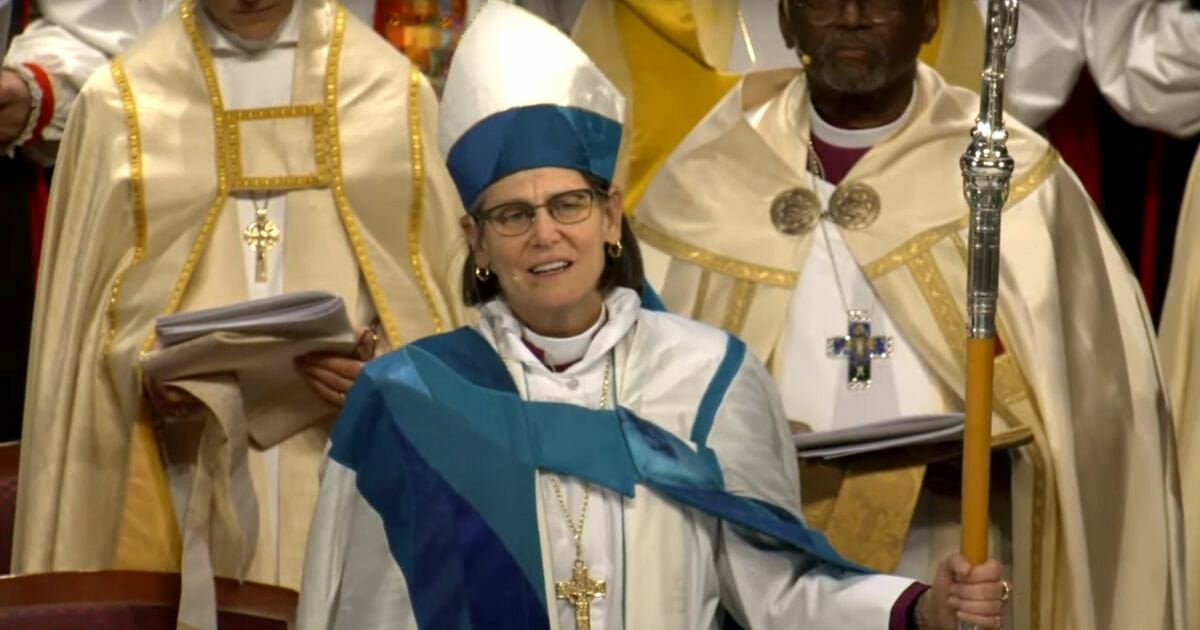
Episcopal church ordains lesbian Bishop

Unfortunately, the institutional church came up with the model of training one man, then one man or woman and now transgender as well to be the pastor/leader of the church. This model is not Biblical and is in fact the apostate church Jesus (Matthew 24:12) and Paul (2 Thessalonians 2:1-4 ) spoke of as one of the “end times” signs. It has no understanding of the fivefold gifts working together to see each and every believer functioning and bringing the Kingdom into their workplace, in the marketplace, into their school, then a greater expression of Jesus is manifested in society. What is needed is small-a apostles?

Larry Kreider of DOVE International — an interdenominational global family of churches and ministries on six continents believes that an apostolically inclined small-a apostle is motivated by and is thinking on a macro, big-picture level, and wants to see the Kingdom of God extend across their city, state, region, nation and world. As with any other spiritual gift and vocations, this gifting is to be called out and affirmed by others in the Body of Christ. To function in these gifts, one needs to see the gifting’s in others, It’s not just someone who prophesies or carries a prophetic gift, but someone who trains up and pours into others so they can mature spiritually. 

This is truly the church as described in the Book of Acts and will be the church that overcomes during the tribulation in the last days before Jesus returns “Be faithful until death, and I will give you the crown of life. “Anyone who has an ear should listen to what the Spirit says to the churches. The victor will never be harmed by the second death.Revelation 2:10-11

REPENTANCE THAT LEADS TO SALVATION

For godly grief produces a repentance that leads to salvation without regret, whereas worldly grief produces death. For see what earnestness this godly grief has produced in you …” 2 Corinthians 7:10-11

To get into Christ’s Kingdom, you have to truly repent, truly dying to self so that you cannot go back to your old life. Paul talks about godly grief, being convicted by the Holy Spirit about your sin. Knowing how abhorrent sin is to God you will have “godly grief that leads to repentance“. You will also realise how good, how gracious and merciful God was to send His Son, Jesus, to pay the price for your sin of rebellion against Him and His values.

Once we have truly repented and accepted Jesus as our Saviour and Lord, God the Father sends the Holy Spirit to indwell our spirit. God’s Word tells us that our spirit is the lamp of the Lord and a lamp requires oil (Holy Spirit) to function as God intended. When Adam and Eve sinned the Holy Spirit departed their spirit, so they died spiritually immediately and their bodies died some 900 years later.

The spirit of man is the lamp of the Lord, searching all his innermost parts.” Proverbs 20:27

Without the Holy Spirit we cannot live the Christian life. He is the one that brings about the sanctification process, making you Christ like. He is the one that produces the fruit of the Spirit in your life; love, joy, peace patience, faithfulness, gentleness, goodness, kindness and self control. He is also one that provides the gifts of the Spirit for ministry; words of knowledge, words of wisdom, prophecy, faith, healings, miracles, discerning of spirits, speaking in tongues, interpretation of tongues. You are not saved unless the fruit of the Spirit and the gifts of the Spirit are evident in your life.

Sadly, there are many people sitting in the pews of churches that have not experienced “godly grief that produces a repentance that leads to salvation“. The “end times” parable of the Ten Virgins tells us that half of them that are waiting for the bridegroom (Jesus) to return do not have oil for their lamps and Jesus tells them to depart from me I do not know you. This parable reveals that half the people in the “end times” church that think they are Christians and are waiting for Him to return are not saved and will be on earth when the wrath of God is poured out with the Trumpet and Bowl judgements.

For Christians this should be a wake up call, we have a mission field in our churches people who need to experience “godly grief that produces a repentance that leads to salvation.”

JIREH/HOW HE LOVES

Love this song from Justin Bieber and Chandler Moore posted by Churchome. They are a community built on the life and teachings of Jesus.

Extract from their website:

“The name, “Churchome,” reflects our belief that we are going to be a church that functions like a home, that looks like a home, and that loves like a home. And ultimately, what we experience on earth will look a lot like heaven.

Luke 15 has become a hallmark passage for our community. The idea and concept of home is centric in scripture. It is the idea that every human is a sojourner and he/she is returning home. Home is not so much brick and mortar, an actual space or room. Home is a place and a posture our soul discovers in Jesus—where the created returns to a loving relationship with the Creator. Bringing people home is what God does. Whether prodigals or prodigies, artists or intellectuals, rebels or rejects, God’s arms are open to all.”

INSTITUTIONAL CHURCHES COMPROMISE WITH THE WORLD

Over the last few decades in the West, and particularly in America, we have seen the destruction of the institution of marriage, the removal of God’s Word in most areas of public life, particularly schools, and the embracing of Critical Race Theory. Moreover, most pulpits are silent about governmental abuse, the LGBTQ agenda, and the blatant murdering of millions of babies. This is an indictment against the nations and the church – our silence speaks volumes. Are God’s people watchmen or cowards?

The pulpit regulates the spiritual condition of God’s people which affects the nation. A lukewarm, sex-saturated culture (and church) simply reflects the lack of conviction in the pulpit as well as the pew.

Sadly, many pastors under the direction of their institutions are exchanging truth for passivity, boldness for cowardliness, and conviction for comfort…they are not aflame with righteousness. They are motivational speakers rather than preachers of righteousness and females taking male roles of leadership in the church.

Arlington Street Anglican Church
This image has an empty alt attribute; its file name is C2V7WZV7T7IDEN4OSMG2MMVMYI.jpg
Westboro Baptist Church

Pastors (Christian leaders) must take responsibility for the spiritual health of today’s church, and the nation. We don’t need more marketing plans, demographic studies, or giving campaigns; we need churches as outlined in the Book of Acts filled with the Spirit of God. Disciples making more disciples of Christ.

The Institutional churches and the prosperity gospel have emasculated the church. It will be the church of Laodicea:

“‘I know your works: you are neither cold nor hot. Would that you were either cold or hot! So, because you are lukewarm, and neither hot nor cold, I will spit you out of my mouth. For you say, I am rich, I have prospered, and I need nothing, not realizing that you are wretched, pitiable, poor, blind, and naked. I counsel you to buy from me gold refined by fire, so that you may be rich, and white garments so that you may clothe yourself and the shame of your nakedness may not be seen, and salve to anoint your eyes, so that you may see.Revelation 3:15-18

This is the church that is “Left Behind” to experience the wrath of God with the Trumpet and Bowl judgements. As I have explained previously, each of the seven churches of Revelation 2 and 3 represent the church in each of the seven years prior to Jesus return (70th week of the 70 Weeks Prophecy given to Daniel by Gabriel – Daniel 9:24-27). The church of Laodicea is the last church that will live through the seventh year when the wrath of God is poured out on an unrepentant world. The previous church, the church of Philadelphia is the church that is raptured.

“‘I know your works. Behold, I have set before you an open door, which no one is able to shut. I know that you have but little power, and yet you have kept my word and have not denied my nameBecause you have kept my word about patient endurance, I will keep you from the hour of trial that is coming on the whole world, to try those who dwell on the earth. I am coming soon. Hold fast what you have, so that no one may seize your crown.Revelation 3:10-11

Which church will you belong to the church of Philadelphia or the church of Laodicea?

A COVENANTAL COMMUNITY AWAITING THE DAY OF THE LORD

The church of Jesus Christ is a community of redeemed sinners bound to their Lord and to one another in the bond of love known as the covenant of grace. God gives Himself to them with the Holy Spirit to be their God and takes them as His people.

But the Helper, the Holy Spirit, whom the Father will send in my name, He will teach you all things and bring to your remembrance all that I have said to you.” John 14:26

The covenant promise to the Jews was spelled out in Leviticus. “And I will walk among you and will be your God, and you shall be my people.Leviticus 26:12

Likewise, Christians belong to their covenant Lord: “None of us lives to himself and none of us dies to himself…whether we live or whether we die, we are the Lord’s” (Romans 14:7–8). This also means that Christians are bound to one another and must think of themselves as part of a community. 

Paul expresses this truth using the language of the body in Ephesians 4:25: “We are members of one another.” We are therefore to take our covenant brothers and sisters into account in all aspects of our Christian living. The covenant community is no place for rugged individualists. We must constantly be asking, “How will this affect other believers?”

If we love our covenant brothers and sisters, we will seek what is best for them, especially their growth in grace. This can be done in a positive way by exhortation and mutual encouragement. The writer to the Hebrews, after speaking of the blessings of the new covenant that are provided by the blood of Jesus, has this stirring call for God’s people:

And let us consider how to stir up one another to love and good works, not neglecting to meet together, as is the habit of some, but encouraging one another, and all the more as you see the Day drawing near” (Hebrews 10:24–25)

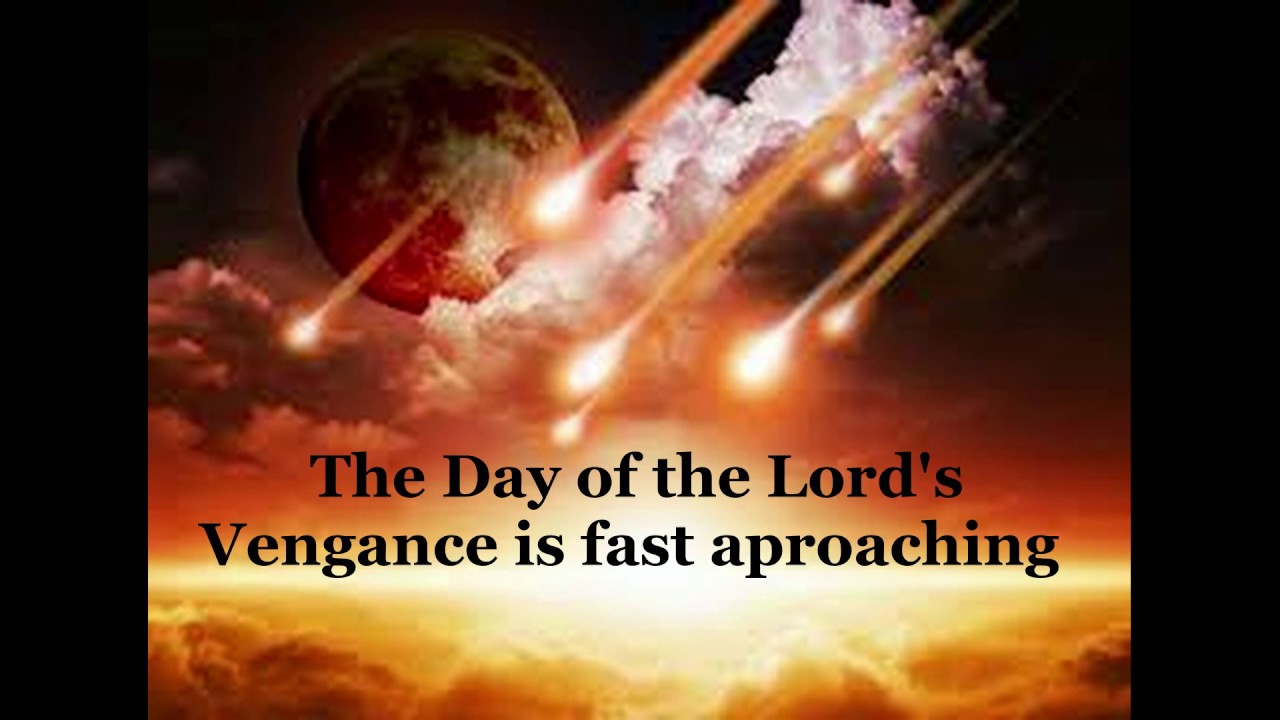
What Day is drawing near? The Day of the Lord

For the day of the Lord is near upon all the nations. As you have done, it shall be done to you; your deeds shall return on your own head.” Obadiah 1:15

Woe to you who desire the day of the Lord! Why would you have the day of the Lord? Is not the day of the Lord darkness, and not light, and gloom with no brightness in it?” Amos 5:19-20

Alas for the day! For the day of the Lord is near, and as destruction from the Almighty it comes.” Joel 1:15

The sun shall be turned to darkness, and the moon to blood, before the great and awesome day of the Lord comes.” Joel 2:31

The great day of the Lord is near, near and hastening fast; the sound of the day of the Lord is bitter; the mighty man cries aloud there. A day of wrath is that day, a day of distress and anguish, a day of ruin and devastation, a day of darkness and gloom, a day of clouds and thick darkness, a day of trumpet blast and battle cry against the fortified cities and against the lofty battlements.” Zephaniah 1:14

Neither their silver nor their gold shall be able to deliver them on the day of the wrath of the Lord.Zephaniah 1:18

For behold, the day is coming, burning like an oven, when all the arrogant and all evildoers will be stubble. The day that is coming shall set them ablaze, says the Lord of hosts, so that it will leave them neither root nor branch. But for you who fear my name, the sun of righteousness shall rise with healing in its wings.Malachi 4:1

And I will show wonders in the heavens above and signs on the earth below, blood, and fire, and vapor of smoke; the sun shall be turned to darkness and the moon to blood, before the day of the Lord comes, the great and magnificent day. And it shall come to pass that everyone who calls upon the name of the Lord shall be saved.” Acts 2: 19-21

Now concerning the times and the seasons, brothers, you have no need to have anything written to you. For you yourselves are fully aware that the day of the Lord will come like a thief in the night. While people are saying, “There is peace and security,” then sudden destruction will come upon them as labour pains come upon a pregnant woman, and they will not escape.1 Thessalonian 5:1-3

But the day of the Lord will come like a thief, and then the heavens will pass away with a roar, and the heavenly bodies will be burned up and dissolved, and the earth and the works that are done on it will be exposed.2 Peter 3:10

All of the above Scriptures reveal that the awesome Day of the Lord is a time of intense judgement for unbelievers. However, Paul also tells us the good news about the awesome Day of the Lord: “Henceforth there is laid up for me the crown of righteousness, which the Lord, the righteous judge, will award to me on that day, and not only to me but also to all who have loved his appearing.2 Timothy 4:8

We do not like to think about God’s judgement but Scripture is clear the time is coming when God pours out His wrath upon an unrepentant world

BIBLE DISCOVERY HOME GROUPS

An important step in making disciples for Jesus. You don’t have to be a graduate of a Bible College to conduct these Bible studies. Family as a Mission to Make Disciples.

In this video, Torben introduces you to three simple steps you can take to see a Bible Discovery Group begin! These three steps provide a simple but amazing tool you can use to host your own Bible Group. Last Reformation (L.R.) is already seeing many new groups start all over America!

Last Reformation plans to network with groups who are ready to start a Bible Discovery Group or host THE KICKSTART PACKAGE. The goal being to see a reformation of the church, back to the REAL JESUS FELLOWSHIP – just like the early church, with love, power, and growth! Then they will make disciples and see Jesus build HIS church!

L.R. expects this is going to explode! I think they are right! So watch the video! Share the video!

HOW CHURCHES ARE TRANSFORMED

In this video, Pastor Craig from Destiny Church in Naples, Florida tells about his experience with the Kickstart Weekend they had there a few months ago. He tells how it has been a big blessing in his church, and how it has encouraged other pastors to have Kickstarts in their churches!

Jesus has given us a command, and that is to make disciples. This is truly what a Kickstart Weekend is doing. It is a beautiful tool in disciple-making – to equip people, to help people to understand and share the Gospel, pray for the sick, cast out demons, and make strong disciples wherever they are!

This is a description of the church as described in the Book of Acts. Church as God intended and certainly a description of the “end times” church which we are told will come under intense persecution.

CHURCH IN THE LAST DAYS

The effects of the pandemic, the growing cultural disdain for “organized religion,” and the socio-politico turn to secularism have reduced church rolls. A Gallup report going all the way back to 1937 shows formal church membership has dropped from a high of 70% to 39% in 2020.

“Continued decline in future decades seems inevitable,” predicted Gallup Senior Editor Jeffrey M. Jones.

Is it over for American churches? Are we living in the era of end-times apostasy signaling an inevitable, irreversible slow fade of church life as we know it?

Movements come and go, say some historical observers, and it just may be that the church’s journey in finite time from the launch at Pentecost has sputtered out. Institutional atrophy seems inevitable.

Sadly, the institutional quest causes a church to become introverted, focusing more on its institutional survival than on incarnational mission. The focus on survival and reconstruction on the ruins of a collapsed institution means a church’s own survival becomes more important than the Lord who created it, the truth He gave it, the call to which He summoned it, and the people to whom He sent it.

The biblical view is the kairological outlook: God so often uses catastrophes for His purposes and no doubt this will be a new day for the Church of Jesus Christ. The church Jesus intended as described in the Book of Acts.

The focus must not be on trying to breathe life into dying institutions. In the biblical scheme, death leads to resurrection. Rather than seeing this period with the desperation of hopeless people watching the creep of finite time bringing death to antiquated hulks, the better focus should be that of the infusion of new life. Rather than pre-occupation with sustaining structure, the energy should be spent on building ministry, making disciples of Jesus. Instead of mourning the death that is inevitable in chronos-time, it is better to rejoice at the new kairological day that is rising before us.

adapted from an article in Christian Post: A New Day for the Church Part 1 by Wallace B Henley

CHURCH LEADERSHIP

Even as far back as the 1970s many church goers began to be suspicious of ordination and all that went with it. The spectacle of some leaders being given special status among the people of God seemed contrary to the essential equality of all people in creation, fall and redemption. When accompanied by the wearing of special clergy robes and designation as “Rev” and then the clambering for such giddy titles as “Right Rev.” and “Very Rev.”, the whole ordination thing seemed reminiscent of Matt 23:1-12 (Scribes and Pharisees). Women clamoured after these top jobs.

The liturgical construct separated ordained clergy from the people of God and from the eldership. Clergy were placed on a pedestal (with all its perils), the eldership was diminished (with all its perils) and the people of God were left behind in this hierarchical understanding of church (a tragedy).

The present rising pattern of non-ordained persons being entrusted with significant pastoral ministries in our churches may be a reaction against the abuse of ordination as noted above. Which makes it time to look at what God’s Word says about the appointment of pastors and leaders.

1 Timothy bear witness to an orderly process:

  • 1 Tim 2:7 on Paul’s appointment as a preacher, apostle and teacher;
  • 1 Tim 3:1-13 on the criteria of character and gifting applicable to church leaders;
  • 1 Tim 4:6 on the value of training in the ‘words of the faith’ and ‘doctrine’;
  • 1 Tim 4:13 on the key word ministries to be undertaken by leaders;
  • 1 Tim 4:14 on the recognition of the role of the ‘council of elders’ (πρεσβυτέριον) in recognising gifts of ministry (see also 2 Tim 1:6b);
  • 1 Tim 6:2 on expected standards for the content of teaching by church leaders.

The context of 1 Timothy is relevant to this discourse. Paul had left Timothy in Ephesus to continue his own ministry elsewhere (1 Tim 1:3). This was an apostolic delegation which many see as part of the transition from the extraordinary and time-bound office of apostle to the more enduring office of pastor or shepherd. We do know that Timothy had been well-reared in the faith by his maternal ancestors (2 Tim 1:5; 3:14). However, he was also young, subject to youthful passions (2 Tim 2:22), possibly subject to self-doubt (2 Tim 1:7) and open to dismissive treatment because of his youth (2 Tim 4:12). The recognition and affirmation of Timothy by Paul and the council of elders was important as testimony both to him and to the church as to his suitability for ministry.

Therefore, by all means let’s scrap the titles, robes and assumed status that can be implied by the traditional construct of ordination. Equally, let’s locate the work of pastor within the eldership rather than as a separate order and let’s recognise the gifting and service of the whole people of God. However, let’s not lightly dismiss the value of orderly processes to test and affirm those called to pastoral ministry.

Of course, the same applies to all roles in church service. The youth leader, small group leader or teacher of children all need processes of testing, training and affirmation before being appointed to their roles. However, the high potential of pastoral leaders to do good or harm demands that they receive particular scrutiny before their ministry is recognised.

This article is adapted from an article by David Burke “Rethinking Ordination” David was a lecturer at Christ College. He was almost refused ordination in 1979 for his views on clergy titles and robes.