WHAT FAITH IS AND IS NOT

Randy Alcorn lost his wife Nanci recently due to cancer. Obviously Nanci and Randy prayed for healing when they first learned the bad news. Fortunately, both learned a great deal about God through the experience and as a result, their trust and faith in God increased. Moreover, we are benefiting now from Randy sharing their story with us

Nanci Alcorn, wife to best-selling author Randy Alcorn has passed away on March 28th after a long batter with colon cancer.

On November 14, 2019, Nanci wrote the following in her journal:

Today I am thinking about “faith.” I have learned so much about faith.

What faith is not:

Trying to gather as much hope and “possibilities” in my own mind to reach a certain level.

Believing in that level of possibilities as hard as I can.

Presenting that package of my own hopes and dreams to God as my personal qualification to receive my hopes and dreams

God weighing the level of that package in order to determine the level of His answer to my prayers If I work up enough hope on my own, God will answer my prayers according to my wishes

What faith is:

A deep and continued study of the character and work of God Almighty

A deep and continued discipline of prayer—listening to the Holy Spirit—praying Scripture—seeking forgiveness—asking for enlightenment—praising Him for His character and works

Then, based upon the above, submit your requests to God Almighty—placing your well-grounded knowledge of His character and works into each request, always asking His will be done

Faith is being assured that God Almighty always acts according to His character and works. He never waivers. You can trust in God Almighty to always do the right thing. Nothing slips through His grid. God has everything planned, and all His plans will succeed.

The more I understand God’s character and works, the stronger my faith will be, and the more I want His will to be done knowing God does all things well.

The more I understand God’s: – Omniscience, Omnipotence, Grace, Mercy, Justice/Worth, Immanence, Immutability, Faithfulness, Love, Unity, Trinity, Holiness. The more my faith in Him will calm my soul.

Randy adds the following:

Some people hold tenaciously to a faith that their child will not die, that their cancer will disappear, and that their spouse will recover from a stroke. Do they have faith in God or is their faith in what they desperately want God to do?

If we base our faith on lack of affliction, our faith lives on the brink of extinction and will fall apart at any moment because of a frightening diagnosis or a shattering phone call. Token faith will not survive suffering, nor should it. Only when we jettison ungrounded and untrue faith can we replace it with valid faith in the true God—faith that can pass, and even find strength in, the most formidable of life’s tests.

God tells us that trials in which evil and suffering come upon us “have come so that your faith—of greater worth than gold, which perishes even though refined by fire—may be proved genuine and may result in praise, glory, and honor when Jesus Christ is revealed” (1 Peter 1:7). Paul Tournier wrote, “If healing through faith is striking, how much more so are spiritual victories without healing.”

Several years ago, before Nanci was diagnosed with cancer, I wrote this in a blog titled “If I Have Enough Faith, Will God Heal Me?”:

We should pray for ourselves and our suffering loved ones, not simply try to pray away suffering. ‘God, please heal this cancer is appropriate. ‘God, please use for your glory this cancer, so long as I have it’ is equally appropriate.

Let me be clear: God can and sometimes does heal presently, and whenever He does we should celebrate His mercy! I have often prayed for healing and sometimes I have witnessed it, and it’s a wonderful thing to behold and celebrate. But ultimately, all healing in this world is temporary, since people’s bodies inevitably deteriorate and die (after Lazarus died and was risen in his mortal body, eventually he had to die again) Resurrection healing will be permanent. For that our hearts should overflow with praise to our gracious God.

Nanci and I have long known that prosperity theology, or the health and wealth gospel, is a deception, not the true gospel. So we did not even once cling to the “certainty” that God would heal her in this world under the Curse.

Nanci’s journals overflow with the promises of God, and many quotes from Spurgeon and the Puritans, people who died long ago (some of whom she probably already met—if there is a line for those waiting to meet Spurgeon, she’s probably in it having delightful conversations). Nanci never quoted from aging and dying prosperity preachers, who will all die of something and daily get closer to death even as they promise “It’s always God’s will to heal you,” typically adding “send us your prayer requests for healing, along with a love offering [money].”

Though we prayed for it every night for four years, we understood that healing was never a certainty, and also knowing full well that sometimes He chooses to heal and sometimes He doesn’t, and even when He does the healing is temporary, and death always comes. “For death is the destiny of every person, and the living should take this to heart” (Ecclesiastes 7:2). When doctors told us Nanci was going to die, she told me, “We always knew that, we just didn’t know when, and we still don’t.”

But of course, God promises the death of death. He will not let it die a natural death, He will decisively “swallow up death forever” (Isaiah 25:8). Death will not have the last word. God will.

Jesus said to Martha, mourning the death of her brother Lazarus, “I am the resurrection and the life. The one who believes in me will live, even though they die; and whoever lives by believing in me will never die. Do you believe this?” (John 11:25-26).

Answering the question Jesus asked Martha, Nanci and I both said yes—we DO believe you, Jesus. We believe that even when we die, we will live, and in the sense of final death, we will never die at all. We will depart a cursed earth to live with Him in the present Heaven, from which He will one day bring our spirits down to join our bodies in resurrection, and we will then live forever on God’s New Earth.

Randy, God does not bring our spirits down to join our bodies in the resurrection. God raises the dead first and then raptures the living Saints and they meet Jesus in the air in their new bodies (changed in an instant). Later, they come down from heaven in their resurrected bodies to rule and reign with Jesus during His Millennial reign on this earth.

For the Lord, himself will descend from heaven with a cry of command, with the voice of an archangel, and with the sound of the trumpet of God. And the dead in Christ will rise first. Then we who are alive, who are left, will be caught up together with them in the clouds to meet the Lord in the air, and so we will always be with the Lord.” 1 Thessalonians 4:13-14

For the trumpet will sound, and the dead will be raised imperishable, and we shall be changed. For this perishable body must put on the imperishable, and this mortal body must put on immortality.1 Corinthians 15:52-53

DAVID’S PRAYER WAS ALSO AN AMAZING PROPHECY

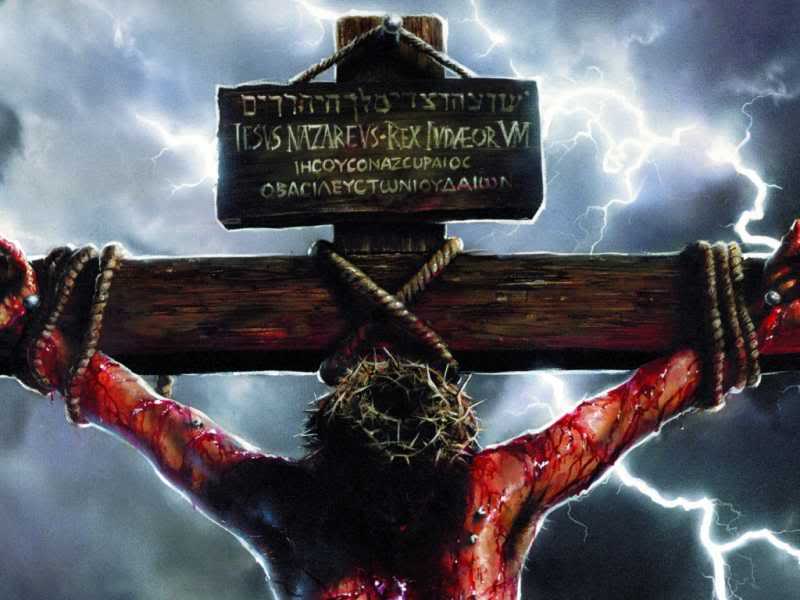
Thank goodness we have the Psalms: how helpful they are in our Christian walk, they explore the full range of human experience in a very personal and practical way. However, one psalm, Psalm 22 stands out because Jesus quotes verse 1 as His last words from the Cross. Why did Jesus take us to this psalm? It is obvious when we read the rest of the psalm, the psalm is a prophecy of what Jesus was experiencing on The Cross at the time He spoke it.

David had no understanding God was using Him to deliver a prophecy that provides incredible detail about what Jesus would experience on The Cross one thousand years later. David was obviously going through a terrible time in his life to have expressed the words he did in this prayer but consider that God gave David the words to pray so that His prayer could be used by Jesus to prove He is who He said He was, the promised Redeemer of not only Israel but the World.

My God, my God, why have you forsaken me? Why are you so far from saving me, from the words of my groaning? O my God, I cry by day, but you do not answer, and by night, but I find no rest.
Yet you are holy, enthroned on the praises of Israel. In you our fathers trusted; they trusted, and you delivered them. To you they cried and were rescued; in you, they trusted and were not put to shame.
But I am a worm and not a man, scorned by mankind and despised by the people. All who see me mock me; they make mouths at me; they wag their heads; “He trusts in the LORD; let him deliver him; let him rescue him, for he delights in him!
I am poured out like water, and all my bones are out of joint; my heart is like wax; it is melted within my breast; my strength is dried up like a potsherd, and my tongue sticks to my jaws; you lay me in the dust of death. For dogs encompass me; a company of evildoers encircles me;
they have pierced my hands and feet— I can count all my bones— they stare and gloat over me; they divide my garments among them, and for my clothing they cast lots..
. ” Psalms 22:1-8

Note how Psalm 22 ends, David understood that regardless of whether God answered his prayer, God is still in control of His universe and this scripture will come to pass:

As I live, says the Lord, every knee will bow to Me, and every tongue will give praise to God.Romans 14:11

Moreover, it reveals that King Jesus will rule over the nations from Jerusalem in His soon coming Millennial Kingdom.

I will tell of your name to my brothers; in the midst of the congregation, I will praise you: You who fear the LORD, praise him! All you offspring of Jacob, glorify him and stand in awe of him, all you offspring of Israel! For he has not despised or abhorred the affliction of the afflicted, and he has not hidden his face from him but has heard when he cried to him. From you comes my praise in the great congregation; my vows I will perform before those who fear him. The afflicted shall eat and be satisfied; those who seek him shall praise the LORD! May your hearts live forever! All the ends of the earth shall remember and turn to the LORD, and all the families of the nations shall worship before you. For kingship belongs to the LORD, and he rules over the nations. Psalms 22:22-28

They came to life and reigned with Christ for a thousand years. The rest of the dead did not come to life until the thousand years were ended. This is the first resurrection. Blessed and holy is the one who shares in the first resurrection! Over such the second death has no power, but they will be priests of God and of Christ, and they will reign with him for a thousand years.” Revelation 20:4-6

A lot of bad theology inevitably surfaces when we face suffering. When people lose their faith because of suffering, it suggests a weak or nominal faith that didn’t account for or prepare them for evil and suffering. Any faith not based on the truth needs to be lost—the sooner, the better.

Suffering and evil exert a force that either pushes us away from God or pulls us toward Him. But if personal suffering gives sufficient evidence that God doesn’t exist, then surely I shouldn’t wait until suffer to conclude He’s a myth. If my suffering would one day justify denying God, then I should deny Him now in light of other people’s suffering.

Believing that God exists is not the same as trusting the God who exists. A nominal Christian often discovers in suffering that his faith has been in his church, family, career, or social network, but not Christ. As he faces evil and suffering, he may find his beliefs shaken or even destroyed. But genuine faith—trusting God even when we don’t understand—will be made stronger and purer.

The last three paras have been excerpted from Randy Alcorn’s book “90 Days of God’s Goodness”.

LOVE OF GOD NEVER CEASES

All of God’s promises are great and there are so many we will never exhaust them. But the following verse is such comfort it is worth putting it up somewhere to remind you. It is a popular verse so perhaps you have already done so.

The steadfast love of the Lord never ceases; his mercies never come to an end; they are new every morning; great is your faithfulness. “The Lord is my portion,” says my soul, “therefore I will hope in him.”
The Lord is good to those who wait for him, to the soul who seeks him. It is good that one should wait quietly for the salvation of the Lord.
Lamentations 3:22-26

IN WHOM DO YOU TRUST AND FOR WHAT?

I will say to the LORD, “My refuge and my fortress, my God, in whom I trust.For He will deliver you from the snare of the fowler and from the deadly pestilence. He will cover you with his pinions, and under his wings, you will find refuge; his faithfulness is a shield and buckler. You will not fear the terror of the night, nor the arrow that flies by day, nor the pestilence that stalks in darkness, nor the destruction that wastes at noonday ... Because you have made the LORD your dwelling place – the Most High, who is my refuge – no evil shall be allowed to befall you, no plague come near your tent. For he will command his angels concerning you to guard you in all your ways.Psalms 91:1-6, 9-11

Now, this magnificent poem does not necessarily mean that the faithful – those who dwell “in the shelter of the Most High”– will not get the pestilence or suffer the other afflictions mentioned. 

Satan used this Psalm in his temptation of Jesus (Matthew 4:5-7), trying to get him to invoke its promise that angels “will bear you up” by throwing himself off from the pinnacle of the Temple.  But such an interpretation, Jesus points out, would be to put God to the test, violating Deuteronomy 6:16.

But those who trust God as their refuge will be delivered from the evil of the pestilence and from fear of it.

Look at these promises of God to David. They are yours if you hold fast to God in love.

Because He holds fast to me in love, I will deliver him; I will protect Him because he knows my name.
When he calls to me, I will answer him; I will be with him in trouble; I will rescue him and honor him.
With long life, I will satisfy him and show him my salvation
.” Psalms 91:14-16

TRUE HAPPINESS IS FOUND IN JESUS

To be holy is to see God as He is and to become like Him, covered in Christ’s righteousness. And since God’s nature is to be happy, the more like Him we become in our sanctification, the happier we will be. When did you last hear that message?

Forcing a choice between happiness and holiness is utterly foreign to Scripture. If it were true that God wants us to be only holy, wouldn’t we expect Philippians 4:4 to say, “Be holy in the Lord always” instead of “Rejoice in the Lord always”?

Why should the nations say, “Where is their God?” Our God is in the heavens; He does all that he pleases.” Psalms 115:2-3

God is decidedly and unapologetically anti-sin, but he is in no sense anti-happiness. Indeed, holiness is exactly what secures our happiness. Charles Spurgeon said,

Holiness is the royal road to happiness. The death of sin is the life of joy.”

It’s common to hear objections to the word happy based on its etymology, or history. One commentator says that “Happy comes from the word ‘hap,’ meaning ‘chance.’ It is therefore incorrect to translate [the Greek word makarios] as ‘happy’”

When people say they want to be happy, they are typically making no statement whatsoever about chance. D.A. Carson argues in Exegetical Fallacies, “The meaning of a word cannot be reliably determined by etymology” (32). King James Version translators wouldn’t have used happy and other forms of the root word happiness thirty-six times or translated makarios as some form of happy seventeen times if they thought its word history disqualified happy as a credible biblical word.

Unfortunately, because Bible teachers such as Oswald Chambers saw people trying to find happiness in sin, they came to think that pursuing happiness is sinful. Chambers said, “Joy is not happiness,” and continued, “There is no mention in the Bible of happiness for a Christian, but there is plenty said about joy” (God’s Workmanship, and He Shall Glorify Me, 346).

That simply is not true. In the King James Version, which Chambers used, Jesus tells his disciples, “If ye know these things, happy are ye if ye do them” (John 13:17). Speaking of faithful Christians, James said, “We count them happy which endure” (James 5:11). Peter said to fellow believers, “If ye suffer for righteousness sake, happy are ye” (1 Peter 3:14 ) and “If ye be reproached for the name of Christ, happy are ye” (1 Peter 4:14).

How beautiful upon the mountains are the feet of him who brings good news, who publishes peace, who brings good news of happiness. (Isaiah 52:7)

It’s hard for me to conceive of a greater insult to Jesus than to effectively deny what Hebrews reveals about his happy nature: “God, your God, has anointed you with the oil of gladness above your companions(Hebrews 1:9 NASB).

It also seems insulting to say that the best Father in the universe doesn’t want his children to be happy. In reality, the Bible is a vast reservoir containing, not dozens, but hundreds of passages conveying happiness. I’ve found more than 2,700 Scripture passages where words such as joy, happiness, gladness, merriment, pleasurecelebrationcheerlaughterdelightjubilationfeastingexultation, and celebration are used. Throw in the words blessed and blessing, which often connotes happiness, and the number increases.

Our message to the world should not be “Don’t seek happiness,” but “You’ll find in Jesus the happiness you have always been seeking.”

Adapted from the article “Common Christian Myths About Happiness” by Randy Alcorn March 11th, 2021 in Patheos.

GOD IS OUR REFUGE AND STRENGTH

God is our refuge and strength, a very present help in trouble. Therefore we will not fear though the earth gives way, though the mountains be moved into the heart of the sea, though its waters roar and foam,
though the mountains tremble at its swelling.
Psalms 46:1-3

Do you live your life according to this Scripture? You will need to in the years ahead as the following Scripture comes to pass.

And you will hear of wars and rumors of wars. See that you are not alarmed, for this must take place, but the end is not yet. For nation will rise against nation, and kingdom against kingdom, and there will be famines and earthquakes in various places. All these are but the beginning of the birth pains.
Then they will deliver you up to tribulation and put you to death, and you will be hated by all nations for my name’s sake. And then many will fall away and betray one another and hate one another. And many false prophets will arise and lead many astray. And because lawlessness will be increased, the love of many will grow cold.
Matthew 24:6-12

Our true reality must be: God is our refuge and strength. Jesus made it possible for God our Father to send the Holy Spirit to empower us to live the Christian life. Those who live under the guidance and influence of the Holy Spirit will live a life of faith in Christ, abound in Christian graces, and know they have everlasting life. We must also remember not to quench the work of the Holy Spirit in our lives nor grieve Him.

Do not quench the Spirit.1 Thessalonians 5:19And do not grieve the Holy Spirit of God, by whom you were sealed for the day of redemption.Ephesians 4:30

There are some 2000 prophecies of Jesus’ second coming. God has told us beforehand how events will unfold before Jesus returns first to take up His Saints to heaven and then to pour out His wrath upon an unrepentant world. Those that follow this website know that I believe the Scriptures teach that the Saints will not be subject to the wrath of God that is poured out with the Trumpet and Bowl judgements. However, the Saints will go through the prophesied tribulation, even great tribulation, of Revelation’s Six Seals. It is at the opening of the sixth seal that we see the prophesied signs that Jesus gave the disciples (Olivet Discourse) which precede both the rapture of the Saints and the wrath of God being poured out on the world.

When he opened the sixth seal, I looked, and behold, there was a great earthquake, and the sun became black as sackcloth, the full moon became like blood, and the stars of the sky fell to the earth as the fig tree sheds its winter fruit when shaken by a gale. The sky vanished like a scroll that is being rolled up, and every mountain and island was removed from its place. Then the kings of the earth and the great ones and the generals and the rich and the powerful, and everyone, slave and free, hid themselves in the caves and among the rocks of the mountains, calling to the mountains and rocks, “Fall on us and hide us from the face of him who is seated on the throne, and from the wrath of the Lamb, for the great day of their wrath has come, and who can stand?” Revelation 6:12-17

The position I hold is labelled Prewrath and if you want more information, I suggest you go to http://www.prewrathrapture.com or http://www.prewrathministries.org

https://youtu.be/Sr-A3-KQJIY

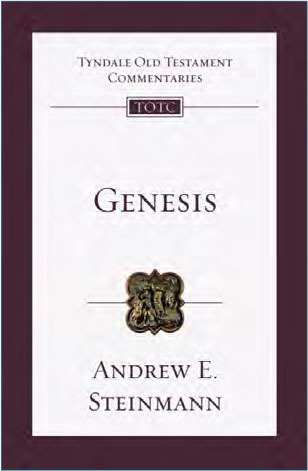
EXCELLENT NEW COMMENTARY ON GENESIS

The Tyndale Old Testament Commentary series are designed to be non-technical and easily accessible commentaries on the English text, aimed at the busy pastor or preaching layman. The latest in the series is on GENESIS. This is the foundational book of the Bible so you need to know what it teaches.

The commentary opens with an Introduction to Genesis where the author highlights that this book is the book of beginnings and relates to the beginning of the world, of sin, of God’s promise of redemption, and of the nation of Israel, whom God chose as His people.

reliable and accessible

Importantly, Steinmann adopts the traditional literal ‘solar day’ view advocated by Young Earth Creationists.

Each pericope or section of text is treated with three separate sections: (1) Context, (2) Comment, and (3) Meaning. The Context section discusses the historical and literary context of the particular section of text. The Comment section provides more detailed commentary on the text itself. Though all verses in the text are covered, it is not strictly a verse-by-verse commentary. Given that this commentary is pitched at pastors and laymen rather than other scholars, there is no detailed Hebrew exegesis, though the author does make occasional reference to key Hebrew words and terms, along with clear explanations. Finally, the Meaning section offers a brief summary and meaning of the text, along with any theological notions and implications.

Numerous ‘Additional Notes’ that discuss a particular topic, idea, or interpretation in more detail also appear throughout the commentary. Topics include ‘The seven days of creation, ‘Knowledge of the name Yahweh in Genesis’, and ‘The ages of the persons in the genealogies of Genesis 5 and 11’.

Steinmann points to the notion of ‘God’s Chosen People’ as a prominent theme throughout the book of Genesis. God chooses his people by favouring a particular line of descendants. God chooses Seth over Cain, Shem over his brothers, Jacob (renamed Israel) over Esau. Because you have put your trust in Jesus as your Saviour and Lord, God chooses you and has at least one important task for you to do.

‘Justification by faith’ is another important theme and is clearly demonstrated in the life of Abraham. Abraham believed in the gracious promise of God that through him and his seed all the nations of the earth would be blessed. Despite Abraham not understanding how this prophecy would be fulfilled through the incarnation and death of Christ, he still trusts in God’s grace and promises: “Abraham believed God, and it was credited to him as righteousness” (Romans 4:3). Indeed, Hebrews 11 also indicates that Abel, Enoch, and Noah were also righteous through faith.

Steinmann’s commentary is an order of magnitude better than Derek Kidner’s previous volume on Genesis in this series. It contains clear and generally accurate historical and theological explanations of the book of Genesis. This is the purpose and goal of the Tyndale Old Testament Commentary series. Although the author often makes reference to Hebrew words and other ancient Near Eastern cognates, you will not find technical discussions of Hebrew grammar and linguistics. What you will find is a concise, reliable commentary on the text of Genesis that is also accessible to the busy pastor and preaching layman.

The book is thoroughly reviewed by Andrew S. Kulikovsky in the latest edition of Journal of Creation http://www.creation.com. The above is extracted from that review.

THE VALUE OF KNOWING YOUR CREATOR

When you do, you can live life to the full and be joyful. In this wide-ranging video, the 51-year-old “Growing Pains” star, Kirk Cameron explains how.

Kirk Cameron, who began acting at just 14 years old — referenced a quote he learned from one of his now-grown daughters. Scrawled on a piece of paper, she wrote: “It’s the same boiling water that softens potatoes that hardens eggs. It just depends on what you’re made of.

“So the same difficult challenges and influences of Hollywood that turns some people sour and makes them narcissistic and bitter and joyless and afraid to not fit in,” Cameron said, “is the same pressure that actually softened my heart and caused me to embrace gratitude and be thankful for the life that I have and want to use a platform and this Hollywood industry to advance the good.”

“I really think it’s what you’re made of,” he continued. “And if you don’t know what you’re made of, don’t look to your environment or your industry or other people to give you an identity.

There is somebody who made you — ask Him. And you can be sure that the ending of the story is gonna be fantastic.”

For Cameron, it wasn’t until he was in the entertainment business that he became a Christian, revealing he actually defined himself as an atheist until he was around 17 years old.

Sitting in his sports car after dropping a girl off at an acting class, Cameron recalled pondering the afterlife, wondering if there really was a heaven and a hell and a creator and a plan for eternity.

“I knew that if there was a heaven, I wouldn’t be going there,” he said, noting he had lived life with a “self-centered, conceited, ‘I’m all that,’ ‘I’m the G.O.A.T.,’(Greatest of All Time) celebrity Mike Seaver guy” mentality, never pausing to consider something outside himself.

It was at that point he decided to pray for the first time, asking God: “If you’re there, would you please show me. … Would you forgive me for all the wrong things I’ve done and make me the person that You want me to be.”

While certainly the most important, coming to Christ wasn’t the only way Cameron changed thanks, at least in part, to Hollywood. He was also introduced to his now-wife on the set of “Growing Pains.”

Cameron said one of his nephews frequently asks him if he “took advantage” and “didn’t waste” the opportunities he had to go out with so many different girls at the height of his sitcom fame.

The actor said he has reminded his nephew he “found something so much better” instead.

“I found a girl,” Cameron said. “She’s beautiful on the inside; she’s beautiful on the outside. I married her and we’ve been married for 30 years. You have no idea how much more valuable that is. I’ve got six grown children who love God and still ask me my opinions about things, who still love to come home and be with me and my wife, and I’m on PragerU’s ‘Stories of Us.’ I mean, the story doesn’t really end much better than this.”

OUR GOD EXPERIENCES EMOTIONS, ANGER, GRIEF, EVEN REGRET

And the Lord regretted that he had made man on the earth, and it grieved him to his heart.Genesis 6:6

The word of the Lord came to Samuel: “I regret that I have made Saul king, for he has turned back from following me and has not performed my commandments.1 Samuel 15: 19-11

In His complexity, the Lord knows all human emotions including regret, not an emotion often associated with God.

God feeling sorrow or remorse challenges our understanding of infallibility. Our typical response to regret is; “if I knew then what I know now, I would never have done it”. God however is fully cognisant of every one of His actions and choices, and still finds himself regretting some of them. For God to feel regret, He must therefore be vulnerable to our choices. Free will must actually be free, and poor choices on our part can cause divine pain. The Lord actually gets upset and frustrated, just as He is pleased and delighted by us in turn. This vulnerability must be a deliberate and sovereign choice of our God. The Lord of all could have placed Himself above all such feelings but He chose a version of creation in which the choices of His children affect Him.

God has sovereignly chosen to make Himself vulnerable. in that, He experiences difficult and even negative emotions, along with great joy and delight, in response to earthly events.

Just take in all the emotions God is feeling in the following two Scriptures.

And the Lord said to Moses, “How long will this people despise me? And how long will they not believe in me, in spite of all the signs that I have done among them? I will strike them with the pestilence and disinherit them, and I will make of you a nation greater and mightier than they.” Numbers 14:11-12

The Lord your God is in your midst, a mighty one who will save; he will rejoice over you with gladness; he will quiet you by his love; he will exult over you with loud singing.Zephaniah 3:17

Thank goodness, our Heavenly Father, sent Jesus to show us the extent of His commitment to us, and His love for us. It is vivdly revealed by Jesus just before His crucifixion in the Garden of Gethsemane:

And he withdrew from them about a stone’s throw, and knelt down and prayed, saying, “Father, if you are willing, remove this cup from me. Nevertheless, not my will, but yours, be done.” And there appeared to him an angel from heaven, strengthening him. And being in agony he prayed more earnestly; and his sweat became like great drops of blood falling down to the ground.Luke 22:41-44

It is staggering beyond belief that Jesus would put Himself through the suffering He endured. Not just the physical pain but the spiritual horror of taking all of our sins upon Himself.

And about the ninth hour Jesus cried out with a loud voice, saying, “Eli, Eli, lema sabachthani?” that is, “My God, my God, why have you forsaken me? Matthew 27:46

What feelings would our Heavenly Father have experienced as He watched us, His creation, torturing and crucifying His Son? We are blessed to have seen how Jesus coped with the situation. It gives us a picture of how our Heavenly Father dealt with it. He understands us in every way.

Father, forgive them, for they know not what they do.” Luke 23:34

It is amazing in our emotional complexity we are not that different from our Creator who experiences anger, pain, regret. After all, we are made in His image. We are His children.

Let us make man in our image, after our likeness. And let them have dominion over the fish of the sea and over the birds of the heavens and over the livestock and over all the earth and over every creeping thing that creeps on the earth.” Genesis 1:26

Do you know God personally? If you do not it is your problem. God assures us that if you seek Him you will find Him.

I love those who love me, and those who seek me diligently find me.” Proverbs 8:17

You will seek me and find me when you seek me with all your heart.” Jeremiah 29:13

Spend more time looking at Jesus and you will find God.

Whoever has seen me has seen the Father. How can you say, ‘Show us the Father’? Do you not believe that I am in the Father and the Father is in me? John 14:9-10

Is it any wonder that those that truly know God get down on their knees regularly to thank Him for all that He has done for us, particularly in sending Jesus, for all that He is doing for us now through the Holy Spirit, and for all that we know He has planned for us through the prophetic Scriptures. There are over 2000 prophecies of Jesus second coming and there were only about 300 prophecies of His first coming. Most of those prophecies are to prepare us for the Millennial reign of Jesus Christ on this earth.

SUPERNATURAL HEALING MIRACLES

An upcoming documentary film examines medical evidence of miracle healings to challenge sceptics and close the gap between the hard sciences and the supernatural.

The “SEND PROOF” documentary by filmmaker Elijah Stephens explores the ways in which miracle claims can be corroborated by looking at X-rays, MRI scans and other follow-up medical examinations. In the film, he interviews evangelical scholars and some of the most prominent voices in Pentecostal and charismatic Christian circles.

Stephens worked closely with the Global Medical Research Institute and interviewed board-certified doctors, scientists, an atheist medical historian who believes in miracles, and some of the leading sceptic and atheist voices who assert that, when examined closely, miracles never withstand empirical scrutiny. 

Stephens’ personal journey through his own doubts and the intellectual journey he took is interwoven in the storyline. At one point in the film, he recounts how frustrated he became with the idea of making the movie even as he felt God calling him to do it. The movie explains how, in 2015, he was at his house and his friends started texting him saying that Shawn Bolz, a prophetic minister who was speaking at Bethel that day called out his name from the stage. Stephens immediately jumped in his car and high-tailed it to the church.

When he arrived, Bolz, who had never met Stephens prior to that day and knew nothing of his filmmaking aspirations, gave him a stunningly accurate word, telling him that the Holy Spirit was breathing on the project and how it was going to impact medical professionals and others. 

For Christians who are hesitant to embrace charismatic theology and practice, the filmmaker hopes that the contributions from biblical scholars like Craig Keener of Asbury Theological Seminary, J.P. Moreland of Talbot School of Theology (Biola University), and Gary Habermas of Liberty University will lead them to reconsider what they believe about the supernatural.