
Most people treat those three days as a gap, a pause, a silence between the tragedy of Friday and the miracle of Sunday. They were not silence. What happened during those three days in the unseen realm, in the spiritual dimension that runs beneath everything we can see and touch was the most consequential, and the most deeply personal sequence of events in the entire history of creation.
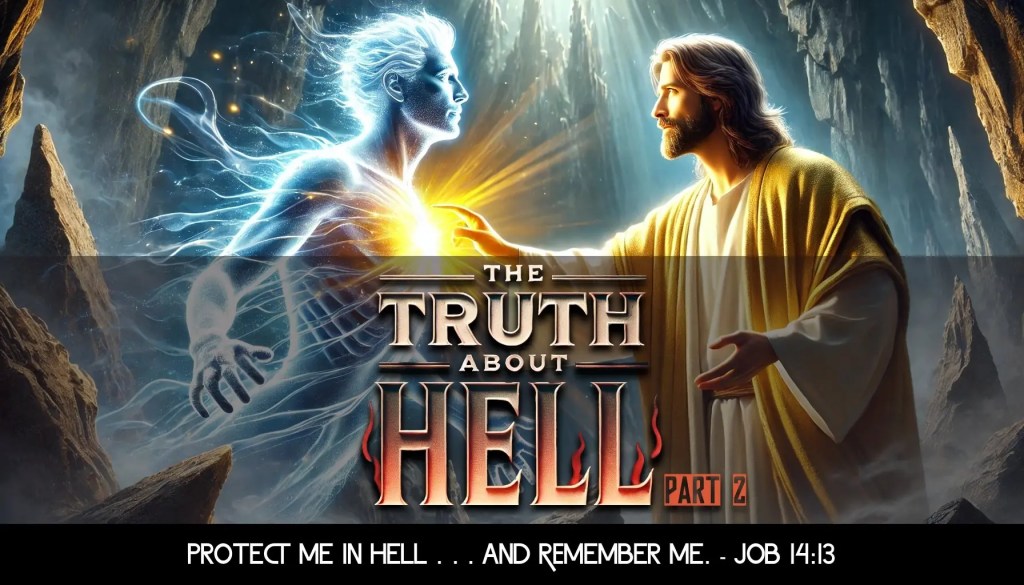
I am going to show you. three things, each one building on the last, each one more staggering than the one before it. And all three are answers to the same question. Where exactly did Jesus go during those three days? Why did he have to go there? And what did he actually do while he was there?
First, where he went. When Jesus died on that cross on Friday afternoon, His body was sealed in a tomb, but his soul went somewhere. and the Apostles Creed reveals where. If you do not know the Apostles Creed, Google it. There are four words buried inside it that describe the first destination of Jesus after death. Four words that contain one of the most explosive, most liberating truths in all of Christian history. Maybe, you have said them many times. You’ve almost certainly never understood what they were actually telling you about where Jesus went and what the place he descended into actually looked like. Because nobody showed you the map. The ancient world, the world of Abraham, Moses, David, and Jesus himself had a detailed, vivid, specific understanding of what the realm of the dead looked like, what it was divided into, who was there, and why. That map is almost entirely lost to modern Christianity. And without it, those four words are just words. By the end of this presentation, you will have that map. You will know exactly where Jesus went. And you will never say those four words the same way again. Second, why He went to Sheol/Hell. This is the question almost nobody ever answers directly. Why did Jesus, the son of God, whose suffering was finished at the cross, descend into the realm of the dead at all? Why did he go there? What was the reason? And underneath that question is an even deeper one that will reframe everything you think you know about the cross. Why was heaven’s door locked in the first place? Why could Abraham, the father of faith, the man God called his friend, not enter heaven when he died? Why could Moses not? Why could David not? Why could not a single human soul, no matter how righteous, no matter how faithful, no matter how beloved by God, could walk through the gates of heaven, until a single specific, unrepeatable moment in history? What was the lock on that door? And what made the cross, and only the cross, the key that could open it? Jesus went to hell because the door had been locked since the Garden of Eden. And He went there as the only one in all of creation who had just paid the price to unlock it. When you understand this fully, the crucifixion will never look like tragedy to you again. It will look like the greatest unlocking in the history of eternity. And third, what He did while he was there. This is where it becomes almost impossible to believe until you see it with full context. There are two verses in the 27th chapter of Matthew that almost every person who has ever read them has quietly passed over. Most people assume they are symbolic. Most people file them away without fully processing what they actually describe. Those two verses record the visible, physical, publicly witnessed aftermath of what Jesus accomplished during those three days in the realm of the dead. Something so extreme, so documented in the streets of Jerusalem, so undeniable that historians have never been able to fully explain it away. And when you understand what those verses actually record, you will finally understand why a group of men hiding behind a locked door on Saturday in absolute terror became by Sunday morning. People who were willing to die rather than stop talking about what they had witnessed. They were not moved by faith alone. They were moved by something they saw with their own eyes in their own city among people they knew by name. Three promises, three revelations, each one an answer to the title of this presentation. Where Jesus went, why he went, and what he did. Each one building on the last.
Now to understand what happened during those three days, you first need to understand something that the first century Jewish world knew as common knowledge and that modern Christianity has almost completely forgotten. You need to understand how the ancient world, the world of Abraham, of Moses, of David, of Jesus himself understood what happens when a person dies. Because the picture they carried is radically, shockingly different from the clean binary most of us were raised with. Heaven or hell, good or bad. The scriptures do not teach that picture. Not in the Old Testament, not in the New Testament, not in the words of Jesus. The ancient Hebrew word for the realm of the dead was Sheol in Greek. The language of the New Testament and the early church. That same realm was called Hades. And here is what every first century Jew understood instinctively that most modern Christians do not. Sheol/Hades was not reserved for the wicked alone. It was the destination of every human soul that ever died. Righteous and wicked, holy obedient and rebellious. The evidence for this is not subtle. Jacob, the patriarch, the man who wrestled with God and was renamed Israel when he believed his son Joseph had been killed, said simply, “I will go down to Sheol.” Mourning, not, “I will go to a place of punishment.” He expected, as a matter of course, to go to Sheol. David, the man described as after God’s own heart, the greatest king in Israel’s history, the writer of the Psalms, wrote repeatedly about Sheol as the destination of his own soul. In Psalm 16, he cried out, “Do not abandon my soul to Sheol, not do not send me to Sheol as punishment.” He wrote from the understanding that Sheol was where souls go, all souls. And in one of the most haunting moments in all of the Old Testament, when King Saul visited the witch of Endor, and she called up the spirit of the dead prophet Samuel, Samuel rose from Sheol, the righteous prophet, the holy man, from Sheol. Now, pause here because this is where it gets truly extraordinary. If both the righteous and the wicked descended into Sheol, were they all experiencing the same thing? No. And this is where the picture Jesus drew for his listeners becomes something you will not easily forget. Because Sheol was divided, two sides, two entirely different experiences, separated by a chasm so absolute, so permanent that not a single soul in the history of the world had ever crossed it. Jesus described this geography himself in precise deliberate detail in a parable recorded in the 16th chapter of Luke. A wealthy man and a poor man named Lazarus both die. Lazarus is carried by angels to a place the Jewish people called Abraham’s bosom. The warmest, most tender name they knew for the waiting place of the righteous, the father’s chest, the place of sheltered rest. Think of a child exhausted and frightened finally being gathered in against the chest of their father. That is the image. The rich man opens his eyes on the other side of that chasm. Torment, heat, anguish, no comfort. And from there he can see across a void he cannot cross. Abraham and Lazarus resting at his side. He cries out. He begs. He pleads for a warning to be sent to his living brothers. And Abraham answers with eight words that carry the weight of eternity. A great chasm has been fixed between us. Fixed, permanent, irreversible. No crossing, no negotiation, no exceptions. Now Jesus tells this parable with deliberate precision. He is not simply warning against greed. He is handing his listeners a map of the spiritual reality that governed every human death. from Abel, the first man to die, all the way to the cross. And what that map shows is the detail that unlocks everything else we are going to discover today. Even the righteous dead, even Abraham himself, were not in heaven. Read that again. Abraham, the father of faith, the man God called his friend. The man who had left his homeland on the strength of a single divine command and believed promises that stretched further than any human lifetime could reach. Not in heaven, in Abraham’s bosom, yes, but still in Sheol. Still in the realm of the dead, still on the wrong side of a door that had not yet been opened. Still waiting. And so was every other faithful soul who had died before the cross. from Abel to Moses, from Joshua to Elijah, from Isaiah who described the suffering servant with the precision of a prophet who somehow saw it 700 years before it happened to the very last righteous soul who closed their eyes before Good Friday. All of them waiting. But waiting for what? And why? That question, the question of why the door was locked at all. The answer is about to reframe everything. But first, I need to show you what happened to Jesus the moment he died. Because there is a phrase you have been reciting your entire life that is about to tell you something you may never have fully understood until this moment. Think about the Apostles Creed. Between was crucified, died, and was buried. And on the third day, he rose again from the dead. There are four words that most sail past without ever stopping to truly ask what they mean. He descended into hell. Here is what those four words actually mean. Here is what the church has taught about them for 2,000 years. And once you truly understand it, you will feel those four words in a completely different part of yourself. The original Latin of the apostles creed does not say descended in Ghenna, the place of fire and eternal punishment. It says descended into inferos. He descended into the lower regions. The word inferos is identical to Hades in Greek and Sheol in Hebrew. It simply means the realm of the dead, the place beneath, the holding ground of all departed souls. This was the first meaning given in the apostolic preaching to Christ’s descent into hell that Jesus like all men experienced death and in His soul joined the others in the realm of the dead. But He descended there as Saviour. Not as a prisoner, not as a soul. Being punished further for our sins. His suffering was finished at the cross. It is finished meant exactly that. He descended as Saviour. As a king entering territory he came to conquer with purpose, with power, with the completed work of the cross held in his hands like the key to a door that had been sealed for thousands of years. But now we arrive at the deepest question. Why was the door sealed? Why couldn’t righteous souls, faithful, holy souls who loved God, simply enter heaven when they died? What was the lock on the door? Here is the answer. And it begins, as so many things in scripture do, in a garden. When Adam and Eve sinned, when the first human act of disobedience shattered the original communion between humanity and God, something broke that no human being in all of subsequent history possessed the ability to repair. The door between humanity and the full presence of God swung shut. Not because God withdrew his love. Not because he stopped caring for the men and women he had made, but because the fullness of his justice, which is not cruelty, but the deepest expression of his holiness, required a payment for sin that no finite human life could make. Think of it this way. Every human being who ever lived, including the most righteous, the most obedient, the most beloved by God, carried with them the inherited wound of original sin. Not a personal guilt they had earned, but a condition they had been born into. A fracture in human nature that ran all the way back to the garden. Abraham did not earn that fracture, but he carried it. Moses, who spoke with God face to face on Mount Sinai, carried it. David, the man after God’s own heart, carried it. John the Baptist, whom Jesus called the greatest man born of women, carried it. And the full presence of God, the beatific vision, the unveiled face of the father requires a soul that has been completely, infinitely, perfectly reconciled, not mostly reconciled, not mostly forgiven, completely. The debt was real. The debt was infinite in its weight. And no finite human life, however holy, however faithful, could make an infinite payment. So the righteous dead waited. They waited in Abraham’s bosom, in peace, in comfort, in the presence of the patriarchs and the prophets. Not suffering, not forgotten, not abandoned, but waiting. Waiting for a payment they could not make themselves. Waiting for a door they could not open from the inside. Waiting for the fulfilment of a promise that had been made in the very moment their first parents were expelled from Eden. A promise embedded in the words God spoke to the serpent in Genesis 3:15. I will put enmity between you and the woman and between your offspring and hers. He will crush your head. The first prophecy of the Messiah spoken in the garden. In the very moment the door first closed, a promise that the one who would unlock it was already coming. And they waited. Abel, the first human being to die in faith, waited the longest. Then Adam and Eve arrived in Sheol carrying the weight of knowing that it was their act that had started the chain of events that made the weight necessary in the first place. Thousands of years passed. One prophet after another descended into Abraham’s bosom with nothing but the promise and the faith that it would one day be kept. And then on a Friday afternoon in Jerusalem at 3:00 in the afternoon, as the Passover lambs were being slaughtered in the temple, a man hanging on a cross between two criminals cried out in a loud voice, “It is finished,” and bowed his head and breathed his last. The debt was paid in full by the only one in all of creation with infinite worth to offer. The son of God in whom human nature and divine nature were perfectly united. Whose sacrifice therefore carried infinite weight, infinite sufficiency, infinite completeness. The door was unlocked and the one who had just paid the price descended immediately, purposefully as Saviour into the realm of the dead. Now, here is what Jesus said to the dying criminal beside him in his final breaths on the cross. Today, today you will be with me in paradise. Today, the same day, immediately. Which means the moment Jesus’ spirit left his body, he descended into Sheol into Paradise into Abraham’s bosom, carrying the completed, finished, perfect work of the cross directly to the souls who had been waiting for it since the beginning of the world. He descended there as Saviour. The descent into hell brings the gospel message of salvation to complete fulfilment. This is the last phase of Jesus’s messianic mission, the spread of Christ’s redemptive work to all men of all times and all places. The last phase. The mission was not complete at the cross alone. The cross paid the price. The descent delivered it to every soul who had ever lived in faith and died before the payment could be made. This is why Jesus had to descend not as punishment, not as additional suffering, but because a Saviour does not merely pay the ransom from a distance. He goes in person to bring the captives home. And now with the door unlocked and the work of the cross in hand, Jesus did something that almost no preacher ever explains.
Jesus went somewhere first. Before he went to Abraham’s bosom, before he gathered the waiting souls, he went somewhere darker to someone who was not waiting for rescue. And what he said in the darkest place in creation is recorded in one of the most mysterious, most avoided, most theologically explosive passages in the New Testament. And what he did after that, what he said when he turned toward the light, toward the waiting souls, toward thousands of years of patient faith finally about to be rewarded. You are about to hear all of it for the first time with full context, and it will permanently change the way you see the power of the cross. First letter of Peter 3:18-20. Hear every word carefully, every single word is loadbearing. Peter writes, “Christ also suffered once for sins, the righteous for the unrighteous, that he might bring us to God, being put to death in the flesh, but made alive in the spirit, in which he also went and proclaimed to the spirits in prison, who had formerly been disobedient when God’s patience waited in the days of Noah, while the ark was being prepared. He went and proclaimed to the spirits in prison.” Three questions tear open from the middle of that sentence. Who were these spirits? Where was this prison? And what precisely did he proclaim to them? Augustine, called this passage replete with difficulties. Scholars, saints, and church fathers have wrestled with it for 20 centuries. So, let’s build the answer from the ground up carefully. Some interpreters have suggested these spirits were the human souls of those who perished in Noah’s flood. People who heard God’s warning through Noah, rejected it, drowned in judgment, and were now imprisoned in the torment side of Sheol. But this interpretation runs directly into the wall of Hebrews chapter 9 27. It is appointed for man to die once and after that comes judgment. Once then judgment. No second chances. No post-mortem appeals. The decision of this life is irrevocably sealed at death. So Jesus was not offering those spirits salvation or a second chance. The most the text says is that he proclaimed something to them. What then was he proclaiming? And who exactly were these imprisoned spirits? Look at what Peter writes just three sentences later, verse 22, as he describes Jesus ascending to the right hand of the father. Angels, authorities, and powers had been made subject to Him. Powers made subject to Him. The language of conquest, the language of military dominance, the language of a war that has been decisively, permanently won. Now read the letter of Jude verse 6 written by the same apostolic circle in the same generation drawing on the same tradition. The angels who did not keep their own position of authority but abandoned their proper dwelling. These He has kept in eternal chains under gloomy darkness until the judgment of the great day. Chained in darkness in a prison awaiting final judgment. And the connection to Noah explicitly named by Peter echoed in Jude is not decorative. In the ancient Jewish tradition that both apostles were drawing from, these were supernatural beings of enormous ancient power. beings who had transgressed the boundaries of their station in the days before the flood, who had worked against the plan of God for humanity since before the written memory of the world, and who had been imprisoned in the depths of Sheol ever since. Chained, waiting for a judgment they knew was coming. Now Jesus, fresh from the cross, his suffering complete, the debt paid, the victory secured, he descended into the realm of the dead. And he went to their prison first, not to offer mercy, not to negotiate, not to give them a second chance, but to declare, to stand in front of the most ancient, most powerful, most long imprisoned enemies of humanity, and announce face to face in their own domain what the cross had accomplished. The Apostle Paul captures the image perfectly in Colossians 2:15. He disarmed the rulers and authorities and put them to open shame, triumphing over them in him. Triumphing. The Greek word there is the exact word for a Roman military triumph. The ceremony where a victorious general would march his defeated enemies through the streets of Rome in chains, making a public spectacle of their humiliation, announcing to the whole world that the war was over and there was only one outcome. Jesus did that not in the streets of Rome, not before human eyes, in the depths of the spiritual realm, in the prison of the powers that had opposed God’s people since before Noah’s flood. He walked in. He stood before them. He declared his absolute irreversible dominion over everything they had ever tried to destroy. You thought the cross was your victory. It was mine. You are judged, and I hold the keys. Then he turned. He turned away from the darkness and moved toward the light, toward Abraham’s bosom, toward the righteous dead, toward every faithful soul that had been waiting since the beginning of the world. And what happened in that moment? The moment Jesus arrived in the place of waiting. The moment a select group of souls, the souls of Abraham, of Moses, of David, of Isaiah, and other prophets who had died heard His voice. That moment is described in language so beautiful and so precise that it has taken people’s breath away for nearly 20 centuries. and what followed it. What happened in the days surrounding the resurrection recorded in two verses in Matthew 27 that most people have read and quietly almost unconsciously passed over as if they couldn’t possibly mean what they say.
That is where we are going next. What those two verses describe, the physical, documented, publicly witnessed thing that happened in the streets of Jerusalem is the reason a group of terrified men hiding behind a locked door on Saturday were by Sunday morning willing to die for what they had seen.
It is interesting that there is a holy Saturday liturgically in the Catholic church in the Eastern churches in the traditions that preserve the full memory of the Triduum. Holy Saturday is not simply the day before Easter. It is a day of its own. A day with its own theology. A day when the church has for nearly 2,000 years sat in the awareness of what was happening in the unseen realm between the sealed tomb and the empty one. And every year in the office of readings on Holy Saturday, the Catholic Church reads aloud an ancient homily. Nobody knows who wrote it. It has survived for nearly 2,000 years. And what it describes in language so beautiful and so precise that it takes your breath away is the moment Jesus arrived in the place of waiting. I want you to hear part of it now. The homily begins. Today a great silence reigns on earth. A great silence and a great stillness. A great silence because the king is asleep. And then it describes Jesus descending into the realm of the dead, searching, moving through the darkness, looking for someone. And it gives him words. Words the church has proclaimed on Holy Saturday for nearly 20 centuries. He has gone to search for Adam, our first father. As for a lost sheep, he greatly desires to visit those who live in darkness and in the shadow of death. He goes to free from sorrow Adam and Eve captive with him. He says to Adam, “I am your God who for your sake have become your son. I order you, oh sleeper, to awake. I did not create you to be a prisoner in the realm of the dead. Rise from the dead, for I am the life of the dead. Rise from the dead, I am the life of the dead. The first person Jesus came looking for when he entered the place of waiting. The first soul he sought in that vast company of the righteous dead was Adam. The man whose sin had started everything. The man whose act of disobedience in the Garden of Eden had locked the door that Jesus had just died to unlock. the man who had been waiting in Sheol longer than any other human soul in existence. And Jesus came for him first. Not last, not eventually, first. As a shepherd searches for a lost sheep, as a father runs toward a son he sees coming down the road. He found him. He found Abraham who had left on the strength of a promise he never saw completed in his lifetime. Sarah, Isaac, Jacob, Joseph, Moses, who had spoken with God face to face and died within sight of the promised land. Elijah who had stood on Mount Carmel and called down fire from heaven. Isaiah who had written about the pierced servant 700 years before the crucifixion. David who had written, “You will not abandon my soul to Sheol” and spent his entire life believing those words before they were fulfilled. John the Baptist who had pointed at Jesus in the Jordan River and said, “Behold the Lamb of God,” and was then beheaded in a dungeon and had waited here for the one whose coming he had announced. and the thief on the cross who had said, “Remember me,” just hours before, and was told, “Today you will be with me in paradise,” resting there exactly as promised. Every soul from Abel to that thief, every person who had ever lived and died, trusting in the promise that began in Genesis 3:15, Jesus gathered them all. The Apostle Paul captures this in Ephesians 4:8-10 quoting the ancient Hebrew victory hymn Psalm 68. When he ascended on high, he led a host of captives, a host, not a handful, the vast, indescribable multitude of every righteous soul who had ever died waiting for this moment. Led out, led up, led through the door that the cross had just unlocked. The door that had been sealed since Eden. the door that only infinite love poured out on a cross could have ever opened into the full unveiled eternal face-to-face presence of God. The waiting was over. The debt was paid. The door was open. Heaven received human souls, real ones, named ones, beloved ones, for the first time since the garden was closed.
And then on the third day, something happened in the visible world. The stone was rolled away. The tomb was empty. The body was gone. And Matthew recording what followed in the days surrounding the resurrection writes two verses that most people have passed over their entire Chapter 27:52 and 53. And I need you to hear these as if for the first time because what they describe is not a symbol. It is not a metaphor. It is not poetry. It is a report. The tombs also were opened, and many bodies of a select group of Saints who had fallen asleep were raised. And coming out of the tombs after his resurrection, they went into the holy city and appeared to many. Many bodies of the saints raised, coming out of their tombs, walking into Jerusalem, appearing in person, face to face, recognized to many people. Matthew is writing for an audience in Jerusalem. who knew their neighbours. People who could walk to the houses of the people he was describing. People who could ask. People who had seen. This is the first fruits. This is the visible physical publicly witnessed confirmation that what happened in the unseen realm during those three days was real and that it was exactly what Jesus said it would be. Death had not merely been survived. It had been invaded, conquered from the inside, and its captives had been set free. Now, do you understand why the disciples were unafraid on Sunday morning? They had seen people they knew, people who had died walking through the streets of their city. This was not rumour. This was not religious enthusiasm. This was their neighbours, their families, people with names and faces and histories. And Peter standing before a Jerusalem crowd 50 days later at Pentecost did something no one could refute. He quoted David, “You will not abandon my soul to Sheol.” And then made the argument that silenced the city. David wrote those words, “But David died.” David’s body is still in that tomb. You can walk to it right now. So David was not writing about himself. He was writing about someone whose soul would actually escape Sheol. Someone whose body would not stay in the ground. And then Peter said, “That someone, we saw him. We touched him. He stood in rooms we locked from the inside. He ate with us. He is not in any tomb.” And the crowd Peter was speaking to, many of them had been in Jerusalem weeks earlier. Some of them had seen the raised saints with their own eyes walking recognized in the streets of their own city. This was not a rumour. This was not one man’s testimony. This was a city full of witnesses and not one of them could produce a body. Now, right here is where I need to bring this home to you personally directly because none of this is merely ancient history. Revelation 1 verse 18. The risen Christ speaks to the Apostle John on the island of Patmos. After the cross, after the descent, after the resurrection, after everything, he says, “I am the living one. I died and behold, I am alive forever more. And I have the keys of death and Hades.” The keys. Before the cross, death held those keys. Every soul that died, even the righteous, even the beloved, entered Sheol and could not leave. Death held them. The door held them. The debt held them. But Jesus paid the debt. Jesus walked into death’s territory. Jesus proclaimed his victory to every dark power within it. Jesus gathered every captive who had been waiting since the beginning. Jesus led them home. Jesus walked out. And he came back holding the keys. Death. no longer holds them. He does. Which means this, and I need you to hear this personally. Wherever you are right now, whatever you are carrying. If you belong to Jesus Christ, if you have placed your faith in the one who died and rose, then when your last breath comes, you do not go to a waiting place. Abraham’s bosom has been emptied. The holding room has been cleared, the door is wide open. You go directly immediately into the presence of the Lord. The Apostle Paul wrote those words from a prison cell in Rome with his own execution approaching. He wrote them without grief, without fear, without negotiation. For me to live is Christ, and to die is gain. I desire to depart and to be with Christ, for that is far better. to depart and to be with Christ, not to wait, not to rest in a holding space at the edge of heaven, to be with Christ face to face. This is only possible because of those three days, because of the descent, because of the proclamation, because of the rescue, because of the door that was unlocked by the only payment that could ever have been sufficient. This is why the church has proclaimed at Christian burials for 2,000 years, “Death has been swallowed up in victory. Oh death, where is your victory? Oh death, where is your sting?” This is why the martyrs sang. Not because death didn’t hurt, but because they had seen or heard from witnesses who had seen exactly what was waiting on the other side of it. A Lord who had been there. A Lord who had gone ahead. A Lord who had cleared every obstacle, defeated every power, and was standing at the door with the keys in his hand. Are you afraid of death, your own, someone you love? Are you sitting in grief right now wondering whether the person you lost is truly safely completely held? Then I want you to take the three days seriously. Not just the cross, not just the empty tomb, the three days in between. Because the cross paid the price, but the three days proved the rescue was personal. He didn’t just unlock the door from outside and say, “Go ahead in.” He went in himself. He went to every soul waiting in the dark. He said to Adam, to everyone. I did not create you to be a prisoner here. Rise, come home. And that is what he is saying to everyone who comes to him. Now the door is open. He went first and he is there on the other side waiting. Now I want to leave you with something that has nothing to do with theology. Just a question. One question that every human being who has ever lived has had to face and that most people spend their entire lives trying not to look at directly. What happens to me when I die? Not in the abstract, not as a doctrinal position. Not as a line in a creed you recite on Sunday. What happens to you? your soul. The people you have loved, the losses you have not fully recovered from, the fear that visits you in the quiet moments. What happens to that person when the last breath comes before today? Maybe the honest answer was, I believe something happens. I hope it is good, but I do not fully know. And that uncertainty lives in me like a stone I cannot put down. That is an honest place to be. Most people live there their entire lives. Even people who sit in church every week. But here is what those three days change. Jesus did not rise from the dead and leave us a theology. He left us a testimony. He went to the place every human soul goes after death. He walked through it. He saw it from the inside. He did not send an angel. He did not issue a decree from a safe distance. He descended personally, purposefully as the son of God who had just become the son of man into the same darkness every human being has ever feared. And he came with the keys. Which means the question, “What happens when I die?” is no longer a question you have to answer with hope alone. It is a question that has been answered by someone who has been there, not theorized, not imagined, been there. And what he found on the other side and what he made possible by going is the thing that changes everything about how you live on this side. The people you have lost, if they died in faith, if they trusted the one who holds those keys, they are not in a waiting room. They are not in the dark. They are not suspended somewhere between here and a heaven that has not quite opened for them yet. The door is open. It has been open since the moment Jesus walked out of that tomb. And they went through it held safe, face to face with the one who descended into death specifically so that no soul who trusted him would ever have to face it alone. That is the testimony of a man who died went there and came back holding the proof. So when the fear comes and it will come because you are human and death is real and grief is not something you logic your way out of. I want you to remember not a doctrine. I want you to remember a man walking out of a tomb holding keys that used to belong to death. saying to everyone on this side and to everyone waiting on the other side, the same thing he said to Adam in the dark. I did not create you to be a prisoner here. Rise, come home. That is what those three days were for. That is the gospel in full. And now you understand what happened. He kept the promise.
 LIVING ETERNAL NOW