
In just 11 minutes Francis Chan describes what the Bible says about church and then he describes the short comings of church today. And even more importantly what we can do to get back on track.
Tag Archives: church
CHURCH IN THE END TIMES
This extremely simple presentation on a napkin outlines what church is all about, what it is designed to do and then explains what the institutional church has added which has made it extremely difficult for it to accomplish what Jesus designed for it to do.
LISTEN TO HOW THIS CHURCH GOT RIGHT WITH GOD
Bob Gallaty finally realises He was the problem in His church. The reason why churches are not seeing God move is the Holy Spirit is not directing them, particularly their leaders, and true prayer is absent. Pastors in particular need to watch this video.
Robby Gallaty is senior pastor of Long Hollow Baptist Church in Hendersonville, Tennessee. He spoke with Faithwire about his church having seen 1,048 people baptized from Dec. 20 to April 11. He spoke about how to lead a church, how to make space for the Holy Spirit, and how to pursue God in prayer in effective and meaningful ways.
Those who follow livingeternal.net know that I believe the end times church will be like the church described in the Book of Acts. Church is relational, home groups, and is about making disciples who in turn make disciples of Jesus. Therefore, I am not saying that Bob Gallaty has discovered the right model but he is certainly moving in the right direction.
BIBLICAL LOVE IS AGAPE LOVE
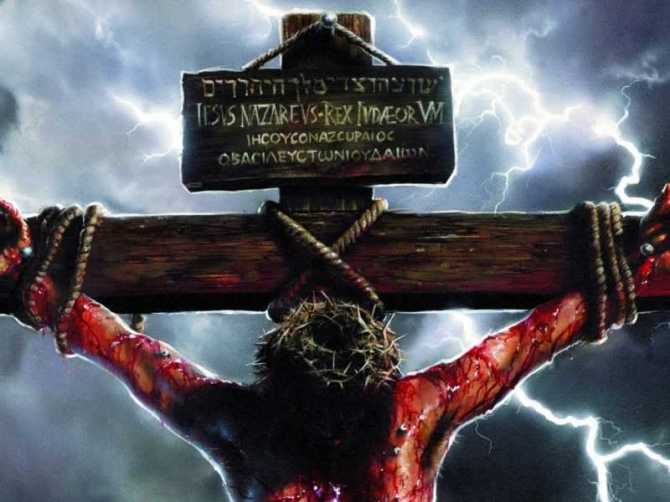
There are two kinds of love: Eros represents egocentric love, and Agape represents unselfish love. Often, even within Christian circles, love is said to mean something along the lines of feeling good about others and being nice to them. Yet Biblical love is sacrificial, it looks like Jesus on the cross! It is willing to regard others as more important than oneself.
“Do nothing from selfish ambition or conceit, but in humility count others more significant than yourselves. Let each of you look not only to his own interests, but also to the interests of others.“ Philippians 2:3
This is why Jesus says that His disciples will be known by others because of their “love for one another” (John 13:35). Yet, at the same time, Jesus defines a disciple as one who denies himself, takes up his cross, and follows Him. (Mark 8:34).
What kind of difference in the world would the church be making if those who profess Christ, by the power of Spirit, were striving to love like this?
How many of our churches look like this? How many of us can say, come to my church and you will see people who are diligently striving to love others as Jesus loves?
In the Sermon on the Mount, Jesus lays forth His law of love which includes loving our enemies.
“Love your enemies, do good to those who hate you, bless those who curse you, pray for those who abuse you.” Luke 6:27
Luke then, adds, “Give, and it will be given to you. They will pour into your lap a good measure—pressed down, shaken together, and running over. For by your standard of measure it will be measured to you in return” (Luke 6:38).
The fact that Jesus provides this illustration demonstrates that the love He advocates has application to the marketplace. It is a love that does right within a society: i.e., it is “just and right.” The Bible calls us to imitate Jesus in this regard!
“For you have been called for this purpose, since Christ also suffered for you, leaving you an example for you to follow in His steps” (1 Peter 2:21).
For more see the article by Rob Dalrymple “Justice without Love is not Justice” Jan. 25th 2021 http://www.patheos.com
GOD IS USING COVID 19 TO SHAKE UP THE CHURCH
Parker and Jessi Green started feeling what they described as a Holy Spirit restlessness amid full-time ministry in New York City. Despite being well-compensated and “successful” by several measures, something was amiss and the couple could not ignore how God was tugging at their hearts.

For the past four years, the Greens have been active with SALT churches, a network of micro churches they started in the region of Southern California. Earlier this year, they led Saturate OC, worship on the beach evangelistic outreach.
If you ask Parker, a micro church is around 10 to 40 people reaching those who do not yet know Jesus, making disciples, and most importantly, are on mission together. That “being on mission” aspect distinguishes it from previous home-based church movements.
“Doing what Jesus is doing [in realtime], I find, is super helpful,” he said, chuckling lightly, in a recent interview with The Christian Post. Jessi added: “We definitely think that this is the trajectory that the Church is going to move in and it’s funny because I think especially because of social media we’re so afraid to almost innovate when it comes to church because we don’t want to appear like we’re bashing or against the current thing.”
“But if you look at church history, what we see right now is how many people would define ‘church’ is actually pretty new as of the last 100 years. What we see now as almost untouchable when it comes to church and how it’s done, most of the world would not define that as church at all.” And distinctly missional micro churches are actually closer to what is seen in the pages of Scripture, they maintained. The “traditional” model that has become the norm for many in the Western world is not as normal as many think.
As many of you know, I have said for many years that the church in the “last days” before Jesus returns will be like the church described in the Book of Acts. God is refining His church with tribulation which will only escalate as prophesied “birth pangs” increase. Francis Chan was the first pastor of a major church that I saw God challenge to walk away from the mega-church model. It has been wonderful to follow his walk since, Home Groups in the USA, then to Hong Kong and ministering to the unreached in places such as Myanmar (Burma). Moreover in Myanmar, for the first time, he has walked in the power of the Holy Spirit with healings and miracles.
WHAT GOD IS DOING IN THE USA
God is at work using individuals who are humble and committed to doing His work, His way. In the world’s eyes they are usually “nobodies” but in His eyes they are “somebodies”.
Take a look at this video and be inspired to step out as God intends for you to complete His mission where He has placed you.
noplaceleft.net is a movement of movements aimed at getting to no place left where Christ is not made known in our generation. Check them out for materials you can use for discipling people for Christ in your area of influence.
MAJORITY OF AMERICANS BELIEVE BEING A GOOD PERSON IS SUFFICIENT
A new survey shows that the majority of Americans no longer believe that Jesus is the path to salvation and instead believe that being a good person is sufficient.
As part of the ongoing release of the Arizona Christian University-based Cultural Research Center’s American Worldview Inventory, the latest findings — exploring perceptions of sin and salvation — from George Barna, the group’s director, show that nearly two-thirds of Americans believe that having some kind of faith is more important than the particular faith with which someone aligns.
Sixty-eight percent who embrace that notion identify as Christians, including 56% of self-described evangelicals and 62% of those who identify as Pentecostals. Sixty-seven percent of mainline Protestants and 77% of Catholics also embraced that idea, the findings show.
Slightly over half of Christian respondents said they believe someone can attain salvation by “being or doing good,” a figure that includes, 46% of Pentecostals, 44% of mainline Protestants, 41% of evangelicals, and 70% of Catholics.
In addition to the viewpoint that eternal salvation can be earned, survey results show that 58% of Americans believe that no absolute moral truth exists and that the basis of truth are factors or sources other than God. Seventy-seven percent said that right and wrong is determined by factors other than the Bible. Fifty-nine percent said that the Bible is not God’s authoritative and true Word and 69% said people are basically good.
Most people contend that all faiths are of equal value, that entry into God’s eternal presence is determined by one’s personal means of choice and that there are no absolutes to guide or grow us morally.
The philosophy of life now held by most Americans contradicts a fundamental basis of what may be the two most significant documents to the longevity and success of America – the Bible and the Constitution of the United States.
Those documents agree that this nation will only be healthy and fruitful if it is populated by moral people. By abandoning their moral standards and traditions, and replacing them with inclusive and conditional preferences, they are losing the foundations that have enabled the ‘American experiment’ to succeed for more than two centuries. We can only hope that their critical moral institutions — particularly the family and the church — will wake up and help the nation to get back on track.
CHURCH IS ABOUT MAKING DISCIPLES
The mark of a fully-devoted disciple is a disciple who is making other disciples, a disciple who is bringing others to the faith either through personal evangelism or bringing others with them to church to introduce them to Jesus. Evangelism is the greatest form of discipleship.

If we in our churches are not creating disciples who regularly create other disciples, we are not succeeding in the Great Commission. Christ called us all to share the good news of eternal life that He made possible through His death and resurrection. If we are not making disciples then what are we doing at church, hopefully not making Couch Potato Christians who sit and soak rather than serve and send. If you want to see who the fully-devoted disciples of Jesus Christ are, don’t necessarily go to the biggest churches or find the Christians with the most seminary degrees or the ones who are the most confident (i.e. arrogant) about their doctrine. Find disciples who are making other disciples. Evangelism is the greatest form of discipleship.
WHY ON LINE SMALL GROUPS CHURCH IS A GREAT OPTION
Nickey Gumbel, vicar (pastor) at Holy Trinity Brompton in London, recently recorded a podcast with Canadian Pastor and thought leader Carey Nieuwhof. Gumbel developed the world-famous Alpha Courses and has decades of experience with in-person small groups. Like so many, he never considered online groups as a viable option and only transitioned his church’s small groups to online when forced by the coronavirus pandemic. A few short months later, he is a true believer in online groups and their advantages. You can listen to the whole podcast here. (He starts talking about online groups around 29:55).
According to Gumbel, here are nine ways that online groups are actually better than in-person groups:

1. Everyone is more relaxed. Think about it: instead of walking into a strange environment, everyone is sitting in their favorite chair at home, they’ve got their coffee or tea (or whatever) fixed just the way they want, and they’re in their comfortable clothes. All of this puts a person at ease, leading to better discussion.
2. Everyone is in their own home. For most, home is a place of solace, and it’s much more inviting to join a group while at home. Some actually have a reluctance to walk into a church building or someone else’s home, so this can be an incredible advantage.
3. Travel time is cut down. This isn’t as big of an issue in smaller towns where distances are reduced, but in larger urban environments, travel time can be a groups killer. For instance, the average commute time where I live (Northern Virginia) is about an hour each way. Adding another meeting with travel time on top of that can be a huge hindrance. Online groups eliminates the travel time.
4. The total meeting time is shortened and cost reduced. Because travel time is eliminated, the total meeting time is shortened, making it easier for people to commit to a group. Cost of Zoom for each group, max $20 a month.
5. Childcare becomes so much easier. Unless your small group meets on Sunday morning at church when children’s activities are going on, childcare for young families can be a deal breaker for in-person groups. Gumbel shared about a single mom that was able to join an online group precisely because it was online and she didn’t have to try and arrange childcare for her kids.
6. The conversation flows better because everyone knows each other’s names. Even in groups that have met for awhile, people aren’t confident that they know everyone’s names. This can lead to reduced interaction out of fear of getting someone’s name wrong. When you’re on an online group meeting like Zoom, everyone’s name appears by their screen. As simple as that sounds, this is actually a big deal. Everyone knows everyone’s name!
7. There’s an easier out if you don’t like the group. People like to have an exit strategy before they try something new (like a small group). Think about the hurdles facing someone debating whether or not to try out a small group for the first time: they’re walking into an unfamiliar place with unfamiliar people. If they don’t like the group, they’re stuck there at least for the rest of the meeting, longer if they feel a social obligation to continue. With online meetings, there’s an easier out: just get off the call. This easier out actually incentivizes people to try something new.
8. People tend to be more open online than in person. Call this the social media effect. Have you ever noticed how people tend to share more openly (even when they shouldn’t) online? It’s as if the screen gives them a sense of transparency where they can share how they really feel. This works for online small groups as well. Gumbel shared in his podcast interview that after leading in-person groups for decades, he was shocked at just how quickly his new online group shared and how quickly they went deep.
9. Group dropout rates are reduced. A final positive aspect that Gumbel noted was that in his short time leading online groups, the dropout rates seem to have reduced. In any in-person group you start, the number you start with is hardly ever the number you finish with. It’s too easy for people to talk themselves out of getting dressed up, getting back in their car after a long day’s work to go to small group. If you’re not feeling well, if you’re got a lot to do, if childcare falls through (or any number of other things), you miss the group. With an online group, people tend to stick longer, leading to reduced dropout rates.
Article by Josh Daffern in Patheos (www.patheos.com) 9 Reasons Why Online Groups May Actually Be Better than In-Person Small Groups.
God is in control of all events in His world. Covid 19 did not take Him by surprise so we need to ask what is God doing and how can we get in step with Him. We are meant to be overcomers and game changers. We know that in the last days, church will be as it was in the Book of Acts, all believers involved in the Great Commission. As Nickey Gumbel has found Zoom Home Group meetings work so let us learn from his experience.
GOD CAN USE EVEN YOU – READ MICHAEL TODD’S STORY
God is using Michael Todd big time, but Michael has no allusions that he is the one doing it and he rightly gives the glory to God.
Todd says he has no illusions that his church’s success can be attributed to savvy marketing, great technological design or his own inspired preaching. In fact, he says his entire testimony served as a test of obedience: Was he willing to obey God even when it didn’t make sense or match his own life plans?
His involvement at his parents’ small house church began after his mother called him on the phone and informed him, “God told me you’re supposed to do something with the youth of this church.” Todd tried to politely refuse—even suggesting that maybe she had misheard God, who meant to use one of her other sons. After all, Todd had never preached or taught from the Bible. But his mom would not be swayed. The next week, Todd became the youth pastor of his parents’ church. There were only seven youth present: three of his brothers, three god brothers and god sister, and one other person. (The church itself had only 15 members.) Todd called the ministry “SO FLY,” an acronym for “Sold Out Free Life Youth.”
“I had never prepared a message or done anything like that,” Todd says. “But God told me four things before I walked in there. He said, ‘Be real. Tell on yourself. Don’t judge them. And love them first.’ And that was my instructional guide into ministry.”
Six months later, Todd says SO FLY had 150 young adults attending weekly. SO FLY had no flashy sound system or game systems. The youth group was 150 young people “literally in a room in a circle,” Todd says.
Today, he recognizes it was a spiritual phenomenon, it was real church, but at the time, he says he didn’t take it that seriously. He didn’t even study or prepare message notes; he just showed up every week planning to share what was going on in his life, talk about the Bible and try to relate to the kids. He says he focused on the four tenets God taught him before his first night of SO FLY. That meant confessing his own sins to the group at times—including pornography addiction and emotional manipulation—and sharing how Jesus personally transformed him every day. He believes that raw, uncomfortable honesty is the real reason young people responded to him.
“I think people are drawn to authenticity,” Todd says. “We have a saying around here: ‘It’s not about perfection; it’s about progression.’ So that gives people license to mess up and be like, ‘It’s my bad. I messed up, but I’m going to get better.’ And I think hearing that from somebody who holds the office of a pastor—when most pastors [project perfection]—is just refreshing to people. … How many pastors or small group leaders actually confess what they’ve done—not in an ethereal story or in an ‘I know a guy’ story? That’s how the Bible tells us we overcome. Yes, it’s by the blood of the Lamb—that’s what God did and what Jesus did on the cross—but then by the words of our testimony. And I think that’s what’s missing today.”
You will need to listen to the Podcast to learn how one of Todd’s sermons got posted on YouTube and went viral. It was certainly not Michael’s’ doing.
Michael now has a huge following on the Internet and it is interesting to read what he has to say about its use by God.
“The first thing you have to know is the internet has changed everything,” Todd says. “And [in some ways], the last thing it has touched is the church—because we want to keep our traditions. I really do believe the Great Commission is to go into all the world and make disciples, but I don’t think we could have done that in a healthy way until now, with the internet. There’s no way I could be a good father and a good husband and all this other stuff, and also go into the world and make disciples. Even if you’re [focusing] only on your house and your neighborhood, that’s still a huge undertaking. But I believe God’s given us the internet … for great good.”
Todd has chosen to obey—and God blessed his ministry beyond his wildest expectations. He spoke to Charisma about his testimony, why the next generation has latched onto his approach to preaching the gospel and how pastoral responsibilities are shifting in the internet age.
Todd never wanted to be a pastor. In fact, as a teenager, he wasn’t even sure he wanted to be a Christian. Though he grew up in a Christian home, he says he never had an authentic relationship with God until his late teenage years. Before then, he says he was primarily raised and discipled by BET and MTV. The church didn’t have answers for the problems he and his peers were going through.
“I messed up so much because I didn’t have an example,” Todd says. “The only rule we were given was, ‘Don’t have sex before you get married.’ Well, what happens when you’ve done that? What happens when the locker room introduced you to pornography? … The church has been so silent about that. In recent years, they’ve started talking about it, but even then, the church is so PG when our middle school locker rooms are R-rated and X-rated. … So what ends up happening is we’re trying to spend the rest of our lives undoing what was presented first.”
That feeling of being failed by the church as a teenager is part of why Todd says he’s so passionate about helping teenagers and young adults today. He says he wishes he’d had a relatable, young mentor like himself when he was struggling with his faith.

You can connect with Steve Strang’s Charisma Media’s podcast with Michael Todd by clicking on the link below.
https://www.charismapodcastnetwork.com/show/strangreport/086c66b9-3ef7-4727-8ce9-bf6270119e4b
 LIVING ETERNAL NOW