The dejected disciples ask Jesus when He will return to restore the nation. Israel, that God established for His purposes.
“Tell us, when will these things be, and what will be the sign of your coming and of the end of the age?… “And you will hear of wars and rumors of wars. See that you are not alarmed, for this must take place, but the end is not yet. For nation will rise against nation, and kingdom against kingdom, and there will be famines and earthquakes in various places. All these are but the beginning of the birth pains.” Matthew 24:3,6-8
In the three Gospels, Matthew, Mark, and Luke when Jesus is asked about His second coming and the end of this age Jesus told the disciples that famines, earthquakes, and pestilences will be signs to watch for.
There are now an estimated 735 million people worldwide facing hunger, and Africa remains the most at-risk region when it comes to the global hunger crisis, according to the latest “State of Food Security and Nutrition in the World” report published Wednesday by five United Nations specialized agencies.
According to the report, some 691 to 783 million people faced hunger in 2022, with a mid-range of 735 million. This constitutes an increase of 122 million people compared to 2019 before the COVID-19 pandemic began.
The five U.N. agencies that published the report — the Food and Agriculture Organization, the International Fund for Agricultural Development, the United Nations Children’s Fund, the World Health Organization and the World Food Program — are collectively warning that if the hunger crisis continues, one of the U.N.’s 17 Sustainable Development Goals of ending hunger by 2030 will not be reached.
“Hunger is rising while the resources we urgently need to protect the most vulnerable are running dangerously low. As humanitarians, we are facing the greatest challenge we’ve ever seen. We need the global community to act swiftly, smartly and compassionately to reverse course and turn the tide on hunger,” WFP Executive Director Cindy McCain said in a statement shared with The Christian Post.
In addition to the global hunger crisis, the report highlights that more than 3.1 billion, or 42% of the world’s population, could not afford a healthy diet in 2021. This figure represents an increase of 134 million more people than in 2019.
With urbanization trends showing that nearly seven in 10 people will be living in cities by 2050, the agencies highlighted disparities between rural and urban populations and how urbanization influences agrifood systems.
The report warns of the growing consumption of highly processed foods in peri-urban and rural areas in some countries and that food insecurity is more prevalent in rural areas than urban ones.
A higher incidence of child malnutrition was noted in rural than urban areas, while overweight children were found to be slightly more prevalent in urban areas.
“Malnutrition is a major threat to children’s survival, growth and development. The scale of the nutrition crisis demands a stronger response focused on children, including prioritizing access to nutritious and affordable diets and essential nutrition services, protecting children and adolescents from nutrient-poor, ultra-processed foods, and strengthening food and nutrition supply chains including for fortified and therapeutic foods for children,” UNICEF Executive Director Catherine Russell said.
“Child wasting remains unacceptably high and there has been no progress in reducing child overweight,” WHO Director-General Dr. Tedros Adhanom Ghebreyesus added. “We need targeted public policies, investments and actions to create healthier food environments for all.”
We are fast approaching the Biblical prophesied time of a one-world government and a charismatic leader offering to bring peace to the Middle East, the Antichrist.
The Ram and the Goat of Daniel 8 are not the Persian Empire and Alexander the Great and the Little Horn, Antioch Epiphanes as most commentators state. The Angel Gabriel told Daniel three times that this vision concerned the time of the end. It has not taken place as yet. Note, the Goat that takes out the Ram (Iran) is located to the west of the Ram which is Turkey.
The Ram (Iran) is already doing what is prophesied: pushing with its proxies: westward and northward and southward.
And I saw in the vision; when I saw, I was in Susa the citadel, at the Ulai canal which is in the province of Elam (Iran). And I saw in the vision, behold, a ram standing on the bank of the canal. It had two horns, and both horns were high, but one was higher than the other, and the higher one came up last. I saw the ram charging westward and northward and southward. No beast could stand before him, and there was no one who could rescue him from his power. He did as he pleased and became great.” Daniel 8:2-4
Next on the Biblical agenda is Turkey’s attempt to re-establish a revived Ottoman Empire prophesied in Daniel 8: the Goat (Turkey) comes against and defeats the Ram (Iran). Muslims the world over will be delighted to see a revived Ottoman Empire. However, we are told it is broken up into four probably by the United Nations forces, and out of the four will arise the Antichrist (Little Horn).
“Then the goat (Turkey) became exceedingly great, but when he was strong, the great horn was broken, and instead of it there came up four conspicuous horns toward the four winds of heaven. Out of one of them came a little horn, which grew exceedingly great toward the south, toward the east, and toward the glorious land… It became great, even as great as the Prince of the host. And the regular burnt offering was taken away from him, and the place of his sanctuary was overthrown.” Daniel 8:8-9,11
Jesus told us above all to watch as we see these prophesied events unfolding and then you will know God is in total control of all that is happening including the persecution of Christians that is taking place. God had to refine His church. Just look at the apostasy that is taking place in denominational churches: gay marriage, homosexual pastors, and even lesbian archbishops (Episcopalian).
What is causing the big difference between those that have and those that do not have? New industries are being created at a phenomenal rate. The Law of exponential progress is what is causing the rate of change we see happening in the world today. Computer power is growing at an exponential rate and the cost is going down at an exceptional rate. Look at your digital phone and its computing power. Just look at what Netflix has done to the entertainment industry. Look at what Robotics is doing to all manufacturing and distribution companies. What about Google and information. The incredible rise in Computing power, Robotics, and Artificial intelligence is going to further speed up the loss of jobs in traditional businesses.
Another important understanding is the Network Effect (NE). NE occurs when each new user increases the usage of the service. It is called Positive Feedback Loop. Google is the best example of this network effect. Uber is another good example of the network effect. What about Facebook, it became popular because it was popular.
Many companies will attempt to counteract the operational risks of the next global pandemic by shifting more of their processes to robotic or “smart” machines of some sort, rather than human beings. Jobs will be lost at a phenomenal rate.
YTD September 2022, $29.4 billion of video games were sold in the U.S. – a 23% increase from the same period the previous year. The majority of that increase was in content, but sales of hardware (consoles and accessories) have also seen double-digit increases since the pandemic began. Consumers are buying more consoles, and those who already have consoles are buying more games to play on them. This is what is influencing the minds of our young people; video games whose content is largely violent, and includes aliens. Satan is preparing them for demonic deception. More and more of their time is spent on their phones and less time developing relationships with family and friends.
The stock market is also chaotic: Facebook’s parent company, Meta Platforms; Amazon; Apple; Netflix and Google’s parent company Alphabet were down 26.6% on average to start the year. Meta and Netflix have taken the brunt of that with 45% losses in less than three months. All have recovered significantly since these sudden drops. You can also find plenty of smaller, lesser-known companies with tons of promise that are way down. Palantir Technologies, one of the top data-analytics stocks in the world with tremendous upside potential, plummeted over 40% for the year.
Technochasm on top of the global pandemic is causing chaos that has caused governments to rack up unsustainable debt and move to more control over every facet of people’s lives. Add to it, governments around the world’s inability to manage the transition to clean energy which is resulting in enormous energy and consumables price hikes and shortages. Lawlessness and anarchy are the inevitable outcomes of this chaos.
This is exactly what the Bible tells us will play out prior to Jesus’ return, first to rapture the Saints and then to pour out His wrath on an unrepentant world.
Jesus Foretells Wars, Famines, Pestilences and Persecution “Then he said to them, “Nation will rise against nation, and kingdom against kingdom. There will be great earthquakes, and in various places famines and pestilences.” Luke 21:11
“And because lawlessnesswill be increased, the love of many will grow cold. But the one who endures to the end will be saved.” Matthew 24:12-13
“Now concerning the coming of our Lord Jesus Christ and our being gathered together to him… Let no one deceive you in any way. For that day will not come, unless the rebellion comes first, and the man of lawlessness is revealed, the son of destruction, who opposes and exalts himself against every so-called god or object of worship, so that he takes his seat in the temple of God, proclaiming himself to be God.” 2 Thessalonians 2:3-4
Is your church preparing you for what is coming next? Probably not, if they are not preparing you for the increasing persecution that Jesus warned us would escalate prior to His return. The following Scripture is very explicit:
“Then they will deliver you up to tribulation and put you to death, and you will be hated by all nations for my name’s sake. And then many will fall away and betray one another and hate one another. And many false prophets will arise and lead many astray. And because lawlessness will be increased, the love of many will grow cold. But the one who endures to the end will be saved. And this gospel of the kingdom will be proclaimed throughout the whole world as a testimony to all nations, and then the end will come.” Matthew 24:9-14
Are you concerned, your unsaved loved ones are facing the coming wrath of God?
You need to be certain God is in control, and if you are available, He will use you to achieve His purposes. Do you believe that with your whole heart and soul? Regardless, it is true. If you do not believe it then get on your knees and repent and commit the rest of your time on His planet to His purposes. If you were born again and received the Holy Spirit then you have been grieving the Holy Spirit and quenching His work in your life. How foolish is that, and yet I have to admit, I have found it easy to let the world, its pleasures, and its concerns, engulf my time. Each morning, as Jesus did in the Garden of Gethsemane we must say in prayer to our Heavenly Father, “Not my will but yours be done” this day and every day.
“And do not grieve the Holy Spirit of God, by whom you were sealed for the day of redemption.” Ephesians 4:30
“Do not quench the Spirit.” 1 Thessalonians 5;19
The following verse spoken by David seems appropriate. God requires the discipline of waiting upon Him.
“Show me Your ways, O Lord; Teach me Your paths. Lead me in Your truth and teach me, For You are the God of my salvation; On You, I waitall the day.” Psalms 25:4-5
Right now, farmers across the world can’t get enough fertilizer for their crops…
According to Bloomberg:
“Expensive fertilizers are just one of many factors that have driven food prices to a record. In response, rice farmers across Asia are scaling back usage of the nutrients, threatening harvests of a staple that feeds half the world. The repercussions could be huge: The International Rice Research Institute predicts that yields could drop 10% in the next season, causing a loss of 36 million tons of rice, or the equivalent of feeding 500 million people.”
In the Olivet Discourse Jesus gave us many signs that would precede His second coming and famines were a significant sign mentioned in the three gospels, Matthew, Mark, and Luke.
“For nation will rise against nation and kingdom against kingdom. There will be earthquakes in various places; there will be famines. These are but the beginning of the birth pains.” Mark 13:8 & Matthew 24:7
“Nation will rise against nation and kingdom against kingdom. There will be great earthquakes, and in various places famines and pestilences. And there will be terrors and great signs from heaven. But before all this, they will lay their hands on you and persecute you,” Luke 21:10-12
Famine knocking at the door of 41 million worldwide, World Food Programme (WFP) warns
WFP said 584,000 people are already experiencing famine-like conditions in Ethiopia, Madagascar, South Sudan and Yemen.
Nigeria and Burkina Faso are also of particular concern as they have pockets where famine-like conditions are present.
“In Somalia in 2011, 260,000 people died of hunger – and by the time the famine was actually declared – half of that number had already died,” Mr. Beasley of WFP recalled. “We can’t debate the numbers to death when people need our help now.”
Yemen, South Sudan and northern Nigeria top the list of the 20 countries, and are facing catastrophic levels of acute hunger. Some families in areas in South Sudan and Yemen are already experiencing starvation and death, or are at risk of starvation.
While most of the affected countries are in Africa, the report said hunger is set to rise steeply in most regions of the world.
Unprecedented famine conditions not seen in the last 40 years are gripping parts of Africa. Back-to-back droughts, COVID-19, and the effects of the Ukraine war have created dire conditions for the eastern region. Fadumo Abdi Aliyow has just buried her two sons on the outskirts of Mogadishu, Somalia. She lays a thorny branch on their graves to protect their bodies from wild animals. Both died from starvation. “I wanted to die before them so they could bury me, but both of them died before me,” Aliyow said. Somalia and its neighbours in the Horn of Africa, including Ethiopia and Kenya, are facing unprecedented drought conditions. “We’ve had four failed rains,” said Alex Marianelli with the World Food Program (WFP). “The drought that we are currently seeing in the Horn of Africa is the worst drought in over 40 years.”
On average, one person dies every 48 seconds from hunger in the Horn of Africa. “Because of the drought, many water sources have dried up,” Wafaa Saeed Abdelatef, a UNICEF representative warned. “Many wells have also dried up.” With crops failing, the United Nations says some 22 million people are at risk of starvation, many of them farmers who only grow enough food to feed their own families. “People will be forced to flee to look for food,” warned Rein Paulsen with the U.N.’s Food and Agriculture Organization. “People will have to try and find a way to survive and obviously this entails very perilous journeys for people who are already marginalized.” Many in the region who rely on livestock for livelihood have seen massive numbers of their animals wiped out.
“For example, in northern Kenya, we’ve lost about 1.5 million herds of livestock,” Joseph Kamara with World Vision Kenya, said. “Similarly, in southern Ethiopia, we’ve lost about two million. In Somalia, we’ve even stopped counting.” In Somalia alone, around eight million people, or half the population, are experiencing crisis hunger levels. One-in-three children face chronic malnutrition. “I have been shocked to my core these past few days by the level of pain and suffering we see so many Somalis enduring. Famine is at the door,” said Martin Griffiths, the United Nations’ humanitarian chief. Anne Kasombo oversees CBN’s offices in Kenya. In partnership with Operation Blessing, they’ve been distributing food and other aid supplies to some of the hardest-hit regions of her country.
“It’s been quite devastating in some communities, especially in the arid areas, even when there’s rain, food is hard to come by because they’re not able to grow their food,” Kasombo said. Four consecutive droughts and African economies still reeling from the coronavirus pandemic have created these dire conditions. “The situation has been aggravated by the current conflict in Europe between Russia and Ukraine,” Kamara said. Before the war, Somalia imported 90 percent of its wheat from Russia and Ukraine while Ethiopia imported 42 percent. Kenya, which also imports oil, iron, steel, and fertilizers from Russia and Ukraine, imports 44 percent of its wheat from both countries. All that has come to a screeching halt since the war started. The result: skyrocketing prices for practically everything. “It has really affected us, especially on food prices,” Richard, a resident of Nairobi, said. “It has also affected the cost of fuel.”
“When the fuel prices go up, the production cost is high, so everything is affected,” Allis, another resident of Nairobi, said. A new survey just out found that most of Kenya are forced to dip into their savings or take out loans to meet the rising cost of living. “It’s been a buildup: From COVID, to inflation, to drought, to war in Ukraine,” Kasombo said. “So just before one situation gets better, another one crops up so the impact has been quite deep and long. It’s devastating. It’s been tough on families.” In late August, the first ship carrying grain from Ukraine docked on the Horn of Africa offloading some 23,000 tons of wheat. “That’s enough wheat to feed 1.5 million people for about a month,” Marianelli of WFP said. Food experts say that’s a drop in the bucket considering the immediate crisis facing millions across the Horn of Africa.
Jesus warned us as recorded in all three gospels Matthew Mark and Luke of the signs that would precede His second coming particularly the increasing persecution that Christians will endure so we can be prepared.
“For nation will rise against nation, and kingdom against kingdom, and there will be famines and earthquakes in various places. All these are but the beginning of the birth pains. “Then they will deliver you up to tribulation and put you to death, and you will be hated by all nations for my name’s sake. And then many will fall away and betray one another and hate one another. And many false prophets will arise and lead many astray. And because lawlessness will be increased, the love of many will grow cold. But the one who endures to the end will be saved. And this gospel of the kingdom will be proclaimed throughout the whole world as a testimony to all nations, and then the end will come.” Matthew 24:9-14
Source: Angela Rodriguez, Contributing Writer for Intercessors for America
When the Covid crisis began, supply chain problems popped up around the globe, leading to outbreaks of fear-based irrational behaviour. The supply chain issues have intensified since the war in Ukraine. When you walk into a supermarket, you notice your favorite cereal is missing. You also start to notice that the milk or other item you bought in 2021 is now costing you almost a dollar more. Many of us notice 30% or more increases in our favorite food items, well above the published inflation rate.
While the supply chain issues are multi-faceted, there are some specific reasons for the problems at hand. Ukraine and Russia are both major exporters of wheat, corn, and sunflower products, but that is just the tip of the harvest sickle. Back in mid-May, economist James Rickards posted an article where he laid out the reasons why we could see more food supply issues in the near future. He wrote, “In the Northern Hemisphere, the planting season for 2022 is well underway. Crops were planted in March and April. Based on that, you can already form estimates of output for next September and October during the harvest season. Plantings have been far below normal in 2022, either due to lack of fertilizer or much higher costs for fertilizer where farmers simply chose to plant less. This predictable shortage is added to the fact that Russian output is sanctioned, and Ukrainian output is non-existent because it’s at war.”
Rickards explains that Russia and Ukraine account for 29% of the global wheat exports and 19% of corn. But he stresses that this doesn’t mean they grow 29% of the wheat in the world–they grow 29% of the exports. There are some countries, such as Egypt, Lebanon, Jordan, Kenya, Sudan, Somalia, and other African and Middle Eastern nations, that receive a large percentage of their grain supply from Ukraine, Russia, or both. Rickards says the situation could become dire because many of the Ukrainian exports have shut down. To make matters worse, the planting season is almost over. Rickards concludes, “And you’re not going to get any grain in October if you didn’t plant it in April or May.” Projecting ahead to October–December of 2022, this means that the countries that rely the most on importing grain will not be able to get the amount they need.
According to Rickards, “The combined population of countries that get between 70%-100% of their imports from Russia or Ukraine is 700 million people. That’s 10% of the population… you’re looking at a humanitarian crisis of unprecedented proportions, probably the worst since the Black Death of the 14th century.” The fertilizer issue is perhaps the biggest nail in the coffin when it comes to the price of future supplies of food. With some farmers paying two to three times last year’s price, it’s inevitable that the consumer will absorb much of this cost. Farmers in North Carolina (USA) say they are feeling the impact of inflation and that increased input costs are not sustainable. One farmer said that fertilizer cost is “up three to four times what it was a year ago.” The farmer also added that “a 275-gallon tote of generic Roundup, which is a weed killer, a year ago was $1400; now it’s over $10,000…everything has risen out of sight.”
Add in higher prices at the pump and you get a recipe for rampant inflation. In places like the United Kingdom, farmers can’t afford to plant crops for the next season because of skyrocketing fuel and fertilizer costs. Bank of England governor Andrew Bailey declared that food prices are rising at the fastest rate in 30 years, causing “a huge income shock.” He described food price increases as “apocalyptic.” He warns that the UK may see a double-digit inflation rate by the end of the year.
In response to the shortages, the United States wants its companies to “ramp up” their purchases of Russian fertilizer, especially as inflation continues to increase. According to a Bloomberg report, “The challenge the US faces is that it must balance putting more pressure on Moscow, while also limiting repercussions for the global economy and the world’s food supply, which relies on a wide range of products from Russia.” At this point, however, over 25 million tons of grain, sunflower oil, and other goods are stuck in Ukraine.
While the grain supply is one concern, another issue is the outbreak of diseases among animal populations. In the United States, a bacterial outbreak occurred in two hatcheries in California, which could lead to the deaths of hundreds of thousands of fish. Additionally, the American poultry industry is getting slammed by what’s being dubbed the bird flu. An egg factory in Iowa slaughtered over 5 million chickens because of the virus in March 2022. Earlier that month 50,000 turkeys were euthanized at a different facility. Other states such as Nebraska, Maryland, and South Dakota have experienced outbreaks as well. Adding fuel to the fire, there’s also been a mysterious outbreak of fires in major food processing facilities across the country. One such facility, known as Azure Standard, was destroyed overnight, affecting liquid products such as honey, oil, and vinegar. A week before this, a fire erupted at Taylor Farms, where the main processing facility was destroyed. Known as a “major player” in the food supply chain for both Canada and the U.S., this loss did not go unnoticed.
Another fire occurred in March at the Maricopa Food Pantry in Arizona, resulting in the loss of 50,000 pounds of food. If that weren’t enough, in Minnesota, thousands of chickens died in a devastating blaze. Additional fires have flared up in Texas, Indiana, New Hampshire, Oregon and more. As these incidents and shortages play out, one can’t help but wonder what the globalists are saying, or more appropriately, what’s their role in all of this? It’s no surprise that one world organization like the United Nations is talking about food shortages. David Beasley, the current head of the UN’s world food program, is predicting a “perfect storm” of global agricultural collapse. The biggest problem this year is food prices, but he warns that next year, it will morph into a food availability problem as supplies run dry. In 2023 there will be a food shortage problem.”
Record low water levels in parts of China have put pressure on the nation’s hydropower generators
In China, the power crisis in the world’s second-biggest economy came at a time when supply chains were already strained by the impact of the coronavirus pandemic, China’s strict lockdowns, and Russia’s invasion of Ukraine. It threatens supplies of everything from metals such as aluminum to automotive parts, as well as food commodities.
Ye Tan, an economist and founder of the consulting group Ye Tan Finance, told DW that the current crisis has also hit the agriculture sector hard. She said the provinces affected were the “food basket” of China — accounting for over 20% of the national agricultural output.
Poor autumn harvests in China will have a huge impact on the global market for agricultural commodities, causing already high prices to surge further, she said. The investment bank Goldman Sachs issued a similar warning, saying rice harvests would be at the greatest risk should the severe weather continue. China’s Agriculture Ministry also said over the weekend that high temperatures and unusually low rains since July have posed “a severe challenge” to fall grain production, Bloomberg reported.
The World Economic Forum (WEF) talked about food shortages at their annual meeting in Davos which was held May 22-26, 2022. Ahead of the meeting, World Economic Forum Founder Klaus Schwab said, “The return of war, epidemics, and the climate crisis, all those disruptive forces have derailed the global recovery. Those issues must be confronted in Davos, and the global food crisis in particular needs our immediate attention.” An article that is part of the Davos agenda lays out the food crisis initiatives. It begins by saying that the food system has been knocked off its axis and “stabilizing the global food system requires collaboration and partnerships among key players in agriculture. Climate resilience must be built into agriculture, including carbon-smart solutions and biological alternatives to artificial fertilizers.”
In this case, is it a stretch to ponder the idea that the globalists have their climate-friendly solution for world hunger already in hand? After all, they claim to be sustainable food supply experts who must act swiftly to save the world. At the 2022 meeting, they parroted all the answers and so did their stakeholders and partners. Speaking of the WEF and its supporters, the Rockefeller Foundation had a lot to say about the global food crisis in their guide titled Reset the Table: Transforming the U.S. Food System.
The objective is clearly stated on page 3: “One of the consistent needs we’ve heard expressed by those seeking to transform the food system is a SHARED NARRATIVE to motivate the needed changes in the system. We articulated a narrative and a message framework focused on the long-term transformation needed in the food system.” Further investigation of this guide reveals some common themes which are: racial justice, equity, fairness, sustainability, and shared prosperity. Additionally, while the consumption of healthier food is suggested, emphasis is placed on the use of government programs and subsidies, which are outlined in the guide.
The guide suggests immediate actions that need to be taken to produce “equitable prosperity throughout the supply chain” such as “Occupational Safety and Health Association (OSHA) must set and enforce mandatory guidelines to keep workers and the food supply safe,” as well as “provide credit, loan servicing and debt relief for farmers and ranchers.” This whole narrative the globalists are creating is likely part of a greater plan–one which will have many strings attached, such as global ID’s and carbon footprint trackers. As J. Michael Evans of the Alibaba group declared at the World Economic Forum’s 2022 annual meeting: “We are developing through technology the ability for consumers to measure their own carbon footprint. What does that mean? That is where they are traveling, how they are traveling, WHAT THEY ARE EATING, what they are consuming on the platform.”
Other hints of this same agenda come from the World Bank Group. They, along with the United Nations, the Bill and Melinda Gates Foundation, the Secure Identity Alliance, Mastercard, the World Food Program and others have big plans for their universal ID program that is built upon sustainable goals. The World Banks states, “The alliance will therefore also work together to help countries build stronger food systems and gradually transition to a sustainable agricultural production base.” Hmm, here are a few questions for the Rockefeller Foundation, Alibaba, and the World Bank.
Will this universal ID be mandatory in order to receive the benefits of these food systems? Will our trackable carbon footprint affect what and how much we can eat? If we defy the approved narrative, will we be locked out of the program? How will food wealth be shared from one nation to another in order to provide “equity”?
“Also, it (False Prophet) causes all, both small and great, both rich and poor, both free and slave, to be marked on the right hand or the forehead, so that no one can buy or sell unless he has the mark, that is, the name of the beast or the number of its name. This calls for wisdom: let the one who has understanding calculate the number of the beast, for it is the number of a man, and his number is 666.” Revelation 13:16-18
The truth is that food can be used as a weapon. So, what do we do about it? Of course, we must take this issue to our Great Provider, Jesus Christ, who is very aware of the true narrative surrounding this issue. No matter what happens, we must remember that God is more than able to provide for all our needs. Like the story of Elijah and the ravens, God can use the most unique ways to sustain us. The ravens brought Elijah bread and meat twice a day. In our times of need, God will not fail us.
Prayer Point: Lord Jesus, please intervene for the nations of the world who may be on the brink of a food crisis. Like Joseph, who supplied grain during a famine, please provide security and sustenance to everyone in need. Above all, keep our eyes fixed on you.
A perfect storm of several problems is decimating the world food supply. It’s been called the biggest food crisis since World War Two. The World Food Program estimates that 285 million people face starvation. The head of the World Food Program, former South Carolina Governor David Beasley, says the world food supply already faced a catastrophe before the war in Ukraine. “We’re so short of funds already, and now with Ukraine, we’ve got 50% rations for people in Yemen. I’ve just cut 50% rations for eight million people. Niger, 50% rations, Chad 50% rations. And 50% don’t have anything, those who are in extreme need.”
Famine threatens 1.4 million children U.N. warns
The war in Ukraine is only the latest of many problems to hit the world food supply. Food costs were already high from soaring inflation and fuel costs. Fertilizer prices were 40 percent higher than before the invasion of Ukraine, which, along with high fuel prices, makes it too expensive for some farmers to plant crops this year. Beasley said.
In the U.S., Americans have seen food costs rise 10 percent over last year, the steepest increase in 40 years, which experts say will lead to an increase in malnutrition among America’s poor. In the developing world, however, it’s become a matter of life and death. War in Ukraine Takes One-Third of the World’s Wheat Off the Table. Russia and Ukraine together produce almost one-third of the world’s wheat. But Ukrainian farmers have been sidelined and Russian exports have been sanctioned. Beasley says.
Rev. Eugene Cho, president, and CEO of Bread For the World says the U.S. needs to do more to fight global hunger, asking Congress to approve $3.8 billion in supplemental emergency funding. Cho said, “Let’s just talk about Afghanistan, 98% of the population does not have enough food to eat. One million children under the age of five could die from malnutrition by the end of this year. In Yemen, eight million people are in dire need of food.”
Even Africa’s wealthiest nation faces a food crisis, according to Nigerian Agri-investor Imal Silva, who told us a majority of Nigerians are facing malnutrition. “Those that are most affected are the majority in the lower and middle class of society. Those that were living below a particular level of income would feel the pinch and that’s quite a large majority,” Silva said. Beasley warns that the world’s food crisis could spiral into a political crisis. “You’ve got catastrophe coming to catastrophe,” Beasley said. “So don’t be surprised if you don’t see destabilization in several nations over the next six to nine months.”
When the disciples asked Jesus when He would return to earth to put things right, He gave them many signs and warnings. Famines and pestilences (Covid and its many variants) were among these signs.
“Tell us, when will these things be, and what will be the sign of your coming and of the end of the age?” Matthew 24:3
“Then He said to them, Nation will rise against nation and kingdom against kingdom. There will be great earthquakes and in various places famines and pestilences.“Luke 21:10-11
“And you will hear of wars and rumors of wars. See that you are not alarmed, for this must take place, but the end is not yet. For nation will rise against nation, and kingdom against kingdom, and there will be famines and earthquakes in various places. All these are but the beginning of the birth pains.” Matthew 24:6-8
End times signs given by Jesus include famines and pestilences. Both are occurring in our times along with so many of the other signs such as apostasy and lawlessness.
“Then he (Jesus) said to them, “Nation will rise against nation, and kingdom against kingdom. There will be great earthquakes and in various places famines and pestilences.“
“And because lawlessness will be increased, the love of many will grow cold. But the one who endures to the end will be saved.” Matthew 24:12-13
The Good News is that churches are rising to the occasion providing opportunities to complete the Great Commission.
Extreme poverty and food insecurity are on the rise.
In 2020, Oxfam and The World Food Bank predicted that half a billion people would be pushed into extreme poverty and a “famine of biblical proportions” would be ushered in by the pandemic. Today, we’re seeing those predictions play out:
296 million people worldwide are going without food — a statistic that’s up 111 millionfrom April 2020.
56% of the world’s children now lack access to education or health services (up from 47%).
World Relief President and CEO Myal Greene reflected, “The pandemic is basicallyundoing a decade’s worth of human development around the world in terms of progress in getting people out of poverty. We’re certainly seeing that in many of the communities where we work.”
COVID-19 is disproportionately impacting those in already vulnerable situations.
When Mount Nyiragongo erupted in DR Congo earlier this year, coronavirus was not the first concern on anyone’s mind. “When people were fleeing, nobody cared about COVID-19 preventive measures,” said Jean Nyandwi, World Relief DR Congo Country Director.
“After the people who had fled returned back to the city, the government announced the third wave of COVID-19,” he continued. “We believe partly this volcanic eruption may have increased COVID-19 cases.”
While the volcanic eruption may have increased people’s exposure to the virus, a lack of access to vaccines, as well as vaccine hesitancy, is most certainly putting women and men at a greater risk of contracting the virus.
And these stories of increased vulnerability are not unique to DR Congo. Across the globe, those in vulnerable situations are experiencing outsized impacts of the pandemic.
“It’s making the poor poorer,” Nyandwi said. “When people get sick, they have to pay for their hospital bills. Burials also cost money. Many people have lost their jobs. Prices have increased for basic commodities, particularly in the city of Goma, and likely this is true for the rest of the country as well.”
And it’s not just the poorest of the poor who are being affected.
When we talk about the poorest of the poor, we’re referring to those who live on less than $2 a day. That number is increasing by several hundred million people globally, and that is significant.
But, as Greene mentioned in a recent interview, “other tiers of poverty are also increasing as people are moving down the scale of development. We’ve had to do food distributions among middle-income populations where we haven’t typically had to do such activities before.”
This was the case in Cambodia where an April lockdown affected people like Grandma Phyn Phally who lives in Phnom Penh province. Like many small business owners, Phun Phally relies on daily market sales to afford food and basic necessities. Job losses and decreased incomes caused by the COVID-19 pandemic have made it harder for people like her to afford these necessities, and this latest round of shutdowns only intensified the fragile situation.
“The Covid-19 pandemic has caused the government to limit travel during this time, so I and my family members are unable to go out and do business and earn money,” Phun Phally said. “Because our family owns a small business, we don’t have as much money to spend over such a lengthy period of time. That is something we are very concerned about.”
Churches and local communities are being equipped to respond.
In Cambodia, World Relief partnered with local churches to supply and distribute food relief packages to the neediest households in Phnom Penh. Grandma Phun Phally was one of the recipients.
“Thank God. He heard our plea and answered it,” she said. “A food shipment from WRC, our church’s partner, was another blessing. This package is extremely beneficial to us in continuing to fight through this difficult period…Pray for everyone to come out on top in this difficult situation.”
In total, World Relief Cambodia gave $20,000 in grants, which funded food relief packages for 1,378 families.
World Relief continues to reach local communities across the globe with accurate COVID-19 prevention messages. Thanks to a $2.3 million grant from USAID,this work is expanding in DR Congo, Kenya, Malawi and Rwanda.
Churches and faith leaders are being equipped and mobilized to rally their congregations and communities around infection prevention efforts including supplying community members with cloth masks, handwashing soap, and other community care supplies while also providing accurate information about COVID-19 vaccines.
Faith leaders, who are often seen as trustworthy authorities in local communities, are playing a key role in accelerating equitable access to and widespread use of COVID-19 vaccinations and prevention measures. God often uses catastrophes for His purposes. Check out my post “God Uses Catastrophes for His Purposes” September 21st, 2020
MILLIONS OF CHILDREN FORCED INTO LABOUR AS COVID 19 CREATES GLOBAL HUNGER CRISIS
“There will be great earthquakes, and in various places famines and pestilences.” Luke 21:11
The COVID-19 pandemic has caused at least 110 million children to go hungry and pushed 8 million others into child labour and begging, according to assessments in 24 countries across Latin America, Sub-Saharan Africa, and Asia by evangelical Christian humanitarian aid organization World Vision. Other international groups like the United Nations and World Food Programme have warned that the economic impact of the new coronavirus is bound to increase child hunger, violence and poverty at alarming levels, and those predictions were confirmed by World Vision’s assessments. “COVID-19 is already affecting parents and caregivers’ ability to meet the needs of their children,” says the World Vision report, titled “Out of Time: COVID-19 Aftershocks.”
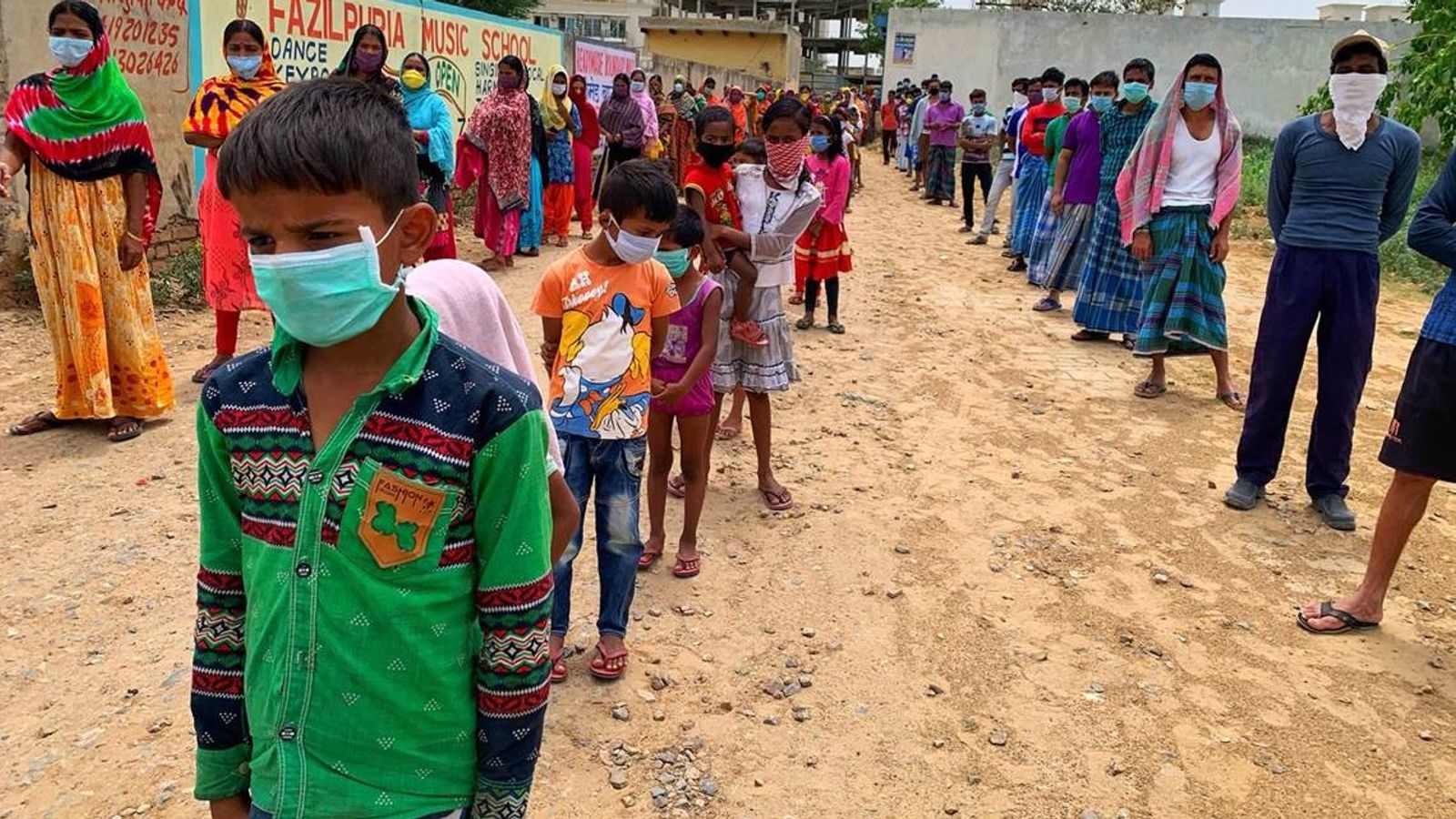
Millions in India facing hunger due to Covid19
“Without urgent action, this will only get worse given that every second child, out of 2 billion children in the world, is living in poverty,” it adds. The report shows that a third of the 14,000 households in nine countries in Asia have already lost jobs or income since the coronavirus outbreak. “Sixty percent of these families depend on casual (daily) labour as a crucial source of income,” it says, adding that a quarter of all families surveyed did not have any food stocks on hand, and one third had only one week’s supply left. In Cambodia, 28% of households facing loss of jobs and income were sending children out to work, and in Bangladesh, 34% were sending children to beg, the assessment found. In urban slums in India, 40% of respondents reported a spike in domestic violence due to travel restrictions and a reduction in family income.
In Africa, 59% of respondents from communities World Visions works with reported spending less on healthy and nutritious food. In Latin America, refugees are severely affected by the loss of income, and one-third of children are going to bed hungry, the report says. “In Chile, 82% of the interviewees reported having serious problems obtaining food, and in Venezuela, 70% have no access to food, which means that children under age five are at high risk of being malnourished. The report also shows 28% of the children surveyed are at risk of eviction from their homes, with seven percent already having been evicted.” According to a projection by the United Nations, up to 66 million more children could fall into extreme poverty because of the pandemic, adding to the estimated 385 million children who were already living in extreme poverty as of last year.
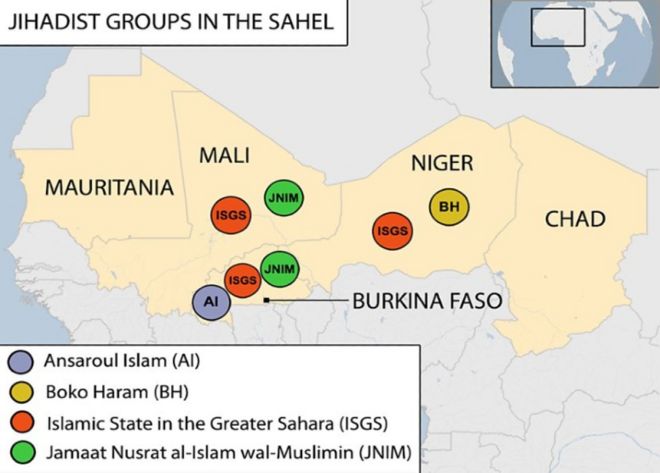
Over 4,000 people were killed in Islamic extremist attacks in Burkina Faso, Niger and Mali in 2019, according to the U.N.’s envoy for West Africa and the Sahel Mohamed Ibn Chambas.
Since 2016, extremist groups including the Islamic State West Africa Province and Ansaroul Islam have carried out attacks throughout the Sahel region of West Africa. But attacks increased fivefold in 2019 — deaths rose from 80 in 2016 to 1,800 in 2019.
A Nigerian organisation claims that more than 350 Christians have been killed across the West African country since the start of 2020 and estimates that about 11,500 Christians have been killed since 2015. “Nigeria has become a killing field of defenceless Christians,” the non-governmental organisation, International Society for Civil Liberties and Rule of Law, Intersociety, said in a new special report.”
IS and al-Qaeda’s JNIM are both active in the Sahel region where they compete for power
Jihadist violence has now spread from the country’s north to the western Boucle du Mouhoun region where rice and maize are produced and transported to other areas, resulting in a food shortages and might cut off food for millions more in the region, according to the Associated Press.
It is feared that the COVID-19 pandemic might exacerbate the situation at a time when 2 million people in the country are already facing food insecurity.
“If production goes down in this area and if movement restrictions due to the coronavirus drive up food prices in the markets, it could push numbers of severely vulnerable people to double or triple,” Julia Wanjiru, communications coordinator for the Sahel and West Africa Club, an intergovernmental economic group, was quoted as saying.
According to the U.N., the number of people displaced in Burkina Faso rose 1,200 percent in 2019. There are about 600,000 internally displaced people in the country as it is becoming one of the world’s fastest-growing humanitarian crises.
Authorities in the Borno state of Nigeria said Wednesday that at least 81 people were killed in an attack on a nomadic community believed to have been carried out by militants aligned with the Islamic extremist groups Boko Haram or Islamic State West Africa Province.
Signs of the End of the Age
Jesus said, “And when you hear of wars and rumours of wars, do not be alarmed. This must take place, but the end is not yet. For nation will rise against nation, and kingdom against kingdom. There will be earthquakes in various places; there will be famines. These are but the beginning of the birth pains.” Luke 13:7-8
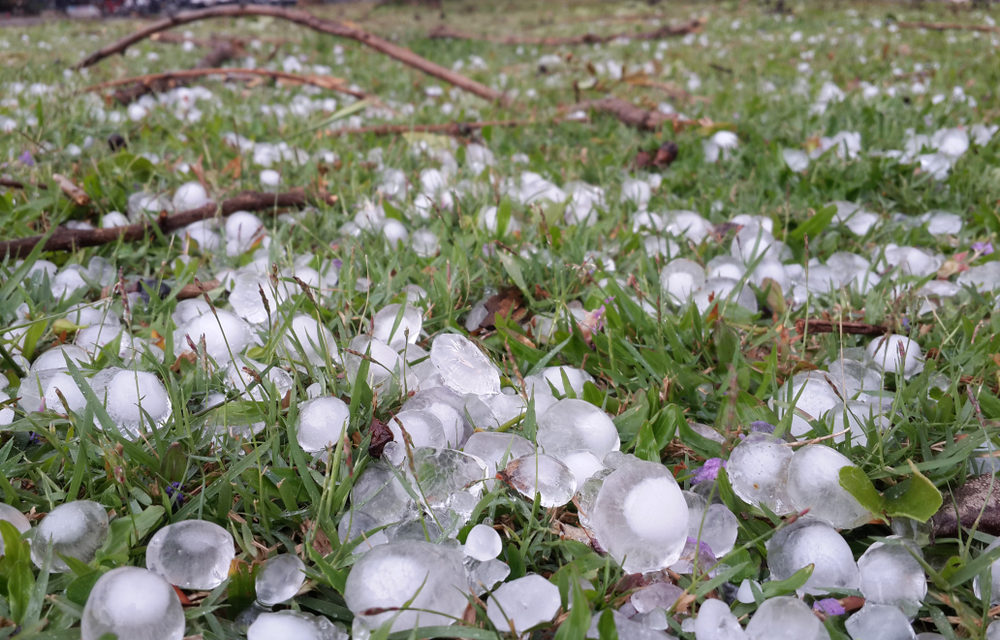
Severe hailstorms strike India destroying homes and crops
In the last days before Jesus returns, God said everything that could be shaken will be shaken so we will understand that neither us nor our governments are in control.
Rounds of hailstorms over the past weeks have wreaked havoc in various parts of India. According to reports from the Watchers, In Mizoram, the hail struck nearly 800 homes as confirmed by disaster management and rehabilitation minister in Lalchamliana on April 29, 2020.
In Haryana, more than 618 thousand acres of crops were leveled by heavy showers and hail over the past weekend. In West Bengal, up to 8 million dollars’ worth of mango was destroyed in Malda as a result of a hailstorm last week.
Meanwhile, In the northeastern state of Mizoram, 46 of the houses were totally destroyed, while 749 others sustained partial damage, according to Lalchamliana’s report, Nine out of 11 districts were affected, including 58 villages.
According to the report, The state government in India will provide all possible help to those who have been impacted by the storms. The worst-affected area is the Hliappui village in east Mizoram’s Saitual district, with a total of 268 residential areas struck, 189 of which were completely damaged.
Covid pandemic, locust plagues and now hail, all severe and causing extreme hardship and damage which will ultimately cause famine across Africa and India. Already, there is an emerging food shortage in Zimbabwe. The Agricultural Minister Perrance Shiri said that there was only enough grain in reserves to last just over a month. There has been little rain and Cyclone Idai’s destruction of soil has not been recovered from, so crops are struggling.
Birth pangs are increasing exactly as prophesied. All can be averted, if we would only repent and turn back to God. He promises to heal/restore the land if we will humble ourselves and pray. Will we? Many Christians are praying as never before but will it cause our leaders and therefore nations to turn from their evil ways. Sadly, most don’t because we already know the outcome from God’s Word. We are fast approaching the time when God will pour out His wrath on an unrepentant world.





 LIVING ETERNAL NOW