EVOLUTIONARY VIEW OF THE FUTURE VERSUS A BIBLICAL VIEW

An article appeared in Science Daily entitled “New research maps 14 potential evolutionary dead ends for humanity and ways to avoid them.” What are these “dead ends” we must avoid?

Well, these “dead ends” are defined as “evolutionary traps” humanity can get stuck in that initially began with innovation but can if we don’t escape them, lead to the end of the Anthropocene (the supposed current geological age) as we know it.

Summary: Humankind risks getting stuck in 14 evolutionary dead ends, ranging from global climate tipping points to misaligned artificial intelligence, chemical pollution, and accelerating infectious diseases, finds a new major assessment by scientists from multiple different disciplines. To break these trends, humans must become self-aware of our common futures.

BIBLICAL UNDERSTANDING

Now, how should Christians understand this? We need to practice dominion with our Bibles open and our hearts attuned to the Holy Spirit, seeking godly counsel. We should want what is best—not just for creation but ultimately for mankind because we’re the only creatures made in God’s image. So we care for everything God made, making it our goal to honor the Creator in everything we do.

Is humanity doomed to an “evolutionary dead end”? Not at all. While we can certainly make decisions that negatively (or positively) impact mankind, our future has already been decided by God, and He has told us in advance. This Earth and mankind won’t end until Jesus returns first to rule and reign with the glorified Saints for 1,000 years. Jesus needs to fulfill the Abrahamic, Davidic, and New Covenant before God destroys this Earth with fire. The final judgment of mankind then takes place after the second resurrection with the White Throne Judgment. It is only after the White Throne Judgement that John sees a new Jerusalem descending from the new Heaven onto a new Earth where only the righteous dwell.

MILLENNIAL KINGDOM

Behold, the days are coming, declares the Lord, when I will make a new covenant with the house of Israel and the house of Judah, not like the covenant that I made with their fathers on the day when I took them by the hand to bring them out of the land of Egypt, my covenant that they broke, though I was their husband, declares the Lord. For this is the covenant that I will make with the house of Israel after those days, declares the Lord: I will put my law within them, and I will write it on their hearts. And I will be their God, and they shall be my people. And no longer shall each one teach his neighbor and each his brother, saying, ‘Know the Lord,’ for they shall all know me, from the least of them to the greatest, declares the Lord. For I will forgive their iniquity, and I will remember their sin no more.” Jeremiah 31:31-34

Also I (John) saw the souls of those who had been beheaded for the testimony of Jesus and for the word of God, and those who had not worshiped the beast or its image and had not received its mark on their foreheads or their hands. They came to life and reigned with Christ for a thousand years. The rest of the dead did not come to life until the thousand years were ended. This is the first resurrection. Blessed and holy is the one who shares in the first resurrection! Over such the second death has no power, but they will be priests of God and of Christ, and they will reign with him for a thousand years.Revelation 20:4-6

This Earth still has 1,000 years before it is destroyed by fire. Jesus and the glorified Saints will rule and reign with a rod of iron even though Satan is bound in the Abyss. Much detail was given to the O.T. prophets about Jesus’ Millennial Kingdom, check out http://www.millennialkingdom.net.

For 6,000 years Satan has ruled much of Earth, and now Jesus will fulfill Israel’s destiny with its Messiah ruling the nations for 1,000 years. At the end of Jesus’ 1,000 reign, God releases Satan one more time and he is able to raise an army like the sand of the sea of rebellious people. How wicked is unregenerate mankind? Only then will this Earth’s destiny be complete.

When the 1,000 years are completed, Satan will be released from his prison and will go out to deceive the nations at the four corners of the earth, Gog and Magog, to gather them for battle. Their number is like the sand of the sea. They came up over the surface of the earth and surrounded the encampment of the saints, the beloved city. Then fire came down from heaven and consumed them.Revelation 20:7-9

Then I saw a new heaven and a new earth, for the first heaven and the first earth had passed away, and the sea was no more. And I saw the holy city, new Jerusalem, coming down out of heaven from God, prepared as a bride adorned for her husband. And I heard a loud voice from the throne saying, “Behold, the dwelling place of God is with man. He will dwell with them, and they will be his people, and God himself will be with them as their God.Revelation 21:1-3

PROGRESS ACCORDING TO WHO?

The Air We Breathe: How we all came to believe in freedom, kindness, progress, and equality Glen Scrivener Good Book Company, 2022

I gave a brief review of this book by the Australian pastor Glen Scrivener (now living in the UK) in a recent post. However, I would like to share more and encourage you further to purchase his book. It will equip you to engage in good conversations with the lost and with the Holy Spirit’s guidance help you to bring them to a knowledge of the truth. As a reminder Scrivener’s main thesis for his book:

Today in the west, many consider the church to be dead or dying. Christianity is seen as outdated, bigoted, and responsible for many of society’s problems. This leaves many believers embarrassed about their faith and many outsiders wary of religion. But what if the Christian message is not the enemy of our modern Western values, but the very thing that makes sense of them?

SCRIVENER ON PROGRESS

Progress does have a dark side. Darwin proclaimed biological progress (evolution by random chance versus creation by an intelligent designer), Hegel, historical progress (Hegel’s providence is not the providence of the Judeo-Christian God. Rather, Hegel argues that universal history is itself the divine Spirit or Geist manifesting or working), Freud, psychological progress, and Marx, economic and political progress. The ugly fruit of such philosophies notwithstanding, Christian ideals run through them like veins in blue cheese. But without a vertical reference (God unacknowledged), the desire for progress all too easily spawns violence. The 20th century was the most blood-stained in history, the ‘murder century’. Think of Stalin’s Holodomor (Ukrainian: murder by famine) and purge of tens of millions in the 1930s, or of Chairman Mao’s ‘Great Leap Forwards’ (1958–1962), where over 45 million died of overwork, starvation, or murder—not to mention the horrors of death camps like Auschwitz. Post-WWII, a moral standard was needed to establish the ‘self-evident’ moral truths so bespattered by the Nazis. As with slavery, those atrocities were deemed “crimes against humanity” but few admitted they were crimes against God. If they were mere “crimes against humanity”, we have a dilemma, for humanity was on both sides (evil oppressors and their victims). Scrivener states pithily, “If
we’re all squabbling apes, then there’s no transcendent justice in condemning Nazism” (p. 181). So what price progress?

Secularism today, having fled past evils, now pursues values like rights, freedom, and progress, but divorces them from their source. This concurs with Tom Holland’s thesis in Dominion—without Christianity’s humanity-enhancing teaching about the image of God, the ruthless suppression of weaker minorities fits evolutionary logic: “To believe that God had become man and suffered the death of a slave was to believe that there might be strength in weakness, and victory in defeat. Darwin’s theory, more radically than anything that previously had emerged from Christian civilization, challenged that assumption. Weakness was nothing to be valued. Jesus, by commending the meek and the poor over those better suited to the great struggle for existence, had set Homo sapiens on the downward path toward degeneration. For eighteen long centuries, the Christian conviction that all human life was sacred had been underpinned by one doctrine more than any other: that man and woman were created in God’s image.”

Transgender advocates want equality, compassion, and consent, but they divorce these from Christianity and recombine them
differently. Equality becomes a radical individualism as people emphasize rights over institutions and community. Compassion risks becoming what sociologists have termed ‘competitive victimhood’, and perceived victim status is used to gain an advantage. This leads to clashes between different minority groups—e.g. feminists versus trans-rights activists—so whose suffering takes precedence? Divorcing sexual consent from Christian values is a wrecking ball as far as marriage, family, and the wider community are concerned. As Scrivener points out, “Consent is vital, but it is not a sufficient foundation for sexual ethics” (p. 194). Progressive secularization is not a sustainable strategy! The WEIRD (Western, Educated, Industrialized, Rich, and Democratic) values upon which Scrivener’s book focuses are strongly believed by all, but people in Western society are
making a hash of applying them in everyday life. Compared to the ancient world, equality, compassion, consent, enlightenment, science, freedom, and progress were given a makeover by Christianity, and these are dear to the hearts of modern people. As
Scrivener says, “These are our creedal convictions, and, by and large, we are a society of believers” (p. 197). But even as people are straining to discard Christianity, they continue with their moralizing: “If anyone blasphemes our WEIRD values … we ‘cancel’ them—that is, we ostracise them socially and professionally. This is really a modern form of ‘ex-communication’ for modern kinds of ‘heretics’” (p.198). And anyone can find themselves a target, especially, as the author wryly observes, with the turbo-charging of outrage made possible by social media. In today’s ‘cancel culture, there is plenty of guilt, but without grace, forgiveness is nowhere in sight! Scrivener is right on the money in noting that the denial of King Jesus while trying to retain Christian ideals,
brings judgment, not liberation: “In order to pursue the kingdom without the King, we have had to dethrone the person of Christ and install abstract values instead. … [But] Values can only judge you” (p. 200). People need the Gospel of hope, so the author invites readers to consider how history will judge them— more especially how will God judge them? Wonderfully, Christ came not to police people’s morals so much as to heal them, cleanse them, and forgive needy, despondent human beings.

Scrivener skilfully defends the Gospels and their accounts of Christ, and he does so in a highly original and compelling manner,
demonstrating their sheer genius. The strong evangelistic approach is fresh, not hackneyed. Jesus, the History Maker, is the One behind the values so cherished by the West—He embodies them. In fact, Christ loved this world to death, pioneering life for all violators of those values through His Resurrection. This is not a book that fizzles out toward the end. In its closing pages,
Scrivener appeals in turn to the three categories of readers mentioned in the second paragraph of this review. It is refreshingly honest and very well executed. To Christians, he writes, “In all this, great wisdom is needed to discern the Christian-ish values of a
WEIRD culture from true Christianity” (p. 230). Absolutely, and this book deserves to be very widely read to equip us to convey the truth to those the Holy Spirit brings across our path.

CRITICAL RACE THEORY

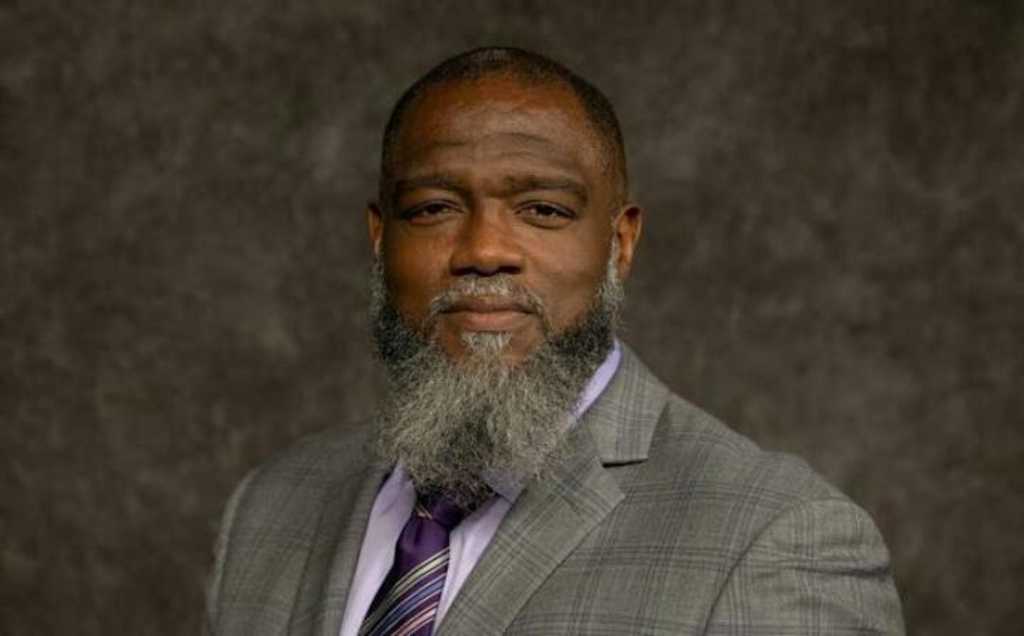
Voddie Baucham, a Los Angeles native who serves as the dean of theology at the African Christian University in Zambia explains ‘Looming Catastrophe’ of Critical Race Theory in the church in his new book, “Fault Lines: The Social Justice Movement and Evangelicalism’s Looming Catastrophe.

Baucham relies on the writings of Critical Race Theory co-creator Richard Delgado, who argues racism “is ordinary, normal, and embedded in society” and that it “advances the interests of both white elites (materially) and working-class people (psychically), [therefore] large segments of society have little incentive to eradicate it.”

He also references the following definition of CRT from the UCLA School of Public Affairs:

CRT recognizes that racism is engrained in the fabric and system of the American society. The individual racist need not exist to note that institutional racism is pervasive in the dominant culture. This is the analytical lens that CRT uses in examining existing power structures. CRT identifies that these power structures are based on white privilege and white supremacy, which perpetuates the marginalization of people of color. CRT also rejects the traditions of liberalism and meritocracy. Legal discourse says that the law is neutral and colorblind, however, CRT challenges this legal “truth” by examining liberalism and meritocracy as a vehicle for self-interest, power, and privilege. CRT also recognizes that liberalism and meritocracy are often stories heard from those with wealth, power, and privilege.

Photo provided by Voddie Baucham
photo provided by Voddie Baucham

During a recent interview with Faithwire, the 52-year-old preacher also addressed the religious philosophies of prominent critical race theorist Ihram X. Kendi, who espouses “liberation theology,” which says Christians are tasked with “liberating society from the powers on earth that are oppressing humanity” and rejects “saviour theology,” which says it is the job of believers “to go out and save these individuals who are behaviorally deficient … and heal them.”

CRT is a religious movement,” Baucham said. “It has all the trappings of a religion. It has its own cosmology, it has its own saints, it has its own liturgy, its own law. It has all of those elements. And a lot of those things are very subtle, which makes them rather attractive to religious people.” He explained that, because Christians are rightly concerned with fighting injustice, condemning racism, and promoting equality of opportunities, philosophies like CRT are appealing, even when their underpinnings are “absolutely” in contradiction to Scripture.

At the core of Baucham’s concern, though, is what accepting CRT as the pathway to moral betterment says of the sufficiency of Scripture.

“We don’t need critical race theory to teach us on race, on partiality, on the sin of partiality,” he said. “I can understand if people want to say that we want to use scientific text, for example, that speaks to an issue that the Bible doesn’t speak to. The Bible is not a mathematics textbook. There’s a whole lot of things that the Bible is not, but, when it comes to the relationships between people, when it comes to sins based on partiality, the Bible is absolutely a textbook on that.”

CRT, according to Baucham, warps our understanding of objective truth. He explained that narrative storytelling — sharing one’s experiences — becomes paramount in the search for truth.

“In critical race theory, if you want to know the truth when it comes to race and racism, you have to elevate black voices, you have to listen to the voice of the marginalized — and this is what people are talking about in church today, right?” Baucham argued. “With critical race theory, we do this because that’s the way you know truth. Not through knowing God, not through knowing God’s Word, but through listening to the voices and the experiences of the people who we determine to be marginalized.”

It is God’s Word that is being marginalised. God is no longer relevant. As I have mentioned many times before the teaching of evolution in our schools has raised a generation that does not know God. We are living in the prophesied last days before Jesus will return to judge a world that has rejected there Creator and His amazing offer of grace and mercy available to all through His Son.

IS YOUR WORLDVIEW BASED ON A SOLID FOUNDATION?

William Kingdon Clifford was a philosopher who lived in England more than 150 years ago. He was not very well known because his life was cut short at age 33. His recently discovered essay entitled “The Ethics of Belief” is now receiving a great deal of interest. In this essay, written in 1877, Clifford says that it is a moral obligation to believe responsibly. We must base our beliefs on sufficient evidence that we have diligently investigated. He believed this to be of such great importance because beliefs influence one’s actions. They are foundational to life.

Picture 1 of 1

Dr. Dallas Willard, former professor of philosophy at the University of Southern California, found that many of the students and scholars who considered themselves to be agnostic or atheist that he encountered on campus and in the world were guilty of what he called “irresponsible disbelief.” These bright men and women would often choose to disbelieve in something without any significant commitment to an investigation of that disbelief by way of sound reasoning and careful examination of the evidence. This is one of the great flaws in our human character. We stubbornly hold on to our beliefs because they generally reflect how we want life to be rather than how life actually is. For this reason, the evidence does not seem to matter.

Before he became a Christian, Dr. Francis Collins, Director of the National Institute of Health USA and Director of the momentous ENCODE project was in this category until he was challenged by one of his patients, She was dying but because she was a Christan had no fear of death. She asked Francis about what he believed.

Dr. Collins, you’ve been so kind as to listen to me and care for me and listen to me share with you about my faith. Tell me about your faith. Tell me what you believe.”

Collins reaction: “Nobody had ever asked me that question before, not like that, not in such a simple, sincere way. I realized I didn’t know the answer. I felt uneasy. I could feel my face flushing. I wanted to get out of there. The ice was cracking under my feet. All of a sudden, by this simple question, everything was a muddle.”

Collins had previously believed that Jesus and the stories of the Bible were nothing more than mere myths. As he studied the historical evidence, he was stunned at how well documented and how historically accurate the Bible is. He also saw a surprising fidelity of the transmission of the manuscripts that were passed down over the centuries. And, over time, Francis Collins, based on the accumulation of the evidence that he observed, concluded that God exists and that Jesus is the Son of God. He also concluded that most of the religious skeptics that he knew and that he meets today are just like he was. That is to say, they didn’t want to think about these things and never looked at any evidence, never drawing conclusions from the real evidence that was available.

If your an agnostic or atheist are you guilty of irresponsible disbelief?

Much of the above information was extracted from the excellent book Reflections on the Existence of God by Richard E Simmons 111

2% OF MILLENNIALS HOLD A BIBLICAL WORLD VIEW

Although 61% of American millennials consider themselves to be Christian, just 2% of them were found to hold a biblical worldview, according to a recent study released by the Cultural Research Center at Arizona Christian University.

A biblical worldview, as previously defined by Barna, includes believing that absolute moral truths exist, and that such truth is defined by the Bible, as well as firm belief in six specific religious views. Those views are that Jesus Christ lived a sinless life; God is the all-powerful and all-knowing Creator of the universe and He stills rules it today; salvation is a gift from God and cannot be earned; Satan is real; a Christian has a responsibility to share their faith in Christ with other people; and the Bible is accurate in all of its teachings.

Considering the American Worldview Inventory 2020 study found that only 6% of American adults, in general, hold a biblical worldview, the fact millennials (18- to 36-year-olds) were at 2% is not surprising. Moreover, it helps to explain the degree of lawlessness erupting across the country.

Even a rudimentary understanding of the foundations of the American republic reminds us that unless the United States maintains spiritual unity under the hand of God, it will not be able to sustain the freedoms that have made the nation unique and desirable. The heart and soul of the nation pursue other gods and beliefs to its detriment as a nation. 

The existing church has not been able to stop the decline that has been evident over the last decade, the war is over and an escalation of persecution of believers is a forgone conclusion. As could be expected, God is raising up His church as described in the Book of Acts. Holy Spirit led leaders such as Francis Chan understood the call of God in this regard. For the past nine years, his family has been in San Francisco, where they started “We Are Church,” which has grown to 25 pastors. No buildings or paid pastors.

Francis is now in Hong Kong reaching out to the unsaved in countries such as Myanmar (Burma) and is seeing God work miracles as he never saw in his church of 5000 in California.

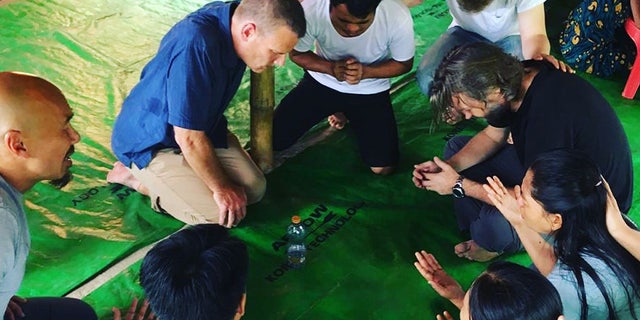
Francis Chan, joined by others in his Crazy Love Ministries, pray on a summer vision trip in Hong Kong.
Francis Chan, joined by others in his Crazy Love Ministries, pray on a summer vision trip in Hong Kong. (Courtesy of Kevin Kim)

HE WHO CONTROLS THE MEDIA CONTROLS CULTURE

Dr. Ted Baehr is Founder and Publisher of MOVIEGUIDE®:  The Family Guide to Movies and Entertainment and Chairman of the Christian Film & Television Commission. It is encouraging to know God has his man in Hollywood to influence what comes out of there.

 Ted’s life’s purpose is to be used of God to redeem the values of the media while educating audiences on how to use discernment in selecting their entertainment.

“He who controls the media controls the culture” – Ted Baehr.

“If God created us, we have incredible value,” he says. “And if Jesus gave His life for us—God of gods, light of lights, King of kings—gave His life for us, we have double the incredible value. And that means, we have the fulfillment of Christ – the presence of God’s Holy Spirit in our lives so we can do His will—not because we are forced to, but because we love to.”

cross-in-hollywood
Holy Spirit is invading Hollywood

Ted says. that’s an entirely different universe than the secular world is in. They can’t comprehend thinking and living that way. But as Christians continue to make wholesome, God-honouring films and as Hollywood continues to increasingly honour biblical values in its movies, we may just see a huge turnaround in this nation.

Baehr says Hollywood is beginning to realize they can make good money by creating wholesome movies. This is something Baehr has been trying to communicate to Hollywood influencers for years.

“What we say to them is: ‘Every week there are about 125 million people who go to church, and there are only 25 million people who go to movies,’

So instead of bashing Christians or church in movies, producers are beginning to put more positive references to God, Christianity and church in their films. Unfortunately, this doesn’t mean they’re taking all the bad things out, but it does show they’re beginning to realize the value of biblical, family-friendly values.

And not only that, but God is raising up more Christians to produce faith-based films that are only getting better and better. Baehr says he has had the Erwin brothers and the Kendrick brothers at his Movieguide® awards—proof that just because a film is Christian doesn’t mean it’s boring or of poor quality.

“We see that the independent world, which used to be monopolised by that sort of edgy, politically aggressive, deviant-type movie, is now being invaded by good Christian beliefs—and they’re the ones that are doing better at the box office,” Baehr says. “… We can affect Hollywood movies, because it’s a direct vote at the box office.”

Dr. Baehr offers books to train you and your family in media wisdom, a devotional for living the abundant life, and how to succeed in Hollywood. Go to movieguide.org

HOW THE WORLD VIEWS ANY CHRISTIAN INFLUENCE OF PARLIAMENT

As Netflix documentaries go, “The Family” is just about as outlandish as they come. Who is this group Netflix  named “The Family”? It is a Christian group, whose real name is The Fellowship Foundation whose primary responsibility is to host an annual Parliamentary Prayer Breakfast. The trailer below is scandalous, if not plainly unhinged. The following is some of the content:

In my 20’s, I stumbled my way in,” spills the first alleged insider. “And what I found was a secretive Christian organisation called The Family, that had been hiding in plain sight for 80 years.”

Another breathlessly warns that this is a group “with tentacles around the world”; a gaggle of power-hungry fundamentalists led by the “most powerful man you’ve never heard of” — a man by the name of Doug Coe, who passed away in 2017.

Coe was, by all accounts, a quiet man with a penchant for world peace. In 2001, he organised a historic meeting between two warring leaders, Rwanda’s Paul Kagame and Congo’s Joseph Kabila. This would be the first of a series of covert diplomacy moves that would eventually lead to the signing of a historic peace accord that likely saved thousands of lives.

Does that sound like a slick political operator who was hell-bent on world domination? The Netflix program’s claims are farcical and absurd.

But what of the prayer breakfast itself? “The Family” is, after all, solely responsible for the popular annual event. So, are there clandestine side-room policy meetings and code-words being muttered into the ear of the president? Is the room scattered with secret handshakes?

Well, not according to Christian author, Jeff Lucas, who attended the gathering back in 2017.

“We ate eggs and bacon,” he told Premier UK. “ No agenda was shared that might lead to world domination. [We] met some interesting people, and…. prayed.”

The documentary lays claim to the uncovering of a secretive religious organisation, “The Family,” that it alleges has been secretly pulling the strings of the United States government for the past 80 years. 

Citing covert meetings with the president and the commissioning of sleeper agents to far-flung lands, the documentary paints a wildly sensationalist picture of “The Fellowship Foundation”, who as mentioned, its primary responsibility is to host the annual Parliamentary Prayer Breakfast.

Still, the hype keeps growing, with one British outlet, The Manchester Evening News declaring that streamers of the docu-series have found themselves “too horrified to sleep.”

Hopefully, people will see it for what it is — a ham-fisted attempt at smearing well-connected people of faith.